The USMNT did the homework and still failed the test — now the real argument begins
The U.S. exited its own World Cup without breaking past the round of 16. The argument now is not whether Mauricio Pochettino failed, but whether a celebrity coach can ever have been the lever American fans wanted him to be.
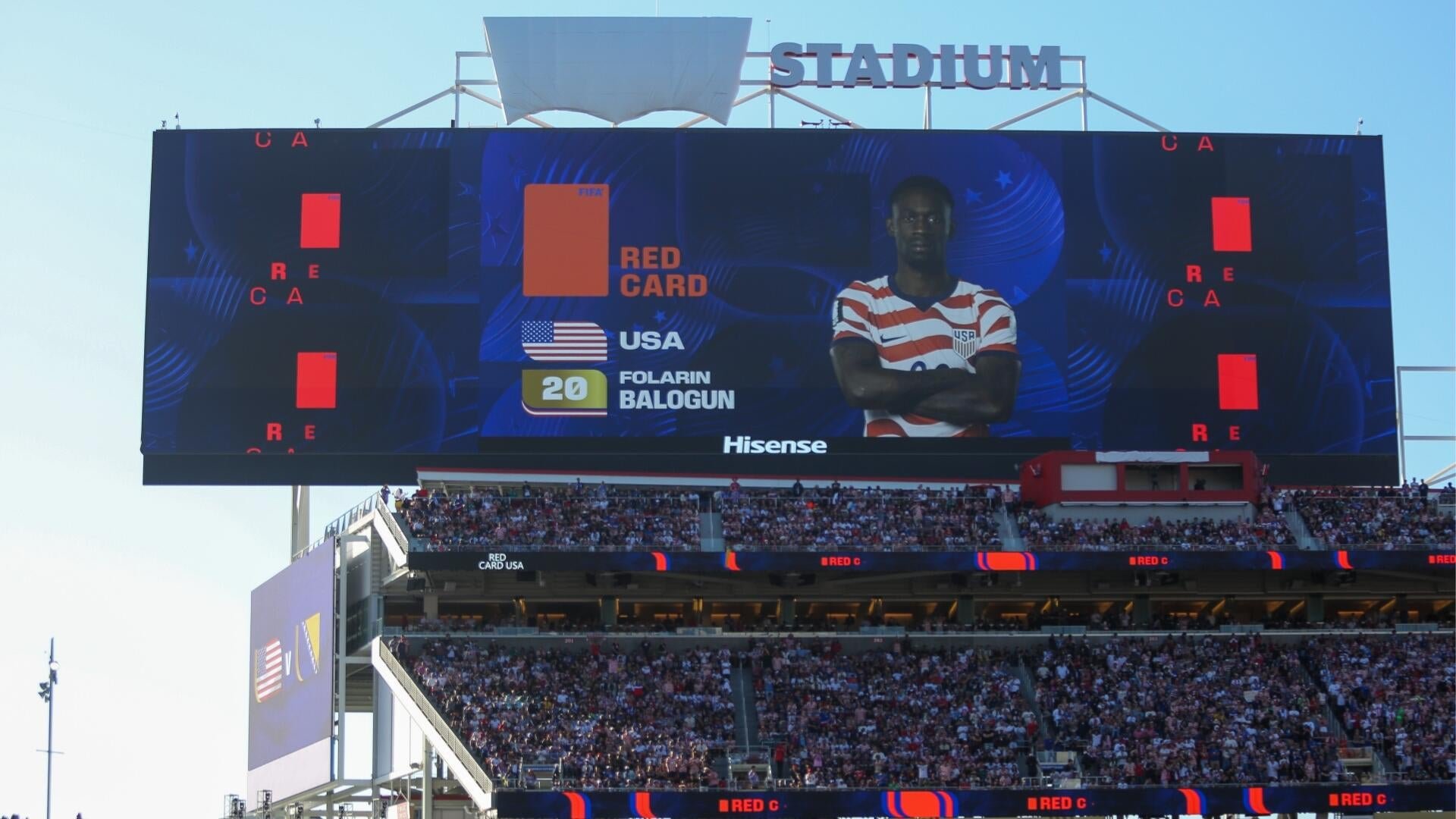
The United States men's national team walked off the pitch in mid-July 2026 having answered almost every question the tournament posed — except the only one that mattered. Group-stage wins, a clean performance against a tricky European opponent, the kind of set-piece discipline that takes months to install, all of it arrived on schedule. The one thing that did not was a goal, or a moment, in the knockout round. On 9 July 2026 the autopsy was already being written: what looked, for ninety minutes a night, like a team coached by a serious coach turned out to be a team whose ceiling was lower than its billing.
The argument this publication is interested in is not the obvious one — that Mauricio Pochettino, hired at great expense to do exactly this job, came up short. The interesting argument is the one ESPN floated the day before the elimination: that the identity of the U.S. coach was, in 2026, a secondary variable. The players were the constraint. The federation picked the most famous manager it could afford, the most-pedigreed tactician on the open market, and discovered that a logo on the touchline cannot convert a half-chance at the back post.
The grades, and what they measure
ESPN's tournament report card, published on 9 July 2026, framed the U.S. campaign in the language of an exam: homework done, quizzes aced, final exam failed. The framing is generous to the staff and unsparing to the result. Preparation — scouting reports, video, set-piece routines, pressing triggers — was clearly visible. The U.S. did not look disorganised. It looked rehearsed, and then it looked stuck.
That distinction is the whole story. A team that arrives unprepared and loses is a story about coaching. A team that arrives prepared, executes the plan for 180 minutes, and then cannot improvise its way past a deeper, more experienced opponent is a story about the squad. Pochettino's staff can rightly point to clean defensive shape, to a midfield that did not get overrun, to substitutions that were made on time and on theme. The ceiling was always the group of players, not the man on the sideline.
The Pochettino premium
U.S. Soccer's decision to hire Pochettino in 2024 was, on its face, a rational bet. He had managed Tottenham, Paris Saint-Germain, and Chelsea. He had worked with elite talent. He spoke the football language of the modern European game. The federation wanted credibility, both with European agents who control the supply of dual-nationals and with a domestic fan base that had grown tired of process stories.
The bet's hidden cost was the message it sent to the player pool. If the federation is willing to pay a premium for a name, the implicit promise is that the name will be the difference. When the name is not the difference — when Christian Pulisic, Tyler Adams, and Folarin Balogun are the ones crossing the halfway line — the disappointment is structural rather than tactical. The U.S. did not lose because Pochettino was outcoached. The U.S. lost because its best players were, on the day, outplayed by better ones.
ESPN's piece, written by staff on 8 July 2026, made this case directly. The expensive, famous coach, the column argued, was asked to do a job that no coach, however expensive or famous, could have done with this squad. The U.S. needed a generationally good striker, or a centre-back who could play a 70-yard pass under pressure, or a No. 8 who could dictate tempo against a top-ten team. It had, instead, a collection of very good MLS and European-league starters.
The structural read
The home-World Cup framing is a distraction. Hosting a tournament does not, in the modern game, confer a competitive advantage — it confers revenue, and it confers the obligation to perform in front of a captive audience. The U.S. is deep enough as a football country that the 2026 squad was not the country's ceiling. It was a snapshot of a generation that is good, and that is still one good transfer window away from being great.
What the Pochettino hire exposed is the gap between the federation's ambition and the player-development pipeline's output. The federation wants to win a World Cup before 2030. The development pathway, from MLS academies to the European loan system, is producing players who are competitive but not yet dominant. A coach, however accomplished, is a downstream variable. He can organise a press, install a set piece, manage a locker room. He cannot teach a 19-year-old to weigh a through ball like a player who grew up in La Masia.
This is the frame the tournament should leave behind. The question is not whether to fire Pochettino, though U.S. Soccer will be asked to answer it. The question is what the federation is willing to invest in the next layer down — in the kind of youth system that produces a starter for a Champions League club at 18, rather than at 24.
The counter-read, and the stakes
The counter-read is the obvious one and it deserves its airtime. Pochettino's teams have a shape: high press, compact mid-block, full-backs inverted in possession. The U.S., in the knockout round, looked like a team that had been told the shape but had not internalised the transitions. A better-prepared team would have known, in its legs, when to step and when to drop. If the shape was clear and the transitions were not, the failure is at the line where a coach's daily work lives.
The counter-read holds some weight. It does not hold enough to overturn the structural argument, because the U.S. is not the only team that lacked automaticity in the transitions. It is the only one of the relevant group whose federation spent the money and accepted the constraints of a top-tier European coach. The reasonable judgment is somewhere between the two: Pochettino did not lose the tournament for the U.S., and he did not win it either. He presided, with discipline, over a team whose ceiling was lower than the moment demanded.
The stakes are concrete. The 2030 tournament is co-hosted by Spain, Portugal, and Morocco, with opening matches in Argentina, Paraguay, and Uruguay. The U.S. will not have home advantage. It will have, by then, either a deeper squad or a more modest one. The Pochettino era will be read, in hindsight, as the moment the federation chose to bet on the ceiling-raising variable it could control — a name on the touchline — rather than the ceiling-raising variable it could not, which is the long, unglamorous work of player development.
Desk note: Monexus treats the U.S. men's team story the way it treats any national-project story — interested in the gap between the federation's stated ambition and the player-development pipeline that actually delivers. The wire pieces framed the elimination as a coaching question; this piece reads it as a structural one.