Ankara's F-35 promise and the S-400 resale rumour: what the Turkish wire is actually saying
Two Turkish-aligned Telegram channels carried competing claims within an hour of each other on 10 July 2026: an F-35 promise to Erdogan, and a report that Turkey resold Russian S-400s to a Gulf state. The provenance deserves a hard look.
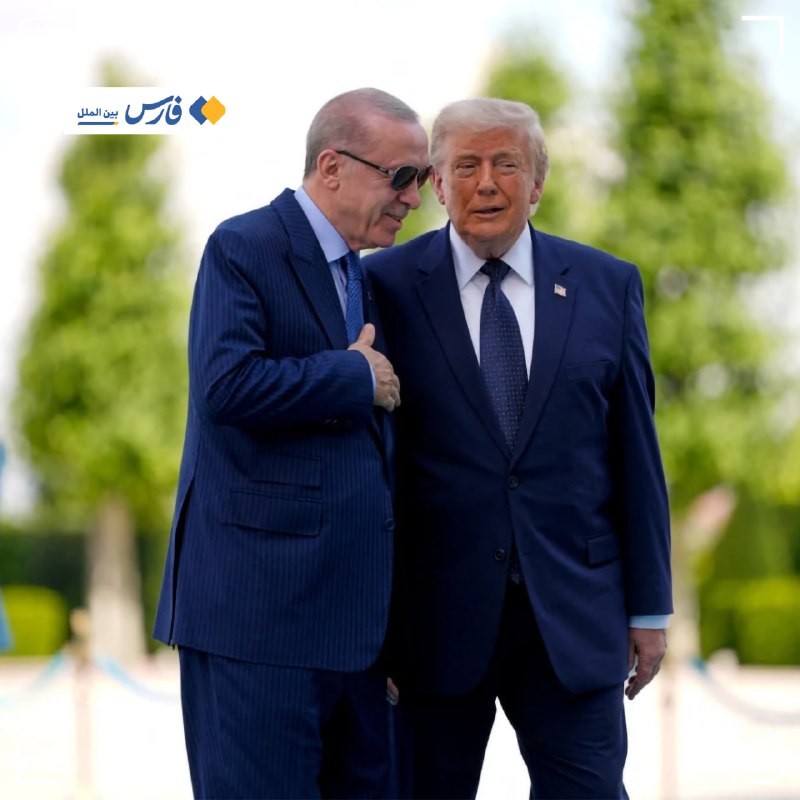
Two competing claims about Turkish defence policy landed on the diplomatic wire within roughly an hour of each other on the morning of 10 July 2026, and the difference between them tells a reader more about how this story will be reported than either claim does on its own. The first, carried at 09:00 UTC by the Iranian-aligned channel Fotros Resistance, says Donald Trump met President Recep Tayyip Erdogan in Ankara and that Erdogan emerged with a promise of five F-35 fighter aircraft. The second, circulated at 07:55 UTC and 07:53 UTC respectively by Fars News and Tasnim English — both of them organs of the Iranian state — claims that Turkey has already handed over its Russian-made S-400 air-defence systems to a Persian Gulf customer. Both stories are sourced to anonymous "reports" rather than to named officials. Both, for now, should be treated as claims, not as facts.
The reason the pair matters is structural. Turkey sits at the hinge between three of the most heavily armed air-defence and combat-air ecosystems on the planet — NATO's F-35 programme, Russia's S-400 family, and the indigenous Turkish defence industry that Ankara has been building precisely to escape the binary. Every move Ankara makes in this triangle reshapes a sanctions regime, a NATO interoperability ledger, and a Gulf security market all at once. Reading the two stories against each other is the only way to see which way Ankara is leaning on 10 July 2026 — and which way Tehran would prefer to push the narrative.
The F-35 promise, and what the wire actually shows
According to the 09:00 UTC Fotros Resistance post, Erdogan told reporters in Ankara that Trump "promised" five F-35s and that "President Trump always keeps his promises." The post is short, declarative, and unattributed beyond Erdogan's reported words. There is no link to a Turkish presidential statement, no White House readout, and no confirmation from any wire service in the source material Monexus has seen. Fotros Resistance is an Iranian opposition channel, not a Turkish government feed; the framing of the post — noting Trump's promises with what reads as pointed sarcasm — is a tell. A claim sourced to a hostile foreign channel about a friendly meeting should not, on its own, carry the weight of a confirmed deal.
The substantive question is what five F-35s would actually mean. Turkey was removed from the F-35 programme in 2019 after taking delivery of the S-400 system from Moscow, a move Washington treated as incompatible with NATO interoperability. Re-entry to the programme, even for a token number of airframes, would be a substantive reversal of a seven-year-old US position. It would also sit awkwardly with the parallel claim, discussed below, that Turkey has just offloaded the very Russian system that got it expelled in the first place. The two stories can be reconciled — the most obvious sequence is "divest the S-400, rejoin the F-35 line" — but the sources do not establish that sequence. They establish two claims, floated in the same morning, by channels with opposed interests.
The S-400 resale: where it came from and who gains from saying it
At 07:55 UTC, Fars News Agency — the English-language wire of the Islamic Republic of Iran — reported that "a newspaper close to the Turkish government" had disclosed Ankara had transferred the S-400 systems it purchased from Russia to "one of the Persian Gulf countries." Tasnim English, another Iranian state outlet, ran the same line at 07:53 UTC with near-identical wording. Both posts name no Turkish source, identify no Gulf recipient, and provide no delivery date, no serial numbers, no satellite evidence, and no independent confirmation.
The provenance is the story. Iranian state media has a structural interest in any narrative that casts Turkey as a sanctions-busting middleman, that puts Russian air-defence hardware on the southern flank of the Gulf, and that complicates Ankara's bid to re-enter the Western defence ecosystem. Whether or not the underlying Turkish report exists — and a number of Turkish newspapers do sit close to the government and do carry unattributed security stories — the Iranian state has selected this line and is amplifying it. A reader who sees only the Fars and Tasnim posts will form a picture of Turkish policy that begins with an Iranian press-release filter, and that filter is the first thing to strip away.
Counterpoint: the claim may still be true. Gulf states have historically sought layered air-defence, and an opportunity to acquire an S-400 battery at a discount from a NATO member would be commercially and strategically attractive. Turkey's defence ministry has not, in the source material available, issued a denial or a confirmation. The honest position is that the underlying facts have not been verified; the honest framing is that the claim is in circulation, the channels carrying it have an interest, and the rest is for the open-source record to settle.
What neither story resolves: the strategic balance Ankara is actually striking
Set the two claims side by side and a coherent strategic picture begins to form, but it is a picture the sources do not draw for the reader. Turkey has spent the better part of a decade building a defence-industrial position that does not require choosing between Washington and Moscow. The Bayraktar TB2 and TB3 drone lines, the Kaan national combat-air programme, and the expanding shipbuilding sector are all designed to give Ankara bargaining chips with both suppliers. If the F-35 promise is real, it sits inside that logic: a small, symbolic re-entry to the Western programme, enough to placate the US Congress, while the indigenous line matures. If the S-400 resale is real, it sits inside the same logic: monetising a system that has become a diplomatic liability, recouping some of the original $2.5 billion-class purchase, and clearing the sanctions overhang that has hung over Turkish defence procurement since 2019.
The two claims are not, on this reading, contradictory. They are complementary: a tidy divest-and-reintegrate sequence that would let Ankara argue it has resolved the original 2019 problem. The reason that reading deserves caution is that it is the most flattering reading, and flattering readings are the ones the wire tends to favour when sources are thin.
What to watch by the end of the week
Three things will move the story from rumour to record in the next seven days. First, a White House or State Department readout of the Trump-Erdogan meeting, naming attendees and outcomes — a single sentence on F-35s from a US official would change the weight of the Fotros post from rumour to confirmation. Second, a denial or confirmation from the Turkish defence ministry, the Presidency of Defence Industries (SSB), or the office of the president — Turkish institutions are rarely silent on defence stories for long, and silence itself will be a signal. Third, satellite imagery or open-source tracking of S-400 transporter-erector-launcher vehicles, which are large, distinctive, and impossible to hide once they move; commercial imagery of Murted Air Base or of any Gulf air-defence site will be the closest thing to a smoking gun the open-source community can produce.
For now, the Monexus finding is narrower than either headline: on 10 July 2026, two Iranian-aligned channels are broadcasting competing Turkish-defence stories, and the underlying primary documents — Turkish government statements, US readouts, imagery, named officials — are not yet in the public record. A serious analyst treats the morning's wire as the start of a story, not the end of one.
— Monexus framed this story against the channel-level provenance rather than the headline. The F-35 line and the S-400 line both touch Ankara, but they are being amplified by outlets with opposed interests; the open-source record has not yet adjudicated between them.
Wire provenance
This editorial synthesis draws on the following public wire/social posts:
- https://t.me/FotrosResistancee
- https://t.me/farsna
- https://t.me/tasnimnews_en