Arabic-script Tattoos Move From Subculture to Studio Mainstream in New York
Noore Yazigi's Brooklyn practice treats Quranic verses and Mahmoud Darwish lines as a working typographic vocabulary — and makes a small argument about what American tattooing thinks belongs on the body.
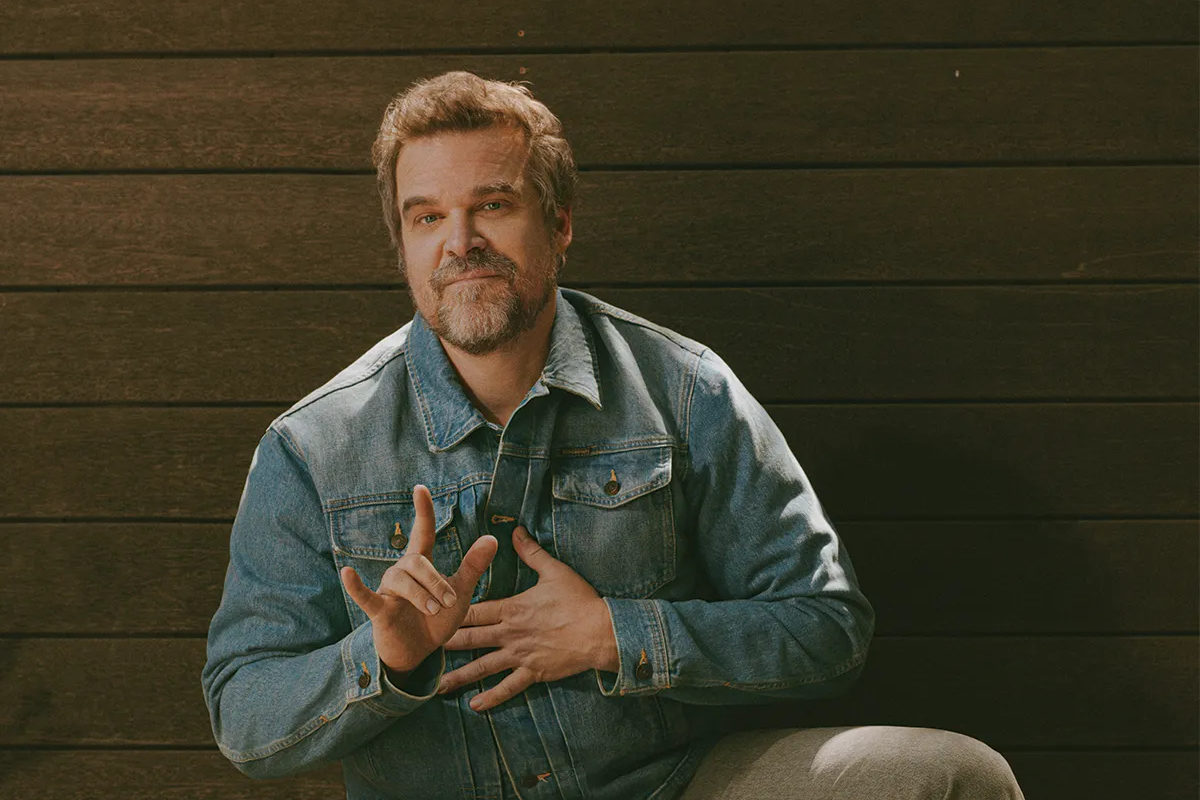
Brooklyn-based tattoo artist Noore Yazigi runs a chair out of a studio where Arabic-script lettering has quietly become a steady share of the appointment book, not a curiosity. A profile published by Hyperallergic on 9 July 2026 frames the work in explicitly literary terms: the verses inked on clients are drawn from the Quran and from the poetry of the late Palestinian writer Refaat Alareer, the Gaza-born poet, academic and essayist killed in an Israeli airstrike in December 2023, whose couplet "If I must die, let it be a tale" became a refrain in literary readings and street art long before it reached the page.
What is happening in that small Brooklyn studio, and across the loose network of Arabic-lettering artists it belongs to, is a quiet contest over the working vocabulary of American tattooing — over which scripts qualify as "serious" imagery, whose poetry gets to live permanently on the body, and which diasporas get to define themselves by mark. The clientele, judging by the work shown, is mixed: Arab and Muslim Americans in obvious proportion, but also non-Arabic-readers who want the visual register of the script without claiming the words as their own. Both groups require a level of translation that mainstream American tattoo publishing has not historically demanded of itself.
The calligraphy problem
Tattooing Arabic is, on its face, a typography problem before it is a translation problem. Letterforms matter. The standard Arabic script most clients ask for is Naskh, the same hand used in printed Quranic mushafs, where short and full stops, diacritical marks, and letter connections change meaning by a stroke. A single missing alif or an over-long tail can flip a sacred phrase inside out. Western tattoo culture has historically treated non-Latin scripts as ornamental — decorative objects without referent — and the worst work in that tradition has produced tattoos with reversed letters, disjointed words, or pious phrases rendered, by accident or indifference, into insults.
Yazigi's practice, as Hyperallergic describes it, refuses that ornamentation register. She treats the lines she inks as text first: verify the wording, verify the source text, verify the calligrapher's convention. The studio acts less like a tattoo shop than a small editorial desk. The artistic claim embedded in the work — that Arabic on the body is legible text, not pattern — is partly an argument with the conventions of American tattooing, which for decades reserved italicised Latin and Gothic blackletter for "serious" lettering and routed Kanji, Sanskrit, Arabic and Hebrew into an Asian-tribal-ornamental category that doubled as a hierarchy of scripts.
Whose poetry counts
The choice of Refaat Alareer is the most pointed editorial decision in Yazigi's portfolio. Alareer was a co-founder of the Gaza-based initiatives We Are Not Numbers and the Palestinian Museum of Natural History; his short poems and his English-language social-media writing were aimed at making Palestinian life legible to non-Arabic readers. He was killed, with his brother, his sister and her family, in an Israeli strike on 6 December 2023 that also killed the journalist Hamza al-Dahdouh, son of Al Jazeera Gaza bureau chief Wael al-Dahdouh. His name sits inside an active, painful and politically unresolved moment in Middle Eastern life; reproducing his lines in permanent form on the bodies of paying clients in Brooklyn is a way of arguing, against the collapse of news cycles, that the work is not finished when the obituary runs.
The choice is also a working argument with the rest of Arabic-script tattooing's lineage. Mahmoud Darwish is the default poet-on-skin across the diaspora. But Darwish is an established, internationally mediated figure whose lines already arrive on the body as authorised quotation. Alareer, younger, less canonical in the West, and indelibly tied to a specific house in a specific year, is harder. Inking him is a claim to the canon at the moment it is being written, not a confirmation of one that has been. The risk is real: a poet's reputation can drift, contexts change, and lines move into uses their authors could not have intended. The defence is also real — that a tattoo honours the author precisely by refusing to wait for permission from the canon.
Who is paying for this
The economic structure of the studio matters. Tattooing is a transactional medium. Clients are paying $200 an hour and up for the work; they choose the artist, the line and the placement. Hyperallergic's reporting makes clear that the client base of an Arabic-lettering specialist is not monolithic. There are Arab and Muslim American readers who arrive knowing the verse and want a particular hand. There are also non-readers — Arab-background clients who want the visible register of the script as a marker, and non-Arab clients who want the visual weight of the script to anchor a piece about heritage, marriage, or memorial. The artist, in either case, is doing translation work that the wider American tattoo industry has not priced in: she is consulting a source text the way a fine-press printer consults a manuscript, and the bill reflects that.
This is where the cultural argument gets specific. American tattooing has spent two decades absorbing text-in-Latin into the high end of the market — Christian devotional tattoos, Persian-script tattoos, literary quotation tattoos — and pricing them as serious work. Arabic is the last of those scripts to be admitted to the same category on its own terms, and the admission is partial, contested, and unevenly priced. Studios that admit Arabic without the editorial layer replicate the old missteps in fresh ink.
What it is not
Some caveats belong on the page. The work is not, and does not pretend to be, a comprehensive claim about Muslim religious practice — Quranic ink is a devotional niche that exists across multiple South and Southeast Asian traditions and within the broader ummah, and its standards of permissibility vary by school. It is also not a unified Palestinian or Arab-American cultural statement: Arabic-script tattooing is practiced across Iraqi, Syrian, Lebanese, Yemeni, Egyptian, Tunisian, Algerian and Moroccan diasporas, each of which carries different regional approaches to script, ornament and body placement. And it is not, finally, a thesis about Western appropriation. Yazigi's work is, by her own positioning, an editorial practice engaged with literature and craft; it operates inside criticism of American tattooing's conventions, not against it.
What remains uncertain in the public reporting is the longer arc of this kind of practice. Hyperallergic's profile is a single artist's working portrait, and the trends it points to — rising demand for Arabic-lettering specialists, more rigorous treatment of non-Latin scripts by studios, more literary sources on the body — are evident in anecdote but hard to quantify. The pipeline accepts an industry that has begun to admit new scripts into its serious register; the editorial question, still open, is whether that admission will hold when the manuscripts change hands.
A desk note on sourcing: this piece is built on a single Hyperallergic profile published on 9 July 2026, supplemented by public-record material on Refaat Alareer drawn from the outlet's earlier coverage and from Wikipedia summaries of his life and death; readers looking for the studio's first-person framing should start there.
Wire provenance
This editorial synthesis draws on the following public wire/social posts:
- https://en.wikipedia.org/wiki/Refaat_Alareer
- https://en.wikipedia.org/wiki/Al-Dahdouh_family
- https://en.wikipedia.org/wiki/Arabic_calligraphy