Ariana Grande exits American Horror Story as the tour wins her calendar
The pop star's exit from Ryan Murphy's anthology underscores how touring now sets the production schedule for prestige television.
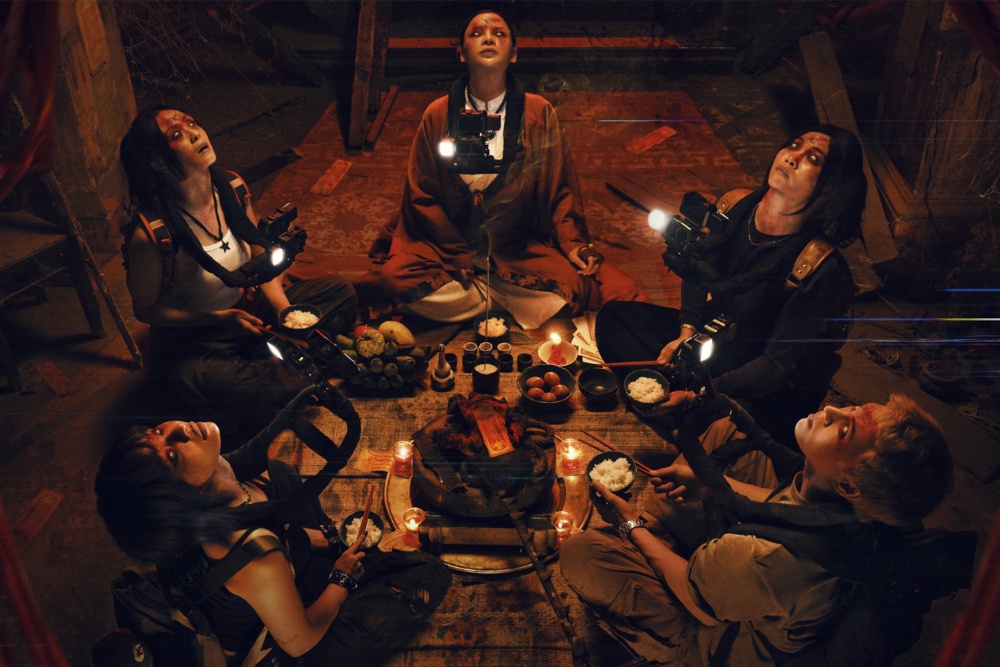
Ariana Grande is no longer attached to "American Horror Story" Season 13. Variety reported on 10 July 2026 that the singer and actor has withdrawn from the FX anthology because her "Eternal Sunshine" concert tour collides with the show's production window. The decision was framed by the production as a scheduling casualty, not a creative one.
The exit crystallises a structural shift inside the prestige-television economy: when a global touring artist earns more from arena nights than from a multi-episode arc, the calendar bends to the tour. "American Horror Story," once the anchor project that helped FX build a brand around Ryan Murphy's name, has become the flexible element.
A schedule, not a story
Season 13 of "American Horror Story" has been in development at FX under Ryan Murphy's overall deal with the network. Variety's 10 July report is the first official confirmation that Grande will not appear, and it names the "Eternal Sunshine" tour as the binding constraint. The production window for a typical Murphy series stretches across months of writers-room, principal photography, and post; a tour of the scale Grande is staging leaves the two projects in direct collision.
For Murphy's production company, the math is straightforward. A delayed season of an anthology costs the studio money; a missed tour date costs the artist more, in some cases by an order of magnitude. Tour revenue is also largely non-recoverable — a postponed arena night is not always a rescheduled one, and ticketholders who request refunds become a write-down. The studio, by contrast, can absorb a recasting in a way a promoter cannot. The asymmetry is now reflected in whose datebook wins.
What this says about prestige TV in 2026
The pattern is broader than Grande. Series built around single-name artists have, for several seasons, negotiated around reality competition, fragrance launches, and stadium tours. A pop star's promotional cycle is now treated as immovable infrastructure, and television — the older medium, the one with more flexible calendars — adjusts. The interesting question is what gets produced in the gap.
Recasting an anthology like "American Horror Story" is comparatively cheap. The show has cycled through large ensembles since its 2011 debut, and its format presumes new faces each season. The risk is reputational rather than logistical: the marketing image, the festival première slate, and any ancillary rights already negotiated around Grande's involvement all need to be redrawn. That is where the budget for this exit actually lands.
The bigger picture
There is a counter-read worth taking seriously. Grand退出 may also reflect the post-pandemic norm in which artists and their labels price tour revenue as the primary income stream and treat screen work as the promotional supplement, not the other way around. Live performance is where catalogue value is converted into cash; television is where catalogue value is built. The pull on any given season is whichever window pays the bills.
Streaming economics reinforce the same pressure from the demand side. A prestige FX season is now packaged into a Hulu bundle whose subscriber economics are calculated in churn, not in opening-night ratings. The marginal revenue Grande would have added to a single season of "American Horror Story" is small relative to a weekend of arena nights. The tour will underwrite the next album cycle; the season will underwrite the next prestige credit.
What remains uncertain
The Variety report identifies the cause of the exit as scheduling. It does not name a replacement cast member, a revised production timeline, or a release window for Season 13. It is also silent on whether Grande's exit triggers any contractual consequence with FX or with Murphy's 20th Television–based production banner. Until the production confirms a new lead, the season's shape and release cadence remain open questions. The next data point to watch is whether FX announces a replacement around its summer press cycle, or whether Season 13 slips into 2027 while the "Eternal Sunshine" tour plays out.
This article frames Grande's exit as a structural data point about where the revenue now sits in the talent economy, rather than as a piece of celebrity gossip — a different emphasis than the wire lede.
Sources
- Variety, "Ariana Grande Drops Out of 'American Horror Story' Season 13 Amid Concert Tour," 10 July 2026.