Carney lands in Riyadh with a 26-year first, and a Canadian bet on the Gulf
Mark Carney's first visit to the kingdom by a Canadian prime minister since 2000 produced fresh defence, investment and AI agreements — part of a deliberate diversification away from Washington.
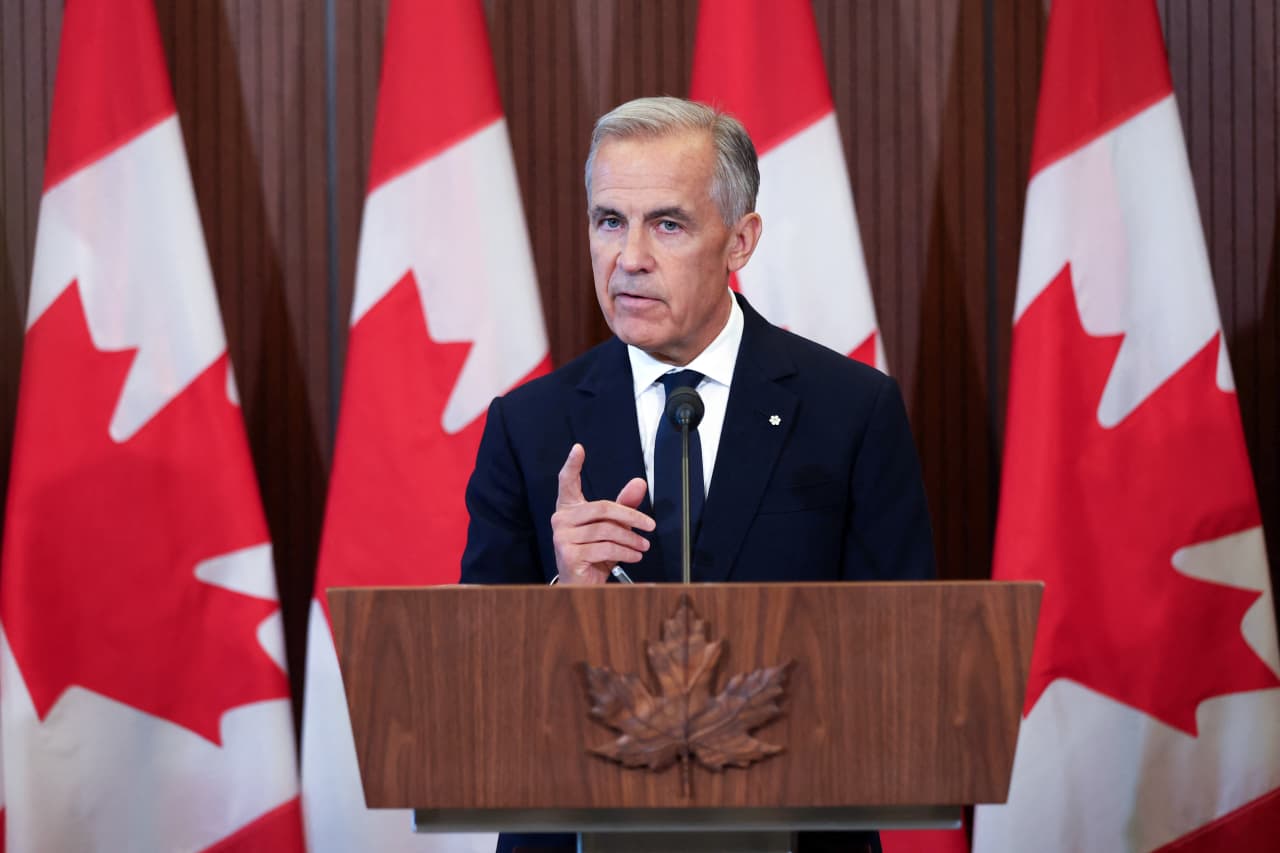
Riyadh rolled out the protocol for a head of government on 10 July 2026 — flags, escorts, the full ceremonial apparatus — for a visitor Ottawa had not sent in a quarter-century. Prime Minister Mark Carney touched down in Saudi Arabia on Friday, becoming the first Canadian prime minister to make a bilateral visit to the kingdom since 2000, and walked into a freshly inked set of agreements covering defence, investment and artificial intelligence.
The visit closes a diplomatic gap that had widened through the post-2018 Khashoggi chill and the renewed chill of the early 2020s, and it does so with substance behind the handshakes. According to reporting carried by Middle East Eye on 10 July 2026, the package spans defence cooperation, investment frameworks, and AI partnership — the kind of three-pillar architecture Gulf capitals now expect from Western visitors who want to be taken seriously.
What's actually on the table
Carney's Riyadh programme mirrors the trip he made to Doha in January: economic diversification out of a single market, with political cover provided by the Gulf's own positioning as a mediator in multiple crises. The deal stack the two governments announced runs across three tracks. The defence track formalises procurement and joint exercises in ways the Canadian side has been reluctant to specify in advance; the investment track covers portfolio flows between Canadian institutional capital and Saudi sovereign vehicles; and the AI track, the most eyebrow-raising of the three, gives Canadian researchers and firms a window into a compute base that Gulf money has been building out at speed.
The economic asymmetry is plain. Saudi Arabia is the larger buyer; Canada is the supplier trying not to look desperate. Carney's political problem heading into the trip was that any photo of him in Riyadh would be read through the kingdom's human-rights file, and the government has accordingly front-loaded the technical content to crowd out the photo. Middle East Eye's 10 July dispatch underlines that the visit's headline purpose is diversification — curbing dependency on the United States — not a realignment of values. The framing matters because it concedes, in plain language, what Ottawa has been signalling for two years: the assumption that Washington will always be the first call is no longer safe to make.
The 26-year clock, and what it was waiting for
Twenty-six years is a long absence between allies that share an embassy district in Riyadh's diplomatic quarter. The last Canadian prime ministerial visit, in 2000, was Jean Chrétien's — a different Saudi Arabia, a different Canada, and a different global trading system, when Saudi crude still priced itself in dollars without anyone having to say so. The intervening quarter-century absorbed the post-9/11 Western partnership with Riyadh, the energy shocks of 2008 and 2014, the Mohammed bin Salman era, the Khashoggi affair and its sanctions, the pandemic-era oil crash, and the early-2020s detente under which Canada's exports of wheat and finished vehicles kept flowing even when ministers did not.
Polymarket's 10 July 2026 market dispatch — tracking the visit as a tradable event — summarised the trip's stated focus as tighter energy and mining ties, which is the most economically legible reading of a broader political signal. Two things have shifted to make Riyadh worth the plane again. First, the kingdom's appetite for non-US defence and AI suppliers is at a multi-year high, and Ottawa has both. Second, the Canadian government's own incentive structure has changed: a prime minister with an economy exposed to a single market has political permission to court the second-largest source of foreign capital in the Gulf, especially one that buys Canadian wheat, arms and engineering services at scale.
Diversification, with limits
The diversification frame is real, but it runs into a constraint the Carney government has been careful not to dwell on in public. Canada is, simultaneously, a NATO member, a Five Eyes intelligence partner, a USMCA party, and the customer of a defence industrial base whose most advanced platforms are either American or American-licensed. Any move that visibly sidelines Washington will run into quiet pushback from both Canadian security institutions and the US embassy in Ottawa. The Riyadh visit's pre-emptive answer is to brand the deals as additive — more trade, more investment, more compute — rather than substitutive, framed as hedging rather than replacement.
There is also the question of what Saudi Arabia gets from the visit beyond the optics. Hosting the first Canadian prime minister in 26 years is a domestic signal for MBS as well: a Western leader under fiscal and political pressure has chosen to come to Riyadh, on Riyadh's terms, with a delegation heavy on business leaders. The kingdom does not need to say anything about human rights for that picture to do work. Carney, for his part, has a near-term incentive to deliver a deal-heavy visit because the Canadian economic calendar through the back half of 2026 is unforgiving, and Gulf capital is one of the few pools big enough to matter at the margin.
What to watch next
Three dates will tell whether the Riyadh trip is the start of a corridor or a one-off photo opportunity. The first is the follow-through on the AI track: whether Canadian firms land named partnerships at NEOM or HUMAIN within ninety days. The second is whether a Saudi sovereign vehicle announces a Canadian asset allocation in the same window — a Public Investment Fund commitment to a Canadian pension co-investment would be the cleanest signal. The third is the next ministerial visit in either direction before the end of 2026 — visits stack, and a follow-on trip is the cheapest possible proof that the relationship has legs.
For now, the substance on paper is consistent with the framing: a Canadian government reducing its single-customer exposure, and a Gulf capital exporting its diversification. The 26-year gap is the headline, but it is the AI agreement — the slowest of the three tracks to mature and the hardest to unwind — that will define whether this visit mattered.
This piece leans on a single reporting day — 10 July 2026 — and the limitation matters: the published text of each agreement has not yet been released in full, so the characterisation here rests on what Carney's office and Middle East Eye have disclosed, plus Polymarket's market-side confirmation of the visit's focus on energy and mining. Where the dispatches did not specify procurement values or AI workload allocation, this article declined to estimate them.
Wire provenance
This editorial synthesis draws on the following public wire/social posts:
- https://x.com/polymarket/status/2075653287009742848