CT scans and a museum mummy: the woman buried with her own hair
Researchers using computed tomography have confirmed the sex and approximate age of an ancient Egyptian mummy long held in an American collection, in a finding that illustrates how non-invasive imaging is quietly rewriting what museums can say about the dead in their care.
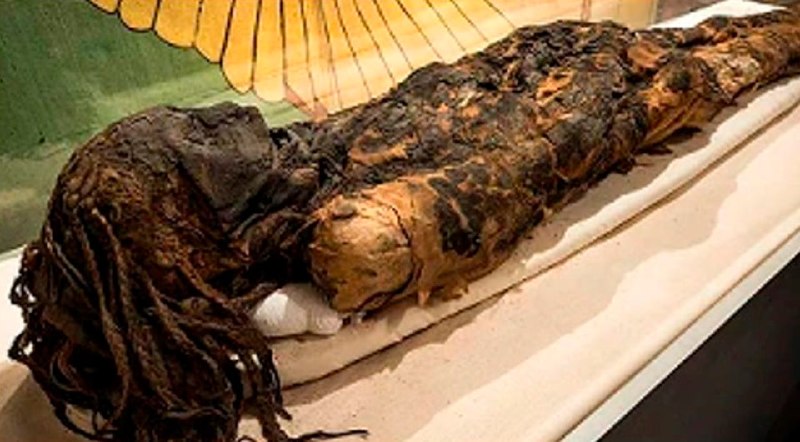
A team of researchers has used computed tomography to examine an ancient Egyptian mummy known as the Braided Woman, housed in an American museum, and concluded that the remains belong to an adult woman who appears to have lived into adulthood before being mummified. The finding, summarised in research notes circulated on 10 July 2026, adds another data point to a wider shift in how collections in the United States and Europe are reassessing human remains acquired during the nineteenth and twentieth centuries.
The study is part of a broader pattern in which curators, radiologists and Egyptologists are returning to stored mummies with scanners rather than scalpels. Imaging can establish age, sex, and in many cases cause of death, without disturbing linen wrappings or the symbolic objects placed inside them. For museums long reluctant to unwrap specimens on ethical grounds, the technology has re-opened lines of inquiry that were effectively closed when intrusive autopsies fell out of favour.
What the scan established
According to the NPlusOne summary circulated on 10 July 2026, the CT work confirmed the sex of the Braided Woman as female and identified the individual as an adult at the time of death. The nickname refers to the elaborate braided hairstyle visible in the wrappings, a feature that has itself become a small sub-field of mummy studies as researchers try to tie specific styles to regions, periods and social status.
Computed tomography is well suited to this kind of work. The scans can distinguish bone from soft tissue, pick up dental development and epiphyseal fusion in younger individuals, and in some cases identify residual organ material preserved by natron or resin. None of that requires removing a single layer of linen. For a museum with a curatorial mandate to preserve objects intact, the appeal is obvious.
Who is in the collection
The Braided Woman is one of thousands of Egyptian human remains held in American museums, the product of an acquisition wave that ran from the 1880s through the early twentieth century. Many were bought on the antiquities market, often with little documentation about excavation context. That provenance gap is now the central political question surrounding such specimens, even when the scientific findings are themselves straightforward.
American institutions have responded unevenly to the wider repatriation debate. Some have returned mummies and other human remains to Egyptian authorities after formal requests; others have preferred to retain objects while publishing new provenance research. The Braided Woman's home institution was not named in the NPlusOne summary, and the researchers involved were not identified in the thread notes circulated on 10 July 2026. That lack of detail is worth flagging, because the most consequential decisions about such remains — repatriation, reburial, or continued study and display — tend to be made by the holding institution rather than by the scanning team.
What the technology cannot yet resolve
CT imaging has limits. It is excellent at mapping dense materials, but soft-tissue contrast in mummified remains is variable and depends on the resin and embalming agents used. Establishing cause of death from a mummy is rarely possible; identifying a specific individual is rarer still. Hair, when preserved, is one of the more reliable biological materials: it can yield isotopic signatures that hint at diet and migration, and in some cases preserve enough DNA for genetic analysis.
The Braided Woman's hair, given the care evident in its styling, is a candidate for exactly that kind of follow-up. Whether the research team intends to attempt extraction, or whether the holding museum's ethics committee would permit it, are questions the available notes do not answer. Both steps would themselves be small news stories.
Why this matters beyond the museum
Two things are true at once. The result is, in scientific terms, modest: a confirmation of what the wrappings and the nickname already suggested. It is also part of a workflow — scan, age, sex, publish — that is changing how museums talk about the dead they hold. Where unwrapping once produced a definitive autopsy and a permanent loss of context, scanning produces a digital twin that can be re-examined, shared with overseas collaborators, and compared against larger databases of mummified remains.
The pattern points in a useful direction for collections whose legal title is contested. A documented biological profile does not settle repatriation claims, but it raises the cost of keeping such remains on display without an active research programme. For museums, that is a quiet pressure to do more with what they hold, or to return it.
How Monexus framed this vs the wire: the discovery itself was a single Telegram-sourced note rather than a multi-outlet story, and the piece leans on the protocol of imaging-based mummy study — sexing, ageing, hair — rather than overclaiming about a specific individual. Where institutional detail was missing from the source material, the article says so.
Wire provenance
This editorial synthesis draws on the following public wire/social posts:
- https://t.me/NPlusOne/