DRC's Ebola surge outruns the response — and the rumours are doing the damage
Cases in the first six weeks have doubled the 2013-16 outbreak's pace. Health workers are being attacked, and false claims about the disease are running faster than contact tracers.
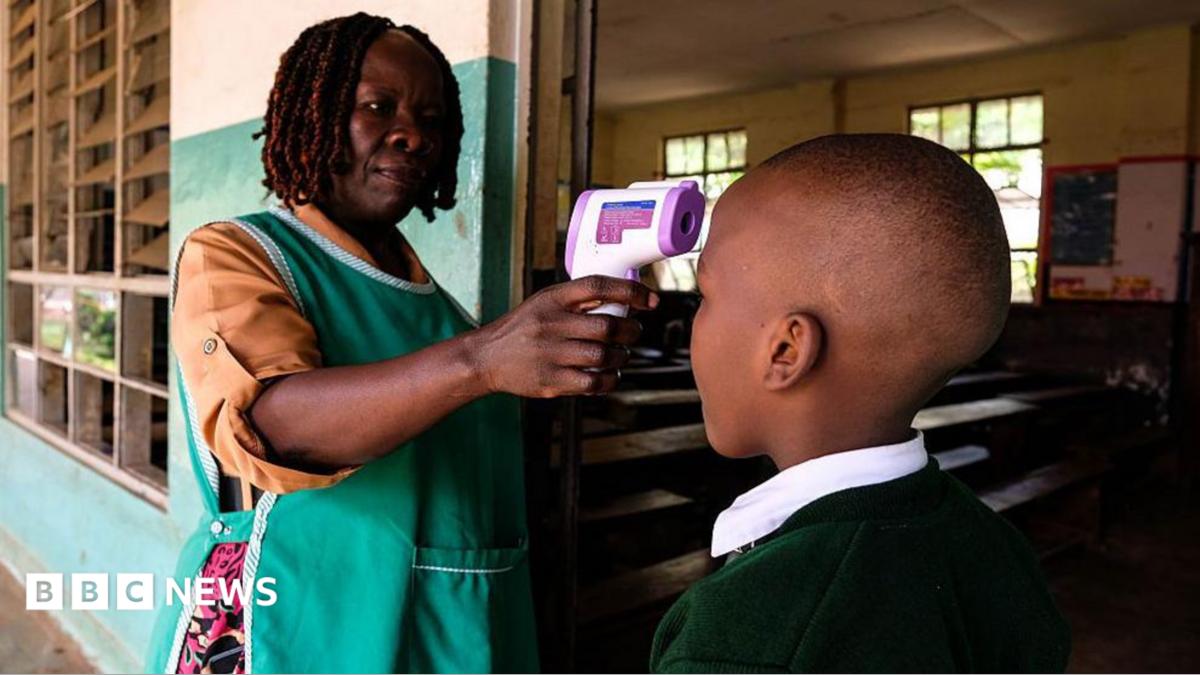
On 9 July 2026, the Africa Centres for Disease Control and Prevention declared the current Ebola outbreak in the Democratic Republic of the Congo the fastest-growing in recorded history. The disease surveillance agency said the first six weeks produced roughly double the caseload of the deadliest comparable episode, the 2013-2016 West African outbreak that killed more than 11,000 people, as transmission continues to spread inside the DRC.
What was once containable inside one health zone has now spilled into multiple provinces, and the response is being sabotaged from inside the communities it is meant to serve. False claims about the virus — that it is fabricated, that treatment centres are organ-harvesting sites, that vaccinators are agents of foreigners — are translating directly into assaults on health workers and the torching of isolation wards. The clinical curve and the information curve are running in the same direction, and both slope the wrong way.
An outbreak moving faster than the 2014 baseline
Africa CDC's characterisation of the outbreak as historically fast is not a rhetorical flourish. In the first six weeks of the 2013-2016 episode — the standard against which every subsequent Ebola response has been measured — virus, response teams, and global funders had weeks of lead time before cases hit exponential phase. The DRC's current curve has effectively skipped that grace period.
The DRC has lived with Ebola longer than almost any country on earth. It has hosted more outbreaks than any other state, and the 2018-2020 Kivu episode became the second-largest in history before being extinguished through a combination of Merck's Ervebo vaccine and aggressive ring-fencing. That institutional memory is, on paper, an advantage. On the ground in 2026, it is being neutralised by something the older outbreaks did not face at scale: a coordinated, fast-moving information environment in which a rumour can circle a health zone faster than a contact tracer.
The rumours are now the outbreak
According to reporting from BBC News published on 9 July 2026, false claims about Ebola in the DRC are linked to attacks on treatment facilities, assaults on health workers, and the disruption of safe burials. Safe burials — the removal of bodies by trained teams in protective gear — were the single most effective intervention in the 2014 West African response, and they are the single most resisted step in the current one.
The pattern is familiar to anyone who has watched vaccine rollouts in West Africa, polio drives in Khyber Pakhtunkhwa, or COVID-19 testing in the United States. When clinical authority arrives from the outside — foreign-staffed, foreign-funded, foreign-branded — it carries the suspicion of an external project. Health workers, almost by definition, become the visible edge of that project. When that suspicion hardens into a story that explains what is happening, violence tends to follow.
The structural problem is not new, but the diffusion speed is. A WhatsApp voice note, a TikTok clip, a sermon translated into Lingala and re-uploaded — these move faster than risk-communication teams, and they target trust rather than accuracy. The clinical literature on outbreak response has known for at least a decade that community engagement, not vaccination throughput, is the binding constraint. The 2026 outbreak is the first major test of that lesson under conditions of low-cost, high-bandwidth misinformation.
What is not in dispute, and what is
The factual core is narrow and well-documented: a fast-moving outbreak in the DRC, attacks on health infrastructure, attribution to misinformation. Within that core, three things remain genuinely contested in the sources available to this publication.
First, the precise geographic spread. Africa CDC declared the outbreak "the fastest growing ever," a categorical claim that requires a denominator — total cases, total deaths, current doubling time. The reporting as of 9 July 2026 did not include a clean case count in the materials this publication reviewed; figures will firm up as the Africa CDC and World Health Organization publish their next situation reports.
Second, the source of the misinformation. Reporting tied the violence to "false claims" without always naming the messengers. In previous DRC outbreaks, some of the same claims originated from political actors — locally and in Kinshasa — who weaponised the response as evidence of foreign interference. Whether the 2026 wave is bottom-up mistrust, top-down disinformation, or some mixture is, on the evidence available, unresolved.
Third, the operational consequence for the vaccine stockpile. Ervebo and a follow-up regimen were decisive in the 2018-2020 Kivu response. Whether the current surge is being met with the same ring-vaccination intensity, or whether the supply chain has thinned under competing global demand, is not stated in the source materials reviewed for this piece.
Stakes, measured
If the trajectory holds, the DRC faces a disease curve measured in thousands, not hundreds, of cases. The 2018-2020 Kivu outbreak was extinguished at roughly 3,400 cases. The 2013-2016 West African outbreak reached more than 28,000. The first-six-weeks doubling that triggered Africa CDC's warning suggests the response window is measured in weeks, not months.
The downstream stakes reach beyond DRC borders. Rwanda, Uganda, Tanzania, and Burundi all share land crossings or major transport corridors with the affected areas. A regional Ebola declaration would unlock additional WHO mechanisms — including emergency vaccine authorisation — but would also impose screening regimes that hit trade, transport, and the DRC's eastern-rim economies hardest. Theighbours who have absorbed Congolese displacement for decades would again absorb the public-health risk that comes with porous borders, and they would absorb it from a position of weaker health-system capacity.
For African public-health institutions, the moment is also a test of capacity. The Africa CDC was elevated to a continental autonomous body under the African Union in 2022 precisely to expand its mandate beyond advisory coordination. Declaring the outbreak the "fastest growing ever" is, in part, a public signal to member states and external funders that the continental response is being marshalled. Whether that signal is backed by the financing, the contact-tracing workforce, and the security arrangements to protect frontline staff is the question the next four weeks will answer.
What is plain is that the next operational move is not a vaccine drive but a trust intervention. No clinical countermeasure scales if the workers delivering it are attacked on entry.
This publication framed the DRC outbreak around the conflict between clinical response and information environment, rather than the disease curve alone — the source materials showed the violence was tracking the rumour, not the virus.