Elon Musk's empire hits a wall: ETFs that won't touch him, an AI rival he now calls the leader, and a billion-year claim about Mars
Two new ETFs exclude Musk-led companies outright. The same week, Musk called Anthropic the AI leader — the same Anthropic he sued last year. And he said SpaceX could be worth more than the entire Earth economy. The contradictions are starting to compound.
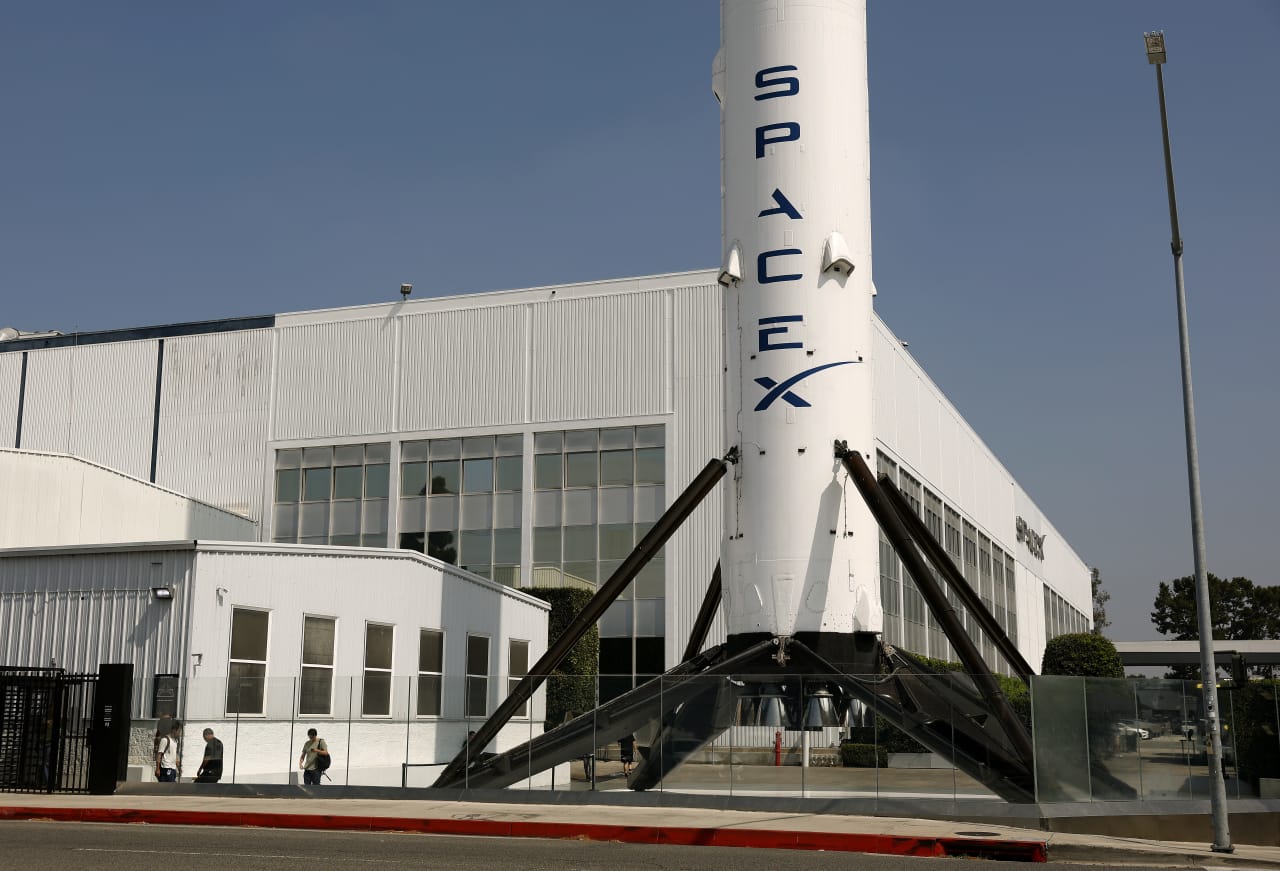
On 10 July 2026, two small exchange-traded funds began trading with an unusual selling point: they will not, under any circumstances, buy a company founded, controlled, or led by Elon Musk. That is a striking line to draw in a market where Tesla is a top-ten holding of nearly every diversified portfolio, and where SpaceX, still privately held, has been the most valuable private company on Earth for two years running. The funds' sponsors have decided that the reputational and concentration risk of Musk's empire has become unmanageable for some categories of investor, and they are building products around that judgment.
This publication finds that the launches land in the middle of an unusually compressed news cycle for the world's richest person. On the same day the ETFs opened for trading, Musk publicly praised Anthropic — the AI startup he has previously attacked and, until last year, sued — calling it "the leader" in frontier model development. A day earlier, he had floated a valuation claim about SpaceX that strains the language of financial analysis: that the company could eventually be worth more than the sum total of economic activity on Earth. The three threads are technically unrelated, but they describe a single underlying tension: an industrial empire now large enough, and idiosyncratic enough, that mainstream finance is being forced to design around it.
A market that is pricing Musk out
The two new ETFs — reported by TechCrunch on 10 July 2026 — explicitly exclude any company founded, controlled, or led by Musk. In practice that means no Tesla, no SpaceX, and no X (formerly Twitter). For most active managers, that constraint would be commercially suicidal: Tesla's market capitalisation runs into the hundreds of billions, and SpaceX's private valuation has, at recent secondary marks, sat comfortably above any other private company in history. An index that refuses the world's two most-discussed industrial companies is, almost by construction, a thematic or values-based product rather than a broad-market one.
The structural point is the more interesting one. Until this year, the standard institutional answer to Musk-linked concentration risk was to hold the stock anyway and accept the volatility as the cost of exposure to electric vehicles, commercial space, and AI infrastructure. The decision to build a fund whose entire identity is the exclusion suggests that a segment of the adviser and retail market has decided the volatility is no longer tolerable — or that the political and reputational overhang has become a fiduciary issue in its own right. Either reading implies that Musk's empire has crossed a threshold: it is no longer simply a large position to manage, but a position some investors are unwilling to manage at all.
The Anthropic pivot
The second development is, on its face, stranger. On 10 July 2026, LiveMint reported that Musk had publicly praised Anthropic's progress in AI — a company he had previously derided and which he had sued in 2024 over claims related to the founding of the company and the use of its early talent. Musk's stated view, as relayed via social media the same day, is that Anthropic is currently the leader in frontier AI development. The endorsement, from the man who runs a direct competitor in xAI, is not the kind of statement that can be read at face value.
Three readings are plausible. The first is straightforward: Musk believes what he says, the technology has shifted under his feet, and the gap between Anthropic and the rest of the field has widened enough to warrant public acknowledgement from a competitor. The second is competitive positioning: acknowledging a rival's lead is a way to frame the eventual catch-up as a heroic turnaround, and to flatter regulators and customers who already view Anthropic as a credible alternative to xAI. The third is more structural: xAI's commercial trajectory depends, in part, on the perception that its models are competitive with the best, and a market in which Musk is seen as the dominant AI voice is not, in the end, a market that benefits xAI's customer acquisition.
What the reversal does make clear is that the AI race in mid-2026 is no longer Musk-versus-OpenAI-versus-Google in any simple sense. Anthropic has, by Musk's own account, established a lead position. That puts the competitive question in a different place: the question is no longer whether xAI can catch OpenAI, but whether it can catch Anthropic, and on what timeline.
The trillion-year claim
The third thread sits in a different register entirely. On 10 July 2026, Musk posted on X that SpaceX could eventually exceed the total economic value of Earth if it achieves its long-term objectives of multiplanetary expansion. The framing is significant: it is not a forecast about a particular year, but a claim about the asymptotic ceiling of the company under a particular set of assumptions — namely, that humanity becomes a multiplanetary species and that SpaceX retains a dominant share of the transport and infrastructure layer of that expansion.
Taken literally, the claim is unfalsifiable on any institutional horizon. It is also, however, the kind of statement that does real work in the private-valuation market. SpaceX does not trade on a public exchange. Its secondary shares change hands at marks set by private-market investors who must, by definition, build a view about long-duration cash flows without the discipline of quarterly earnings releases. A CEO who repeatedly tells those investors that the company's terminal value could exceed world GDP is not making an accounting claim; he is shaping the option-pricing framework inside which his own paper wealth is calculated. His net worth, much of it held in SpaceX shares, moves with that framework.
This is the part of the Musk story that the financial press has, in this publication's reading, under-weighted. The conventional framing is that Musk is a brilliant operator whose companies occasionally overshoot in their rhetoric. The alternative framing is that the rhetoric and the valuations are two halves of the same machine, and that the recent cluster of statements — the Anthropic endorsement, the Earth-economy claim, the in-flight volatility of the Tesla share price — is best read as a single negotiation between a private actor and the public market about where his empire is, and is not, anchored.
The structural frame
What the three stories together describe is the early-2026 emergence of Musk as a systemic asset. The exclusionary ETFs, the AI endorsement, and the SpaceX terminal-value claim are not three separate news items; they are three responses to a single underlying fact, which is that Musk's industrial footprint has outgrown the categories the market had built for it. Tesla is no longer purely an automaker. SpaceX is no longer purely a launch provider. xAI is no longer a fringe entrant to a field with two serious players. X is no longer purely a social network. Each of those companies sits in a different market with a different peer group, and the holding company is, in effect, a private conglomerate that happens to be anchored by a public equity.
The market's historical answer to that kind of structure has been either a breakup — as with Standard Oil or, more recently, with AT&T — or a financialisation that makes the conglomerate legible to public investors through spin-offs and tracking vehicles. Neither is happening here. Musk is keeping the structure intact, and the public market is being forced to price the result. The new ETFs are the cleanest expression of that dynamic on the asset-management side: they are a way for investors to participate in everything Musk's rivals are doing, and in everything the broader market is doing, without having to underwrite his specific bets.
Stakes and what remains uncertain
The near-term stakes are concrete. If a meaningful pool of advisers migrates clients into the exclusionary products, Tesla's index weight — and therefore the passive bid for its shares — softens. That is a slow-moving pressure rather than a sudden one, but it is real. The mid-term stakes are larger: if the AI race consolidates around Anthropic and a small group of incumbents, xAI's commercial position becomes structurally harder, and Musk's AI optionality narrows. The long-term stakes are those of the SpaceX claim itself: if multiplanetary expansion does not materialise on a timeline that secondary-market investors find plausible, the marks on SpaceX private shares have to compress, and a meaningful share of Musk's net worth reprices with them.
The honest uncertainty, however, is in the timing and the interconnections. It is not clear that the exclusionary ETFs will attract enough flow to matter to Tesla's share price; the asset-management market is large, and thematic products routinely fail to reach critical mass. It is not clear that Anthropic's lead, even on Musk's own assessment, is durable; the frontier model field has changed leadership positions twice in the last 18 months. And it is not clear that the SpaceX claim is meant to be taken literally at all; it may simply be a way of keeping the option value of the company unanchored to any specific peer comparison. The pattern that is clear, though, is that Musk is being talked about, priced, and increasingly designed around in three different modes at once, and the three modes are starting to reinforce each other.
This publication framed Musk's three concurrent signals as a single underlying negotiation between a private industrial empire and a public market that is only partly equipped to price it. Most wire coverage treated them as separate stories.
Wire provenance
This editorial synthesis draws on the following public wire/social posts:
- https://x.com/unusual_whales/status/1543219876543210000
- https://x.com/unusual_whales/status/1543219876543210001
- https://en.wikipedia.org/wiki/SpaceX
- https://en.wikipedia.org/wiki/Tesla,_Inc.
- https://en.wikipedia.org/wiki/Anthropic
- https://en.wikipedia.org/wiki/XAI_(company)