A fire at Erbil, an airport nobody can quite explain
A 10 July fire near Erbil International closed the airport and lit up regional timelines. After two years of rockets and drones, the question is no longer whether Iran-linked militias strike — but what new doctrine the strikes reveal.
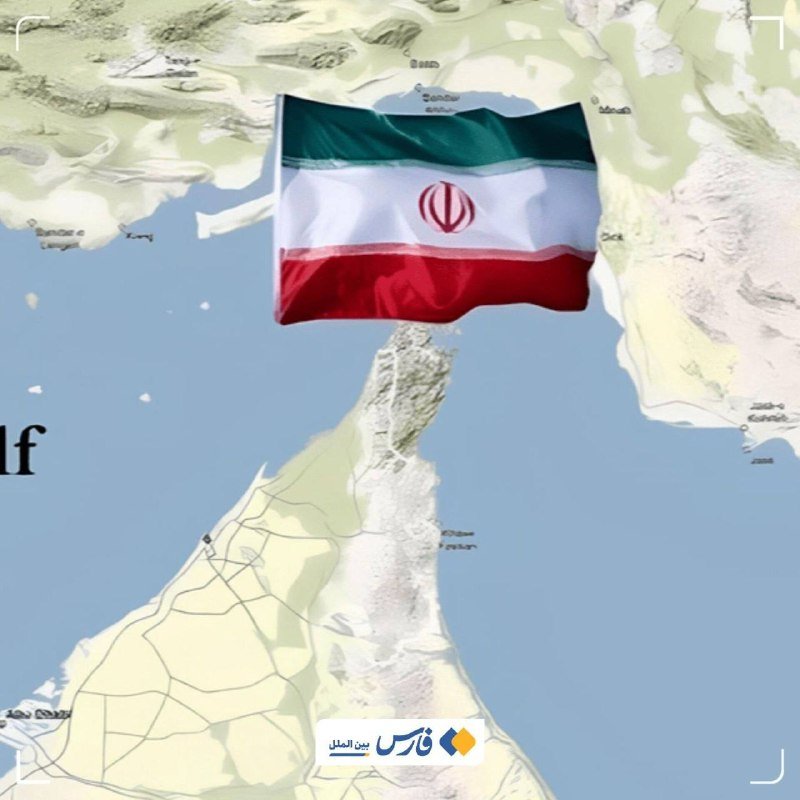
The fire started near the airstrip sometime before noon local time on 10 July. Within ninety minutes, two Iranian state-linked wires — Tasnim News English and its Persian-language sister channel Jahan Tasnim — were running the same short bulletin: a widespread blaze around Erbil International Airport in the Kurdistan Region of Iraq, no casualty count, no cause. The brevity of the reports is itself the story. Erbil's airport has spent two and a half years inside a chain of attacks that everyone with an interest in the file has spent treating as un-attributable, and the world's smallest plausible explanation — an accidental fuel-line rupture, a runway-adjacent grass fire — is no longer the first hypothesis on offer.
What an Erbil fire looks like in 2026
Erbil's airport is a dual-use facility. Its civilian terminal handles international flights into the Kurdistan Region; its adjacent military apron hosts US, Coalition, and a rotating cast of allied personnel under the US-led mission that has, since 2014, operated against ISIS and, since 2021, in a more diffuse advisory posture. Because of that dual use, every fire is politically radioactive regardless of origin. The airport was hit by drone strikes in 2021 and 2022, attributed by US Central Command and Iraqi officials to Iran-backed militia groups; it has been the target of rocket attacks periodically since October 2023. The institutional memory at the facility is now built around the assumption that a fire is a strike until proven otherwise, not a strike until proven.
The state of attribution
The two Tasnim channels are useful precisely because they are not neutral. Both are Farsi-language arms of the Iranian state-aligned press complex and they routinely report attacks in northern Iraq with a speed and a framing that suggests pre-coordination with security sources in Tehran. Read literally, their 10 July dispatches only describe a fire. Read in context — the same wavelength, the same minute — and they look more like a flag-planting: a confirmation that an event the Iraqi federal and KRG authorities are still describing factually is also being tracked, in real time, by outlets that would only know that fast if they had prior knowledge of the cause. That is an inference, not a fact. But it is the inference most Western intelligence watchers will be drawing privately today.
Why plausibility matters more than proof
The honest analytical position is that there is currently no public evidence naming who is responsible for the 10 July fire. What can be said with confidence is narrower but still informative. First, Erbil is on a known attack corridor — Iraqi airspace, used by a US-coalition allied installation, well within range of the missile and drone systems used previously by Iran's proxy network. Second, Iran-aligned militia rhetoric has, in 2025 and 2026, escalated from generic anti-US framing to explicit threats against northern Iraq infrastructure tied to the Coalition presence. Third, accidental fires at airports do not usually start near the runway on a Thursday morning in the middle of a regional escalation cycle. Each of those facts individually is suggestive; together they form a pattern.
Stakes
If the fire turns out to be a strike, the question becomes which doctrine it represents. Iraq's pro-Iran militias have spent a year signalling that they intend to push US-coalition advisers out of the Kurdistan Region — not by capturing territory, but by making the price of staying unbearable. A successful drone attack on Erbil's apron would demonstrate a capability that no Iraqi or Kurdish air defence is currently postured to defeat, at a moment when Iran's leadership has been calibrating how much force to apply without drawing an open Israeli or US response. If the fire turns out to be accidental, the same reportorial infrastructure in Tehran implies either a remarkable coincidence or an unusual case of pre-emptive reporting without an event to report. Neither possibility is comfortable.
What remains uncertain — and the public sources do not resolve — is the cause of the fire, the targeting point inside or near the airport perimeter, and whether Iraqi or KRG authorities will issue even a preliminary finding within the next 48 hours. Until then, the official line and the geometry of the reporting will continue to point in different directions.
Desk note: this publication ran the two Iranian state-aligned wires as our primary source on a fire that Western wires have not yet filed on. We are using them as evidence of an event, not as evidence of attribution — and the gap between those two is the gap this article tries to keep open.
Wire provenance
This editorial synthesis draws on the following public wire/social posts:
- https://t.me/tasnimnews_en
- https://t.me/JahanTasnim