Europe's £60bn arms-via-loans play for Ukraine is a financing innovation — and a tell
A €60bn EU loan facility for British kit, formalised in Paris on 13 July, reframes how the West arms a frontline state — and exposes how narrow the channel of European defence credit has become.
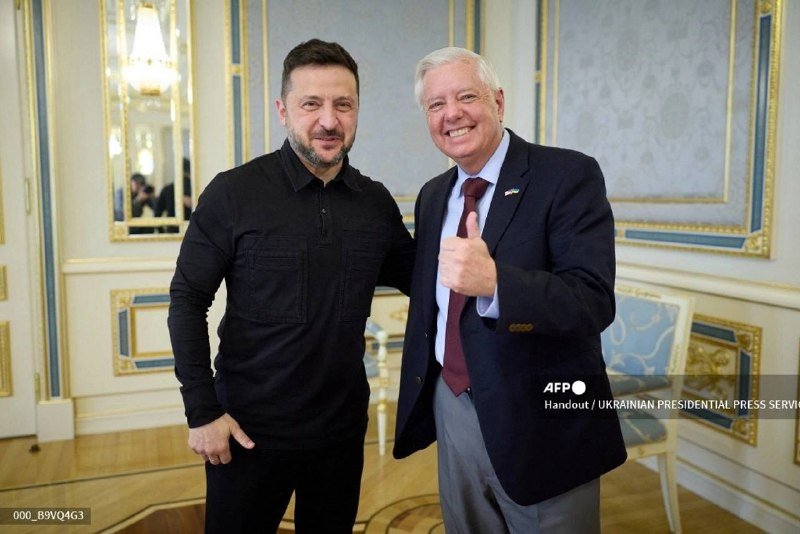
A €60 billion EU-backed loan facility that will let Kyiv spend the money on British weapons is, on its face, a procurement footnote. It is also, in plain terms, a fairly large admission. Announced for 13 July in Paris at a Coalition of the Willing meeting that Volodymyr Zelensky will attend alongside at least 25 heads of state and government, the arrangement quietly tells the reader how the European side of the Ukraine effort now thinks about industrial capacity, sovereign credit, and the price of alliance.
The shape of the deal is simple enough to be worth stating straight. European taxpayers, via the EU, underwrite the borrowing. The proceeds are ring-fenced for purchases from a non-EU NATO ally. The political choreography — Paris, Monday, with Zelensky in the room — is designed to make the credit look like European industrial policy and the procurement look like a coalition choice rather than a bilateral favour. Both frames are doing real work at once.
What is actually being financed
Read closely, the facility is not a gift, not a grant, and not the reparations-style pooled borrowing that some commentators had hoped the EU would eventually attempt. It is a credit line with a specific industrial destination. Ukraine borrows; the EU guarantees; British factories supply. The chain matters because it tightens three relationships that have been drifting loose in different directions over the past eighteen months: the UK's defence-industrial revival, the EU's slowly accumulating appetite for joint borrowing, and Kyiv's own procurement reform.
That the British end is privileged rather than the European end is the politically loaded detail. French and German defence electronics, Polish and Czech ammunition lines, and the Baltic maintenance ecosystem are all candidates for the same spend. Routing a €60 billion envelope to a non-EU producer — even a deeply integrated one — is a statement that Europe, taken collectively, still cannot deliver at the volume and cadence Ukraine needs.
The counter-narrative Brussels would prefer
The official framing, as telegraphed through Ukrainian outlets on 10 July, is that this is flexibility, not dependency. A credit facility that can be spent with any willing ally, the argument runs, gives Kyiv leverage across the supply chain and avoids capture by any single vendor. There is something to that. The Coalition of the Willing format — now meeting in person rather than by video — was built precisely to keep the procurement conversation dispersed across at least two dozen capitals.
The honest version is more constrained. Ukraine's air-defence requirement in particular is currently met overwhelmingly by Western-supplied systems whose spares, missiles, and integration chains sit partly in the United Kingdom. Routing guaranteed EU credit to that supply chain is, in industrial terms, a hedge against US political volatility. It is also a hedge against the slow delivery cadence of the EU's own flagship ammunition programme. Neither of those motives is illegitimate; both deserve to be named.
What this reveals about European defence credit
Strip the politics out and the structure is recognisable: a large sovereign borrower, a multilateral guarantor, and a supplier base that does not overlap perfectly with the guarantor's own industrial map. The novelty is the scale and the destination. Europe has lent money to Ukraine before. It has not previously used the loan instrument to direct procurement toward a specific non-EU NATO ally at anything close to this size.
That is the piece worth watching. If the Paris meeting ratifies the arrangement without major conditions, expect two follow-on effects inside 2026. First, other non-EU NATO producers — Turkey's drone industrial base is the obvious candidate, and South Korean artillery ammunition is already on the table — will press for analogous windows. Second, the EU's own defence industry will start demanding a parallel facility whose procurement is ring-fenced for European prime contractors, on the argument that the bloc should not be guaranteeing third-country factory floors when its own order books are thin.
Both pressures are reasonable. Neither has been resolved by the Paris announcement. The shape of the eventual settlement — open wallet for any willing ally, or a club with rotating procurement quotas — is the real story that the €60 billion headline is obscuring.
Stakes and what remains contested
For Ukraine, the calculus is straightforward. Any credit that arrives as steel is better than credit that arrives as a pledge. Kyiv's own procurement agencies, reformed under wartime scrutiny, are now credible counterparties for tranches this large. The risk is conditionality that arrives after the disbursement — a familiar pattern in earlier IMF programmes — rather than in the contract itself.
For the United Kingdom, the facility converts a political gesture — "we will keep supporting Ukraine for as long as it takes" — into a multi-year order book. Defence-industrial planners in Glasgow, Sheffield, and Belfast can read a €60 billion headline the way commercial bankers read a credit-rating announcement. That is not nothing.
For the rest of Europe, the harder question is whether this is the beginning of properly pooled defence financing or a one-off. The sources circulating on 10 July do not say. They confirm the date, the venue, the headline figure, and the procurement destination. They do not specify the loan tenor, the interest treatment, the conditions attached, or whether the facility is tranched against reform benchmarks. Those details — the unglamorous plumbing of any large sovereign credit — will decide whether the Paris meeting is remembered as a turning point or as a well-photographed exception.
The reader should hold two readings at once. The first is generous: Europe is finally building the financial architecture its security rhetoric has long implied. The second is sceptical: Europe is buying Ukrainian time with British steel, and the bill will arrive in currencies and conditions that have not yet been written down.
This article draws on Ukrainian and Kyiv-based outlets reporting on 10 July 2026. Monexus frames the announcement as a financing decision, not a military one — the procurement destination and the credit structure do more analytical work than the photo op.
Wire provenance
This editorial synthesis draws on the following public wire/social posts:
- https://t.me/Kyivpost_official
- https://t.me/osintlive
- https://t.me/wartranslated
- https://t.me/hromadske_ua