Fidan's framing: Ankara's diplomatic line on Israel, and what it leaves out
Turkey's foreign minister insists there is no reason for a frontal collision with Israel — and argues the Israeli prime minister is a burden on his own country. The restraint is real, but so is what it leaves unsaid.
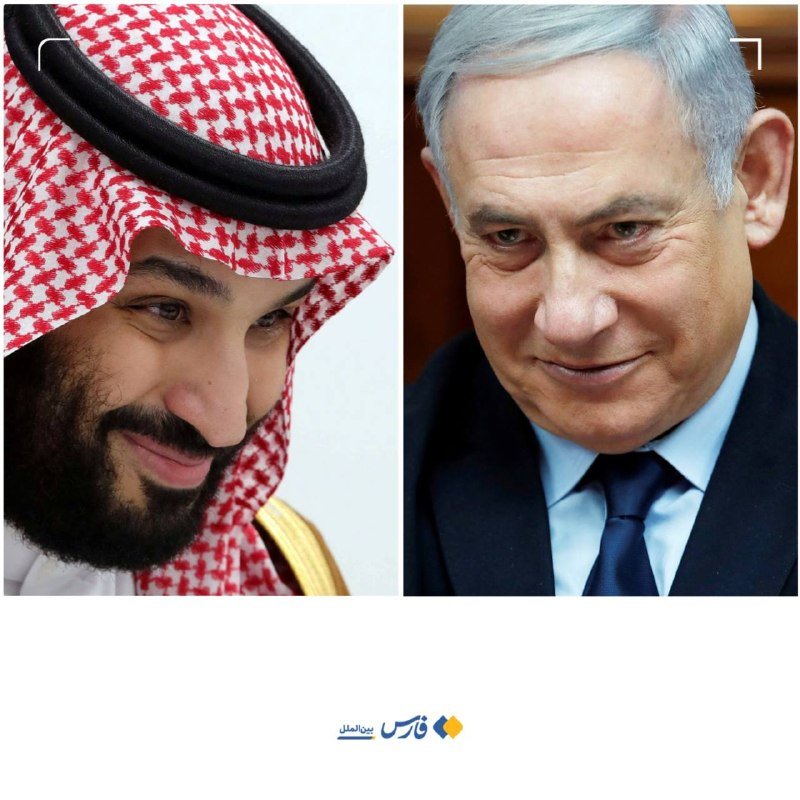
In a pair of public remarks on 10 July 2026, Turkish Foreign Minister Hakan Fidan drew a careful line: Ankara does not want a head-on collision with Israel, he said, and the government of Prime Minister Benjamin Netanyahu is not merely a Turkish problem but a burden on Israel itself and on the wider region. The phrasing — warm where it counts, sharp where it is meant to sting — is the closest thing to a doctrine Monexus has seen from Ankara this year.
The point of the remarks is not war or peace in any legal sense. It is framing. Turkey is signalling to its own public, to Arab capitals, and to Western chancelleries that it intends to keep pressure on the Israeli government while leaving the diplomatic door open to Israeli society and to future Israeli governments. That distinction — between Netanyahu's policies and the Israeli state — is the load-bearing wall of the speech.
What Fidan actually said
On 10 July 2026, in remarks circulated by Open Source Intel, Fidan set out the core proposition in unusually direct terms. "There is no reason for a frontal confrontation between Turkey and Israel," he said, in comments relayed across monitored channels at 11:36 UTC and again at 12:07 UTC. He added that "there are still many good people in Israel with common sense and strategic thinking" — language clearly meant to draw a line between the current leadership and the country's longer institutional tradition.
The second half of the message was sharper. "The policies of Netanyahu's government are not only a problem for us," Fidan said. "His policies and his government are a burden for Israel, a burden for the region." That formulation is designed to do two things at once: it tells Israeli listeners that Ankara reads the prime minister as an outlier, and it tells regional listeners that Turkey reserves the right to keep criticising that government in louder terms than it would use for Israel as a whole.
The counter-narrative to the counter-narrative
Read one way, the remarks are a model of restraint — a NATO member with the region's second-largest military publicly taking a confrontation off the table. Read another way, they are a sophisticated permission slip. By separating "Israel" from "Netanyahu's Israel," Fidan offers Israeli opposition figures and foreign-policy professionals a rhetorical off-ramp while reserving maximum pressure for the sitting government. That is not contradiction. It is a diplomatic instrument.
What the framing leaves out is at least as important as what it contains. Fidan's language does not address the structural questions — settlement expansion, the daily operating reality in Gaza, the legal architecture of the occupation — that drive most of the friction between Ankara and Jerusalem. By routing the dispute through the personality of the prime minister, the remarks make the conflict contingent on an election rather than on a policy framework. If Netanyahu falls, the diplomatic weather changes. If he survives, the same structural tensions reassert themselves under a softer headline.
The plain-language frame
The structural pattern here is familiar from other regional disputes: when two states with overlapping interests and deep public hostility cannot afford open war, each side searches for language that lets it keep pressure on without paying the cost of escalation. Turkey's economy, its NATO posture, and its energy exposure make a hot conflict with Israel strategically irrational. Its domestic politics, its leadership of the broader Sunni diplomatic space, and its principled opposition to the war in Gaza make a fully quiet relationship politically impossible. Fidan's language sits exactly in the gap.
What is unusual is the explicit pivot from "the Israeli government" to "Israel" inside the same set of remarks. That is not a slip; it is a posture. It treats the current administration as a temporary custodian of a state whose longer-term trajectory is presumed to be saner than its present leader. It is, in plain terms, an investment in a future Israeli government Ankara expects to negotiate with.
Stakes and what to watch next
The near-term stakes are diplomatic rather than military. Ankara is signalling to Washington, Berlin and Brussels that it intends to remain a serious interlocutor on Israel–Gaza questions without producing a rupture that would force NATO to choose. It is signalling to Arab and Muslim-majority capitals that it will continue to articulate the harshest regional critique of the sitting Israeli government. And it is signalling to Israeli politics that a different Israeli government would find a different Turkish posture waiting.
The risks are equally concrete. If a future Israeli government reads the door-open language as an invitation and is rebuffed in private channels, the public posture will harden. If a future Turkish government reads the personalisation of Netanyahu as a one-election bet and loses, the same frame will be harder to maintain. And if the underlying events on the ground in Gaza and the West Bank shift in either direction — escalation or ceasefire — the carefully separated categories of "Israel" and "Netanyahu's Israel" will be tested by events rather than by communiqués.
The honest summary is this: Fidan's words are neither warm nor cold. They are calibrated. What they reveal is that Ankara has decided the diplomatic contest with the current Israeli government is worth fighting in words, but not worth fighting in any other register. The space between those two judgements is where Middle Eastern diplomacy will live for the foreseeable future.
Desk note: The wire carries this as a personality-versus-policy story. Monexus reads it as a posture — the language of separation is itself the policy, and what it leaves out is where the next round of friction will arrive.
Wire provenance
This editorial synthesis draws on the following public wire/social posts:
- https://t.me/s/osintlive
- https://t.me/s/osintlive