France ends Morocco's run to reach third straight World Cup semifinal
Les Bleus brushed aside pre-match noise over South American officials to beat Morocco 2-0 on 9 July 2026, booking a third consecutive World Cup semifinal and validating the favourites' tag in plain, workmanlike fashion.
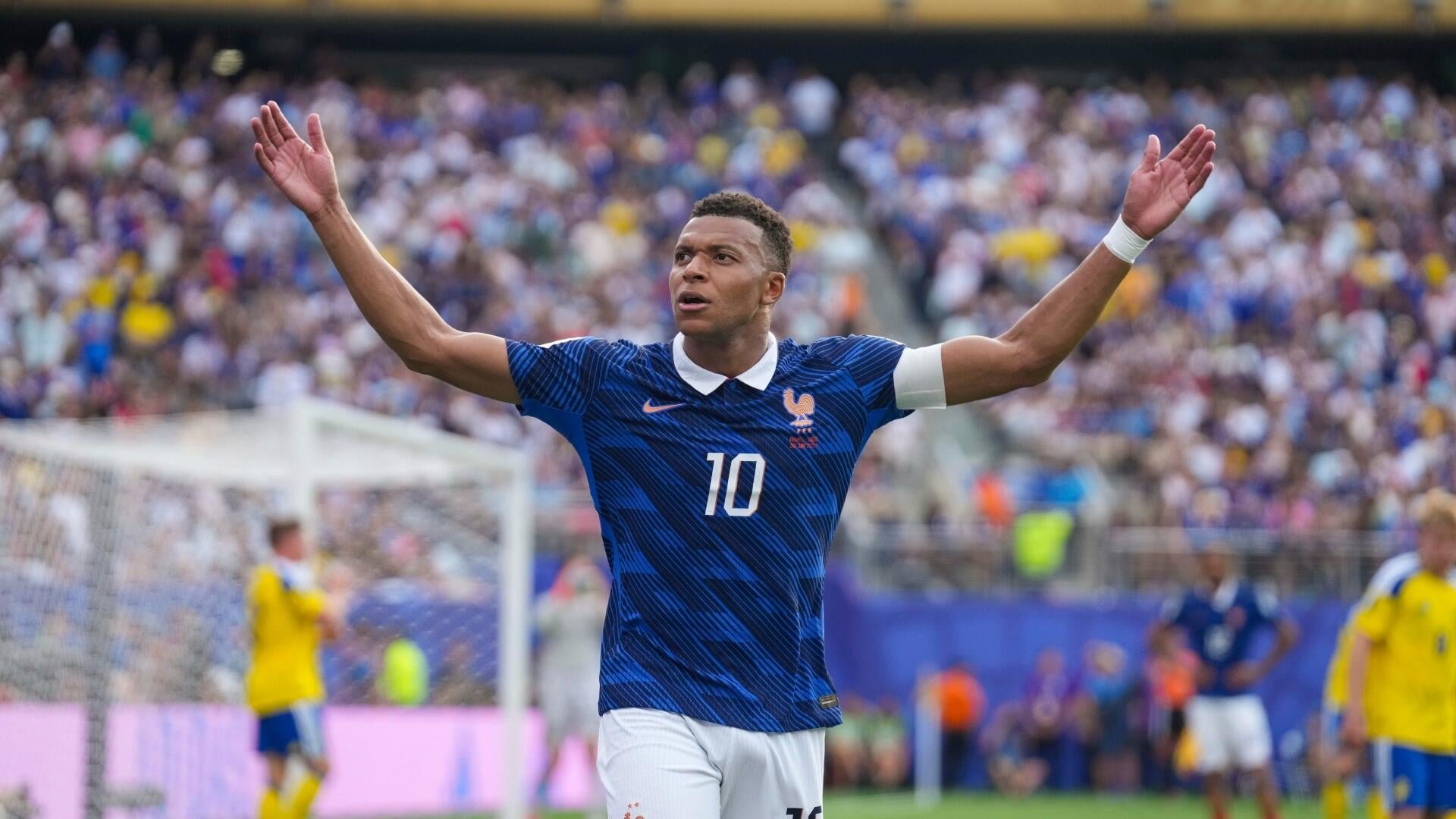
France advanced to the FIFA World Cup semifinals on 9 July 2026 with a 2-0 victory over Morocco in the quarterfinals, the result that bookmakers and prediction markets had priced as the most likely outcome of the tie. The win sends Les Bleus into the final four of a third consecutive World Cup, a run of consistency that places the reigning 2018 champions among the modern era's defining national-team programmes.
The contest was framed less by what happened on the pitch than by what happened off it in the 36 hours before kick-off. France head coach Didier Deschamps had been asked at his prematch press conference about the appointment of Argentinian officials for the fixture, an assignment that drew scrutiny in Morocco and across the African press given Argentina's rivalry with Morocco's group-stage opponents. Deschamps played the line down, telling reporters that France was "unfazed" by the choice of refereeing team. The framing of that exchange — officials from one continent adjudicating a match between teams from another — recurred on Moroccan broadcast channels throughout the day.
A prematch story that did not survive the match
Argentina's path through the bracket had brought it up against the Atlas Lions in the group stage, a fixture that still resonates in Casablanca and Rabat as a reference point whenever officiating crews are announced. The Football Federation had not publicly objected to the appointment before kick-off, but the topic dominated the prematch coverage cycle. Deschamps, speaking to reporters on 8 July 2026 UTC, declined to amplify the controversy. The French football federation's communications team took a similar line, focusing pre-match messaging on the squad's fitness and on the absence of any new injury concerns.
Polymarket's prediction market, which had tracked the match throughout the week, had France installed as a heavy favourite from the moment the bracket was set. The market's implied probability on the morning of 9 July 2026 reflected the same gap the bookmakers showed. That consensus held. France scored twice, kept a clean sheet, and the refereeing crew — to the visible relief of both dugouts — produced a quiet night. The result, in other words, did the talking.
The pattern beneath the result
There is a less obvious reading of the result that has nothing to do with officiating and everything to do with squad construction. France's run of three straight World Cup semifinals — Russia 2018, Qatar 2022, and now the 2026 tournament in North America — sits inside a wider pattern of European national teams converting youth-academy depth into tournament endurance. Spain reached the last four in 2010, 2012 (winning), and was a penalty shootout away from doing so again in 2022. Germany strung together deep runs across 2006, 2010, 2014, and 2018. France's version of this is structural rather than sentimental: a federation that has institutionalised the production of elite attacking talent, with Kylian Mbappé at the apex of a pyramid that includes a deep supporting cast of Champions League-level starters.
Morocco's run to the quarterfinal, by contrast, is the story of an African federation that broke a ceiling in Qatar and has now spent four years working out how to keep the door open. The Atlas Lions were the first African side to reach a World Cup semifinal in 2022. Their 2026 quarterfinal appearance, in front of a heavy North African diaspora crowd across the host cities, is the consolidation of that breakthrough rather than a regression from it.
What the market saw, what the wire saw
Prediction markets and sportsbooks often diverge from editorial coverage in useful ways. The Polymarket contract on the France–Morocco quarterfinal traded as a near-coin-flip only briefly during the group stage, when Morocco's form had the betting public reassessing. By kick-off it had settled back to a roughly two-thirds implied probability for France, in line with the closing lines at major European bookmakers. Editorial coverage, by contrast, leaned harder into the officiating storyline than the underlying probability gap would have suggested. That divergence — markets pricing the obvious, press chasing the narrative — is itself a story about how tournament football is reported at the sharp end of a multi-billion-dollar media cycle.
The result also narrows the field in a way that matters for the betting public and for FIFA's broadcast partners. With France through, the remaining quarterfinals determine the other semifinalist from the upper half of the bracket; the lower half is yet to be settled at the time of writing. A France semifinal, against whoever emerges, keeps the tournament's most valuable national-team brand alive in the final weekend — a non-trivial consideration for a federation whose commercial reach extends across kit sales, broadcast rights, and tournament sponsorship inventory.
Stakes and what remains uncertain
For Deschamps, the win extends a managerial tenure that began in 2012 and has now taken France to three straight semifinals. The next match, against an opponent still to be determined, will test whether this squad has the depth to convert another deep run into a final appearance. For Morocco, the loss ends a tournament in which the federation's project — built around Spanish-born and French-born players of Moroccan heritage, paired with a domestic league that has professionalised significantly since 2022 — produced another round-of-eight finish rather than a return to the last four. Coach Walid Regragui's contract status and the federation's appetite for continuity will be the next questions in Rabat.
The prematch officiating controversy, which felt like the story on Wednesday morning UTC, dissolved inside 90 minutes. What remains is the structural fact: France are two wins from a second World Cup in eight years, and the Atlas Lions are still the only African side to have reached a men's World Cup semifinal. Both of those sentences will still be true on 10 July 2026, regardless of how the rest of the bracket plays out.
Desk note: Monexus framed this result through the prediction-market lens and the structural pattern of French squad-building, rather than the officiating storyline that dominated the wire. The market-implied probability on the morning of 9 July 2026 was a better summary of the match than any of the premock controversy columns.
Wire provenance
This editorial synthesis draws on the following public wire/social posts:
- https://x.com/polymarket/status/2026-france-morocco-quarterfinal-result
- https://en.wikipedia.org/wiki/France_at_the_FIFA_World_Cup
- https://en.wikipedia.org/wiki/Morocco_at_the_FIFA_World_Cup