When the stadium empties, the street fills: France–Morocco and the politics of post-match order
A quarter-final exit in Doha turned into a security operation on the Seine. The match itself was the smaller story.
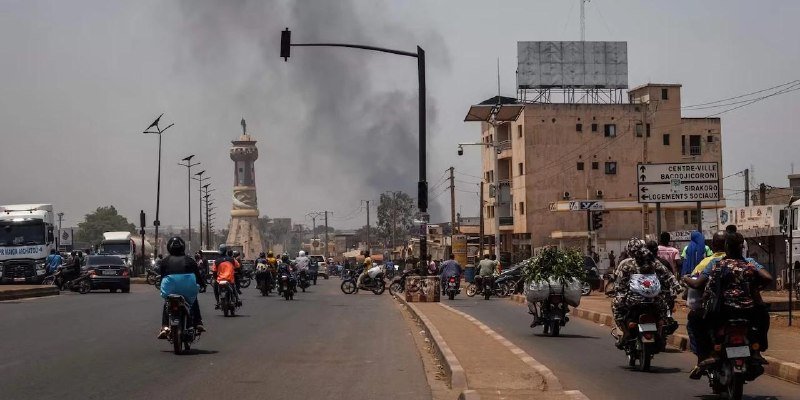
France eliminated Morocco from the World Cup quarter-finals on Thursday evening in Doha, and within hours riot police were deployed in Paris. By 23:25 UTC on 9 July 2026, video posted to X by Polymarket's news account showed columns of officers moving through central districts; earlier in the day, at 18:03 UTC on the same date, the same account reported that Paris authorities had scrambled security drones and locked down parts of the city ahead of kickoff, citing fears of unrest. On the touchline in Qatar, Morocco coach Mohamed Ouahbi told reporters his team would "bounce back" and keep building towards co-hosting the next tournament.
The result on the pitch is the smaller story. The larger one is what the security perimeter around it tells us about how European cities are now budgeting for football nights — and about which communities the budgets are written to contain.
The match, briefly
France advanced to the semi-finals after a tight contest decided in Morocco's half of the draw. Ouahbi's post-match comments, carried by the Standard Kenya wire on 10 July at 03:02 UTC, struck a forward-looking note: the squad is young, several starters are still in their early twenties, and Morocco's pathway to the next tournament runs through being a co-host rather than a qualifier. That is a meaningful distinction — co-host status removes the qualifying lottery and gives the federation two years to professionalise its youth pipeline rather than grind through it.
What Paris prepared for
The interesting decisions were taken before the whistle. Drone deployment, district lockdowns, and visible riot-police columns are not standard for a group-stage fixture; they are the toolkit reserved for the nights when the metropolitan stands and the banlieues are likely to read the same result very differently. Roughly one in three residents of the greater Paris region is of Maghreb origin, and France's Moroccan community is the largest in continental Europe. A Morocco–France knockout game is therefore never only a match: it is also a stress test of the country's claim to hold two loyalties at once.
Authorities evidently treated it as such. The Polymarket feed, drawing on ground video and local reporting, framed the drone flights and lockdowns as a pre-emptive response to feared unrest rather than a reaction to any incident that had occurred. Read narrowly, that is prudent policing. Read in context — after the 2022 World Cup, after the 2023 riots, after a series of high-profile encounters between French police and Muslim communities — it also looks like a city buying insurance against its own integration record.
The structural frame
Major tournament football in Europe has become a recurring referendum on three questions the political class would prefer not to answer in public. Can the city guarantee a night out to second-generation citizens without that guarantee being conditional? Can a loss to a former colonial power be processed as sport rather than as grievance? And when the answer to the first two is "not always," who picks up the bill — and who is on the wrong side of the perimeter when the bill is presented?
The standard rebuttal is that riot police protect everyone, including the fans who would be the first victims of disorder. That is fair as far as it goes. It is also incomplete, because the same rebuttal is offered in response to every post-match disturbance from Rotterdam to Brussels to Lyon, and the pattern that emerges is not "football causes violence" but "the cost of containing football is consistently billed to the communities that turn out for the losing side."
What remains contested
Two things are genuinely unsettled in the available reporting. The first is scale: the Polymarket feed documents police presence and drone flights, but does not quantify arrests, injuries, or property damage. The second is intent. Was the lockdown a proportionate response to a credible threat, or a reflex triggered by a template written after 2022 and applied regardless of the actual temperature on the streets? The available sources do not let this publication adjudicate that question. They show preparation; they do not show whether the preparation matched the moment.
What can be said is that Morocco's project, articulated by Ouahbi in the small hours of 10 July UTC, points in a different direction. A co-host preparing to welcome the world is not a federation that wants its diaspora's match nights framed by drone footage. The more interesting story of this tournament may be which of those two readings — Paris as a security perimeter, or Morocco as a coming host — survives the next eighteen months.
This publication framed the Paris response as a pre-emptive security operation rather than a reaction to events, on the strength of the timing reported in the Polymarket feed; the scale of any disorder on the night remains undocumented in the available material.
Wire provenance
This editorial synthesis draws on the following public wire/social posts:
- https://t.me/s/StandardKenya
- https://x.com/Polymarket/status/1942875210636759543
- https://x.com/Polymarket/status/1942786411283972107