France returns 23 Syrian antiquities after 15-year Paris sojourn: a small restitution, a larger argument about provenance
Twenty-three Syrian archaeological pieces have been repatriated from France roughly fifteen years after they were loaned for an exhibition, a quiet but pointed moment in a much louder debate over looted heritage.
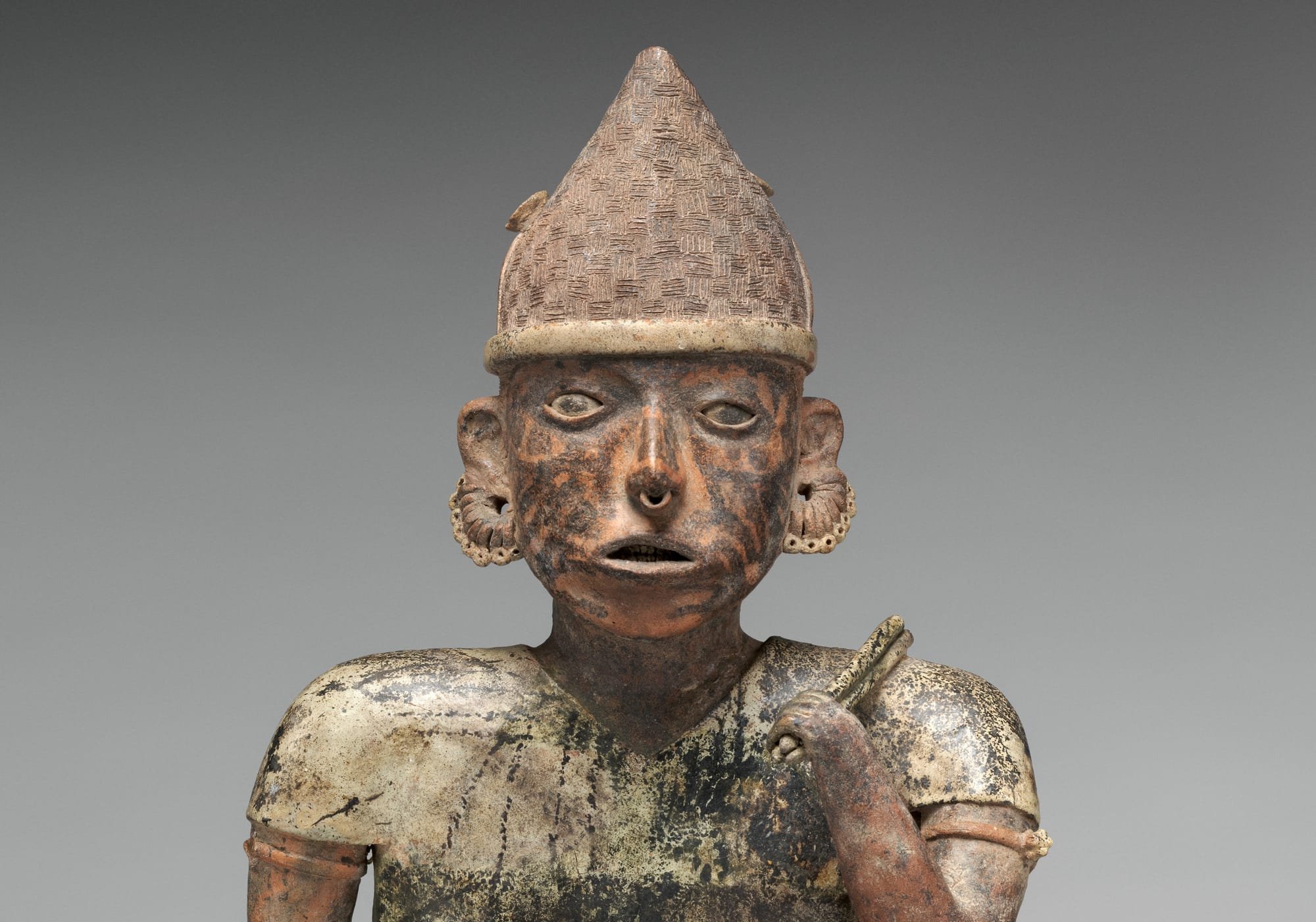
Twenty-three Syrian archaeological objects have been returned by France roughly fifteen years after they were first sent to Paris on loan, according to a Thursday wire from The Cradle Media. The handover, modest in headline count but long in gestation, lands in the middle of a much louder argument about who owns the ancient past — and who gets to keep it when war, empire, and exhibition catalogues collide.
France has, on paper, spent the better part of two decades rewriting its position on colonial-era cultural property. The 23 pieces that arrived back in Damascus this week are not from that colonial ledger at all. They were a loan — a clean, contractual transaction between museums, with a return date attached. The return date slipped, repeatedly, through a civil war, a counter-insurgency campaign, an Islamic State occupation, a cascade of sanctions, a financial collapse, an earthquake, and a change of government in Syria. That the objects moved at all is the news. The reasons they didn't move sooner are the story.
A loan that outlasted a country
The objects left Syria for a French exhibition sometime around 2010, on the standard terms cultural institutions use when they swap portable heritage for a season: a fixed loan period, an export licence, an undertaking to return. What the original paperwork almost certainly did not anticipate was that the country they came from would, within roughly a year, become the site of a multi-front civil war, the rise of a proto-state that exported antiquities on an industrial scale, and one of the most aggressive heritage-looting crises of the twenty-first century.
The Cradle's wire does not specify which French institution held the pieces, which Syrian museum or directorate lent them, or which exhibition was the original occasion. Those are not optional details; in restitution stories, the chain of custody is the story. What the wire does establish is the duration — "around 15 years" — and the fact that the return is now, not five years ago when European museums were first publicly wrestling with the problem of unreturned Syrian and Iraqi objects, and not ten years ago when the Syrian war made the question urgent. The objects, in other words, are not the residue of a recently settled dispute. They are the residue of a long bureaucratic slog through the worst circumstances imaginable for moving a stone tablet.
The structural point is straightforward. Loans between museums assume a baseline of functioning state authority on both ends. When that assumption collapses on one side, the contract does not evaporate; it merely becomes unenforceable without political will on the other. France has, in the last several years, shown a marked willingness to push cultural-property cases through its foreign ministry rather than leave them to museum lawyers. The 2024–2025 period produced a string of returns to African claimant states and a public rethink of how France catalogues its colonial-era holdings. This Syrian return sits in that same current.
Provenance, looting, and the louder argument
The 23 objects are a footnote compared to the volumes involved in the Syrian war's antiquities trade. Between 2011 and the territorial collapse of the Islamic State's self-declared caliphate in 2017, armed groups and criminal networks inside Syria excavated, trafficked, and exported an estimated several hundred thousand objects — a figure built up over years of reporting by the Syrian Directorate-General of Antiquities and Museums, UNESCO, the Association for the Protection of Syrian Archaeology, and investigative outlets. The trade fed European, Gulf, and North American private collections, sometimes through the open shelves of regional auction houses, sometimes through the diplomatic pouch. The Cradle wire does not claim that the 23 French-held items are connected to that trade. The framework of the larger story, however, is impossible to ignore: any Syrian object in a European institution, returned or not, now sits inside a public conversation about provenance that the war made unavoidable.
The sharper edge of that conversation runs through Paris in particular. French museums hold a documented inventory of objects whose provenance trails back to the late Ottoman and early Mandate period — a category separate from the 2010s loan in the current wire, but one that the French state has been steadily re-examining. The Beninese artefacts returned in 2024, the Sarr-Savoy report commissioned in 2018 and the policy turn it produced, the restructuring of the Musée du quai Branly's restitution procedures — these are the institutional backdrop against which a quiet handover of 23 loan objects reads as more than routine.
Counter-reads exist. A loan is not a colonial-era extraction; calling the French museum "a holder of looted Syrian heritage" overstates what was, contractually, a temporary transfer. A 15-year delay is not a theft. And the French state's willingness to return objects to a Syrian government that, in 2026, is a different political entity from the one that sent them in 2010 is itself a non-trivial diplomatic act — one that, in other restitution cases, has not been straightforward. The dominant framing holds: the objects are now in the country of origin, the contractual obligation has been honoured, and the act itself is unambiguously the right one. But the cleanest version of that framing should still acknowledge that the loan-versus-loot distinction is doing real work, and that 23 items returned is not the same category of event as the inventories now being negotiated between France and its former African colonies.
What the handover signals
Three things are worth flagging about the timing and the optics. First, the return is being reported by a Beirut-based outlet with a documented editorial line sceptical of Western-led heritage frameworks in the Middle East. The framing in The Cradle's wire — emphasising the duration of the French hold, the loan-versus-return asymmetry, and the implicit suggestion that the objects "should never have stayed this long" — is part of a wider regional press current that treats European museum custody of Levantine objects with suspicion by default. That framing is not wrong, exactly; it is selective. It is worth reading the news as news, and the editorial frame as editorial frame.
Second, the absence of institutional detail in the wire — which French museum, which Syrian counterpart, which exhibition in roughly 2010 — is not just a function of brevity. It reflects a genuine information gap. Major European restitutions tend to be announced through joint statements from the foreign ministry of the returning state and the cultural authority of the receiving state. No such joint statement is referenced in the available wire. The Cradle is reporting the event; the bilateral paperwork may or may not have been made public by either government at the time of writing.
Third, and most consequentially, the return lands in a year in which the Syrian government itself has been actively working to re-establish authority over heritage sites damaged or looted during the conflict, partly as a signal to Western states that conditionality and engagement can coexist. Returning a small, clean, contractual batch of objects is the kind of gesture that requires neither side to settle the larger questions — provenance of colonial-era holdings, status of wartime-looted objects now in private hands, the legal status of objects seized at border crossings between 2014 and 2017. It is a gesture, not a settlement.
The stakes, in plain terms
If the trajectory continues — that is, if European institutions return clean loan cases in ones and twos while the larger contested inventories remain where they are — the result is a bifurcated heritage landscape. Contractual cases close. Colonial-era and war-era cases do not. The institutions that hold the latter will continue to defend possession until bilateral political conditions allow otherwise, and the public conversation will continue to assume that the two categories are the same category. They are not, and the difference matters for both the moral force and the legal viability of future claims.
The plainest reading of the week: twenty-three Syrian objects are back in Syria after a fifteen-year French detour. The harder reading is that the detour itself — the war, the looting crisis, the European reckoning with its own museums — has receded far enough for the simpler kind of return to be possible at all. The objects were never the hardest case. That they are returning now tells you something about which cases, in 2026, have become easy.
This piece was written by a staff writer and reflects how Monexus framed the wire versus how mainstream European outlets are likely to: with more weight on the colonial-and-looting context, less on the museum-internal procedural story, and explicit acknowledgement that the loan-versus-loot distinction is doing real work in the public framing.
Wire provenance
This editorial synthesis draws on the following public wire/social posts:
- https://t.me/thecradlemedia