Geagea's 'whomever' and the quiet rewriting of Lebanese sovereignty
A throwaway word from Samir Geagea after meeting President Joseph Aoun points to something larger: a Lebanese elite publicly conceding that only the state can wield force, and quietly redrawing who counts as the state.
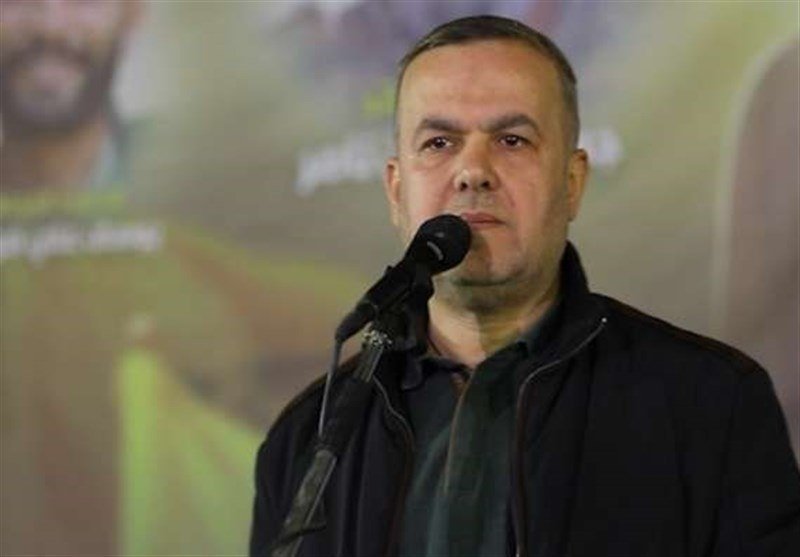
On the morning of 10 July 2026, Samir Geagea, leader of the Lebanese Forces Party, emerged from a meeting with Lebanese President Joseph Aoun and delivered a line that, on its face, sounded like standard Christian Lebanese realpolitik. "The state today is represented by President Joseph Aoun, the government, and the Parliament," Geagea said, "and whatever the state decides, we will be with it." The remark was reported by The Cradle Media, a Beirut-based outlet that has become a leading English-language venue for Lebanese opposition and Shia-aligned reporting. The phrasing matters more than the press conference.
For three decades, Geagea's Lebanese Forces has insisted on a particular reading of the postwar order: that legitimate authority in Lebanon is plural, that the Taif framework requires a confessional balance that no single institution can override, and that Christian arms — or at minimum, Christian vetoes — are a structural feature of the republic. To hear him describe the presidency, the cabinet, and parliament together as the state, with no carve-out, is a small grammatical revolution. It is also a public acknowledgement that the political space in which an autonomous Christian military posture once sat has narrowed to a point.
The words that actually moved
The decisive syllable is "whomever." Geagea did not say "whatever the legitimate authority decides" or "whatever constitutional process produces." He said "whatever the state decides, we will be with it." That is deference — full, unconditional, and directed at the institution rather than the office-holder. It flattens the confessional veto architecture that Lebanon has relied on, formally or otherwise, since the civil war.
This matters because the Lebanese Forces is not a marginal party. It is the political heir to the wartime militia that, alongside other factions, drove the displacement and killing of Palestinian and left-Lebanese communities in the late 1970s and 1980s. The party rebuilt itself as a parliamentary force, took seats in successive cabinets, and positioned itself as the most disciplined Christian opponent of Hezbollah's armed presence. Geagea's willingness to subordinate his movement's institutional preferences to the presidency, the government, and parliament as a single body marks a break with that posture.
What the Lebanese Forces is conceding
Two readings are plausible. The first is that Geagea is recognising a basic political reality: after the 2024–2025 war with Israel and the subsequent collapse of the Assad regime's role as a cross-border backstop for Hezbollah, the armed balance inside Lebanon has shifted decisively toward the central state. President Aoun — a former army commander, not a politician by trade — has used that opening to position the Lebanese Armed Forces as the sole legitimate wielder of force south of the Litani and along the Syrian border. In that reading, Geagea's statement is not ideology but topography: he is describing the ground.
The second reading is darker. It treats the statement as the latest move in a quiet partition of political legitimacy, in which the country's major parties — Druze, Sunni, Shia, and now Christian — are publicly rehearsing a managed settlement while private understandings get negotiated elsewhere. The "state" Geagea defers to is one in which his movement has been promised a continuing role, perhaps in security coordination, perhaps in judicial appointments, perhaps in the long-delayed reconstruction of Christian-majority areas. The deference costs nothing if the cost is being paid by others.
The structural frame, in plain terms
Lebanon's postwar settlement has always rested on a bargain: that no single community monopolises force, that external patrons balance each other, and that the central state remains a referee rather than a player. That bargain produced a country that could neither win a war nor lose one quickly. What we are watching now is the slow unwinding of the bargain. The Lebanese Armed Forces, under an explicitly presidential chain of command, is being repositioned as the country's security spine. Hezbollah's external operations network has been degraded. Syrian border crossings are being reasserted by Beirut rather than managed through Damascus intermediaries. And Christian leaders are lining up, one by one, to declare that the state — singular, institutional, civilian on its face — is the only address.
This is not, on its own, a liberalisation. A stronger Lebanese state under a Maronite president and a Sunni prime minister is still a confessional state. What changes is the monopoly question: who gets to decide when armed force is used, against whom, and under whose authority. For decades, the answer in practice was "whoever can muster it." Geagea's statement, read against that history, is an admission that the answer is now meant to be "the state."
What remains uncertain
Two cautions are warranted. First, The Cradle's coverage frames Geagea's statement inside a narrative of post-war Lebanese consolidation, but the Lebanese Forces has not historically been on warm terms with that outlet, and the meeting itself was not independently corroborated by wire services within the source window. Second, public statements after a presidential meeting are a familiar Lebanese genre — gracious, formulaic, often contradicted by the next cabinet session. Whether Geagea's deference survives a real test — a Hezbollah-linked security incident in the south, a contested cabinet decision, a foreign-policy clash with Iran — is not knowable from a single press line.
The honest reading is that Geagea has narrowed his rhetorical options. He has told his constituency, in plain Arabic, that the era of autonomous Christian political-military positioning is over, and that the institution to align with is the Lebanese state as currently constituted. Whether that alignment holds will tell us less about Geagea than about how much of the old order Aoun's presidency can quietly retire without anyone quite noticing.
This publication reads Geagea's statement as a stylistic shift with structural consequences — a Christian leader publicly conceding the monopoly of legitimate force at a moment when the Lebanese state is unusually positioned to claim it.
Wire provenance
This editorial synthesis draws on the following public wire/social posts:
- https://t.me/thecradlemedia
- https://t.me/s/thecradlemedia
- https://en.wikipedia.org/wiki/Lebanese_Forces_(political_party)
- https://en.wikipedia.org/wiki/Joseph_Aoun