Graham's 'hellish' sanctions bill and the late-war economic weapon Washington is now testing on Moscow
A bipartisan package agreed with the White House would hand Donald Trump fresh tools to squeeze the Russian economy. Kyiv says parts of the Kremlin inner circle are already wobbling. The bill's real test is whether escalation tightens the screws — or gives Moscow a renewed argument at the negotiating table.
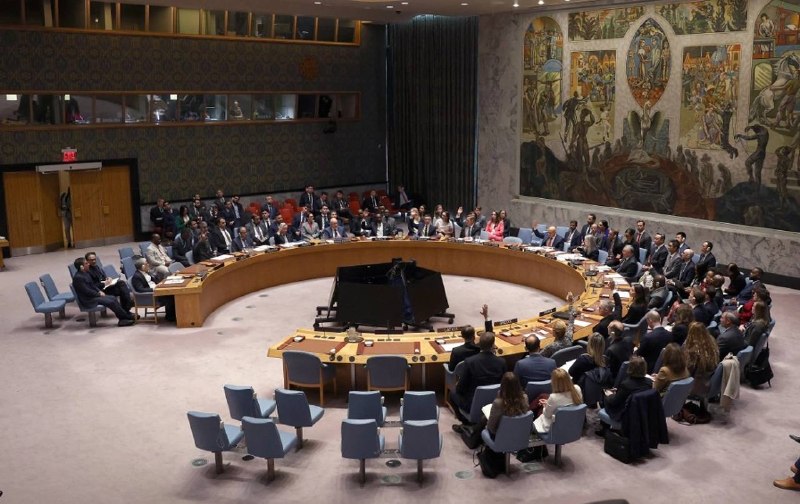
On 10 July 2026, Senator Lindsey Graham announced that a bill he has spent more than three years drafting — a sweeping sanctions package he calls "hellish" — has been agreed with the White House and is on track to become law. Speaking to reporters, the South Carolina Republican said the legislation would give President Donald Trump "additional tools" to press Russia to end its full-scale invasion of Ukraine, framing the package as an economic weapon rather than a diplomatic gesture. The bill, in Graham's telling, is designed to "economically cripple" Moscow and to be deployed as leverage while diplomacy continues, not as a substitute for it. (The full Senate text has not been published; Graham's public remarks, relayed by the OSINTdefender and War Translated channels on 10 July, are the most detailed account currently available.) [1][2]
The bill lands at a peculiar moment. Volodymyr Zelenskyy said in remarks on the same day that part of Vladimir Putin's inner circle now favours ending the war, citing the deteriorating state of the Russian economy as the cause. The Ukrainian president's read of the Kremlin — that economic pressure, more than battlefield losses, is fracturing Moscow's war coalition — is the strategic premise on which Graham's bill is being sold. If the premise is right, the package is a scalpel. If it is wrong, it is a sledgehammer swung at an economy that has so far absorbed every previous round.
The shape of the package
What Graham described is not a single instrument but a layered one. The bill, as he sketched it on 10 July, would impose secondary tariffs on countries that continue to purchase Russian oil, gas and refined petroleum products — extending the cost of doing business with Moscow to third-country buyers. It would also target Russia's so-called shadow fleet of tankers operating outside Western insurance, classification and port-state control regimes, and would tighten the enforcement perimeter around Russian financial institutions still able to clear transactions in non-Western currencies. Graham framed each of these as a "tool" the president could deploy, calibrate, or hold back — an explicit signal that the bill is built for leverage, not for a clean break. [1][2]
The secondary-tariff mechanism is the politically novel element. The existing Western sanctions architecture has, since 2022, relied on price caps, oil-service bans and a coalition of G7 enforcement officers. The new feature is the use of the US tariff code to penalise buyers in jurisdictions that have not signed up to the price cap — most consequentially in parts of South and Southeast Asia. The intent, in the bill's own logic, is to make the marginal barrel uneconomic to lift, even from a buyer who is happy to keep buying.
The drafting history matters. Graham's sanctions work has run in parallel with the broader Senate Russia file since 2022, when he first paired up with Senator Richard Blumenthal on a comprehensive package. Versions of that bill were held up for more than two years over concerns from successive administrations about their effect on oil markets and on relations with buyers Washington needed for other purposes. The 10 July announcement is the first time the White House has publicly aligned itself with the bill's overall architecture. Whether that alignment survives contact with the legislative text — and with the buy-in of the Senate leadership — is the first of several open questions.
The economic picture in Moscow
Zelenskyy's 10 July framing — that the Russian economy is in worse shape than the Kremlin admits and that this is generating factional pressure inside Putin's circle — is the argument the bill's supporters are amplifying. Independent reporting on the Russian economy in 2026 has consistently described a war-footing economy running on labour shortages, sanctions workarounds, and an inflation rate that has remained stubbornly above target. War Translated, an outlet that translates and contextualises Russian-language sources, has tracked the slow-burn squeeze on Russian household budgets and the parallel expansion of military spending as a share of federal outlays. The point is not that Russia is about to collapse; the point is that the cost of continuing is rising, and that the marginal constituency inside the system is no longer indifferent to it. [3][4]
The counter-narrative — the one Moscow would prefer Western readers to absorb — is that the Russian economy has now adapted. The official line from Russian economic ministries in 2025 and 2026 has been that growth is positive, that inflation is being brought under control, and that the financial system has stabilised. There is something to this: the ruble has held, the banking system has not suffered a systemic event, and energy exports — though rerouted — have continued. The honest reading is that Russia is not in crisis but is in a slow squeeze, and that a slow squeeze is precisely the condition in which a new round of sanctions can either tip the balance or simply add to the noise.
The complication is that several of Russia's largest remaining energy customers are precisely the countries Washington has been courting on other files. India, China, and Turkey together account for the bulk of discounted Russian crude now in circulation. Secondary tariffs aimed at those buyers would impose a real cost on buyers who have, for the most part, stayed inside a Western-aligned economic perimeter on other issues. The bill's authors are betting that the marginal cost of losing access to US dollar clearing and US tariff preferences will exceed the discount on Russian oil. That is an empirical question, and one the bill's drafters are now asking the market to answer.
What the bill is really for
The deeper read of the 10 July announcement is diplomatic rather than economic. Graham's explicit framing — that the package is meant to give Trump "additional tools" — is the language of a sanctions regime designed to be deployed, escalated, or withdrawn at the president's discretion. The instrument is the threat. The bill's value, in its own strategic logic, is to expand the surface area of what the United States can credibly threaten to do, not necessarily to do it.
This is the part of the story that is least well covered in the open sources. The Western-wire line on Russia sanctions has, since 2022, oscillated between two registers: the enforcement register (what is being banned, seized, or capped) and the political register (what the sanctions are meant to achieve). The 10 July Graham announcement is firmly in the second register, and Zelenskyy's same-day remarks on the Russian inner circle are part of the same political register. The two are not independent; they are, in effect, a coordinated read of the same bet — that the cost of continuing the war is now visible inside the Kremlin, and that a credible additional squeeze is the cheapest available way to make the cost unbearable.
The alternative read is that the bet is wrong. Russia has, since 2022, demonstrated an ability to absorb escalating sanctions pressure and to redistribute the cost across the domestic economy. The argument that the inner circle is wobbling is, in the public record, almost entirely Ukrainian in provenance; the Russian state media line, predictably, denies it. A serious reading of the situation would put weight on both. The structural fact is that the Russian elite is now operating under a sanctions regime whose end is not in sight, and that the personal cost of that regime to senior figures has increased over the past year. Whether that cost has crossed the threshold at which a meaningful faction inside the Kremlin is willing to break with the war's continuation is the question the bill is now being staged to test.
The political economy in Washington
The bill's White House alignment is itself a story. The Trump administration's posture toward Russia has been, since January 2025, more openly transactional than its predecessor's — focused on negotiations, on bilateral deals, and on conditional sanctions relief as a bargaining chip. The Graham bill is a partial departure from that posture. It takes the most coercive tool available — secondary tariffs, shadow-fleet restrictions, financial-system tightening — and binds it into a single legislative vehicle, with the implicit constraint that relief can only come through legislative repeal, not through executive waiver alone.
That is a constraint the administration has, in other contexts, been reluctant to accept. The reading that the White House is now willing to accept that constraint on Russia is the strongest signal yet that the administration has concluded that the diplomatic route, on its own, has run as far as it can. The counter-reading is that the White House is preparing to use the bill's existence as a negotiating asset — to extract concessions from Moscow in talks that have not been publicly disclosed, or to extract concessions from buyers in third countries. Both readings can be true at once, and probably are.
The domestic political economy is also working in the bill's favour. A Russia sanctions package is one of the few remaining bipartisan vehicles in the Senate; the politics of the war in Ukraine have remained broadly stable on a US bipartisan basis, even as the wider foreign-policy consensus has fractured. The bill's principal obstacle is therefore not votes but timing — whether the Senate can move a complex sanctions package in an election year, and whether the House will accept a vehicle shaped by the Senate's preferences rather than its own.
Stakes and the next four months
The narrow stakes are legislative: whether the Graham bill can clear both chambers and reach the president's desk before the autumn recess, and whether the version that does so preserves the secondary-tariff mechanism in a form that is actually enforceable. The wider stakes are strategic. If the bill becomes law and is deployed, the marginal cost of doing business with the Russian energy sector rises sharply for buyers in third countries, and the Russian state faces a more visible fiscal squeeze. If it becomes law and is held in reserve, it becomes a lever the president can use in negotiations that may or may not be public. If it stalls, the signal is that even a bipartisan consensus on Russia is no longer enough to move complex economic legislation in a polarised Congress.
The honest uncertainty here is genuine. The sources on which this analysis rests — public statements by a US senator and by the Ukrainian president, both on 10 July 2026, plus the channel-mediated reporting that carried them — are thin on the operational details of the bill and on the state of play inside the Russian elite. Zelenskyy's claim that part of Putin's inner circle favours ending the war is a political claim, not a documented one, and the Russian state media line, which is the only public counter-voice, denies the underlying premise. The economic data on Russia is contested between official Russian sources, which emphasise stability, and Western analytical outlets, which emphasise strain. The structural read — that sanctions are now being used as a bargaining lever rather than as a clean-break instrument — is the analytical frame that fits the available evidence, but it is a frame, and it should be read as such.
What is not contested is that the political weather has shifted. A bill that sat on the Senate calendar for two years is now, in July 2026, being described by its lead sponsor as agreed with the White House. A Ukrainian president is publicly describing the Russian inner circle as fracturing. The two statements, made on the same day, are not coincidental. They are the public surface of a recalibration that is, at this stage, more visible at the rhetorical level than at the operational one. The next move — the bill's text, the Senate vote, the response from Moscow, and the response from buyers in third countries — will determine which side of that rhetorical shift the year ends on.
How Monexus framed this: where most of the wire coverage treated the 10 July announcements as a single news cycle, this publication reads them as a coordinated pivot — a sanctions bill shaped as leverage, a Ukrainian public line designed to amplify the squeeze, and a White House that has decided, for now, that additional economic pressure is a cheaper instrument than further diplomacy alone. The story is not the bill; it is the bet the bill represents.
Wire provenance
This editorial synthesis draws on the following public wire/social posts:
- https://t.me/s/OSINTdefender
- https://t.me/s/osintdefender
- https://t.me/s/OSINTdefender
- https://t.me/s/osintdefender
- https://t.me/s/wartranslated
- https://en.wikipedia.org/wiki/Sanctions_against_Russia_during_the_Russo-Ukrainian_war
- https://en.wikipedia.org/wiki/Lindsey_Graham
- https://en.wikipedia.org/wiki/Russian_oil_sanctions_since_2022
- https://t.me/s/OSINTdefender
- https://t.me/s/osintdefender
- https://t.me/s/OSINTdefender
- https://t.me/s/osintdefender
- https://t.me/s/wartranslated
- https://en.wikipedia.org/wiki/Sanctions_against_Russia_during_the_Russo-Ukrainian_war
- https://en.wikipedia.org/wiki/Lindsey_Graham
- https://en.wikipedia.org/wiki/Russian_oil_sanctions_since_2022