Hormuz under pressure: why the world's busiest oil chokepoint keeps drifting toward crisis
Tanker traffic is slowing through the Strait of Hormuz after US-Iranian clashes, and a UN agency document is now urging member states to push back against Iranian encirclement of the waterway. The standoff is a test of whether the global economy's most consequential corridor can be governed by anything other than force.
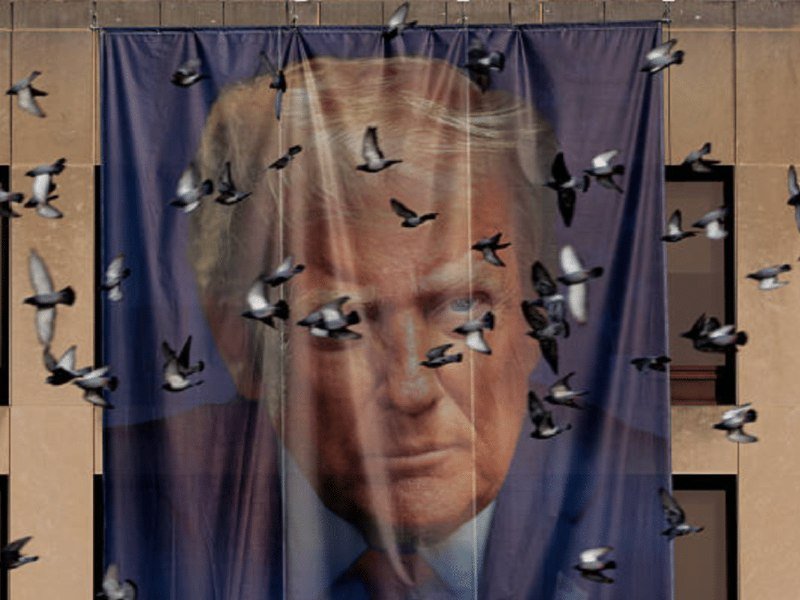
On 10 July 2026, Reuters reported that tanker traffic through the Strait of Hormuz had measurably slowed following a renewed exchange of strikes between the United States and Iran, the kind of throttled flow that quickly translates into insurance premiums, freight rates and, eventually, pump prices. The same day, a UN agency document circulated to member states, also reported by Reuters, called on countries to reject Iranian efforts to assert control over the waterway. The geography has not changed: roughly a fifth of globally traded oil, and a comparable share of liquefied natural gas, transits that narrow stretch between Iran and the Arabian peninsula every day. What has changed is the willingness of both Washington and Tehran to test the other in it.
What this edition of the standoff exposes is not a sudden rupture but the steady erosion of the diplomatic scaffolding that once kept Hormuz a boring corridor. For decades, the strait was governed by something close to a tacit bargain — free passage under US naval protection, in exchange for Iran's continued ability to export its own hydrocarbons. That bargain is now openly contested on both sides.
The immediate picture
According to reporting on 10 July 2026, US officials told Bloomberg, via a Telegram channel that tracks Ukrainian operational summaries, that negotiations with Iran continue despite the exchange of blows in the Strait of Hormuz, and that Washington remains "committed to the idea of finding a diplomatic solution." Reuters separately confirmed that tanker traffic has slowed in the hours after the latest clashes, a signal that commercial operators — not just naval planners — are pricing in risk. The framing matters: a diplomatic channel that survives a kinetic episode is news; a diplomatic channel that is invoked while a kinetic episode unfolds is closer to posture.
The UN agency document, summarised by Reuters, makes the institutional counter-move explicit. Member states are being asked to collectively reject Iranian encirclement of the strait. That is a diplomatic instrument, not a military one — it raises the political cost of any closure attempt by tying it to a wider coalition of states, including Iran's largest oil customers, rather than to a unilateral American response.
The counter-narrative
The Iranian position, articulated through state-aligned outlets and long-standing official talking points, runs through several registers at once. First, that Iran has a legitimate sovereign interest in securing its own coastline, including the northern shore of the strait, against what it characterises as repeated violations by US naval forces. Second, that any disruption to traffic has been provoked by the American presence, not by Tehran's behaviour. Third, that oil-market stability is best served by the withdrawal of extra-regional military assets, not by their reinforcement. Each of those framings deserves to be read on its own terms rather than waved away. They are also, on the available evidence, insufficient. Sovereignty arguments do not transfer to interference with third-party commercial shipping; the record of Iranian Revolutionary Guard activity against tankers in recent years is documented in Western and Gulf-state sources; and the argument that stability is served by removing the principal guarantor of free passage cuts against the actual behaviour of global oil markets, which price American naval presence as a stability input, not a risk.
The structural frame
The deeper pattern is one of a corridor whose governance was always improvised on top of a power asymmetry. There is no equivalent of the Montreux Convention for Hormuz — no codified regime that anoints a flag, sets rules of transit and binds both sides. What kept the strait open was, in plain terms, an arrangement: US force on one side, Iranian revenue on the other, and a multilateral commercial interest in neither side disrupting the other. That arrangement is fraying in three directions at once. The United States is less willing to underwrite the implicit subsidy that comes with policing a corridor for others. Iran's leadership is more willing to weaponise geography now that sanctions have already cost it the easy export route. And the major Asian importers — China, India, Japan, South Korea — have their own reasons to want the strait treated as a shared commons rather than an American lake.
The UN agency document is best read as an attempt to convert that shared interest into something harder than rhetoric. A collective rejection of encirclement, articulated through a multilateral body, is the kind of instrument that constrains all three actors simultaneously: it limits Iranian options, narrows the legal cover for unilateral US enforcement, and gives Asian buyers a vocabulary for objecting to whichever side disrupts their supply.
Stakes and the forward view
If the trajectory continues, three outcomes become more probable, not less. Insurance war-risk premiums for Hormuz transits rise and stay elevated, embedding a permanent cost premium into Gulf oil. Major importers diversify routing — pipelines through the UAE and Saudi Arabia, more crude by rail and overland from the Gulf to the Red Sea — and Hormuz's centrality erodes slowly rather than collapses suddenly. And the diplomatic language around the strait hardens into something closer to a multilateral regime than a tacit deal, with all the friction that comes with formalising what used to be informal.
What remains genuinely uncertain is whether the diplomatic channel the US is publicly invoking is a route to a real arrangement, or simply a holding pattern that allows both sides to keep testing limits. The UN document suggests the international institutional layer is being prepared for the latter. The slowing tankers suggest commercial operators have already priced in the former.
Desk note: Monexus leads on the Reuters UN-agency document and the Reuters shipping report, with Bloomberg via a tracked Telegram summary used as a posture check on the US negotiating line. The Iranian counter-position is treated on its own terms rather than dismissed, in line with how this publication handles contested claims of regional sovereignty.
Wire provenance
This editorial synthesis draws on the following public wire/social posts:
- https://t.me/operativnoZSU