Tehran's Mashhad signal: Baqaei draws a line under US diplomacy
Tehran's foreign ministry says it never asked to talk to Washington, even as it hosted a mediator in Mashhad. The framing matters more than the meeting.
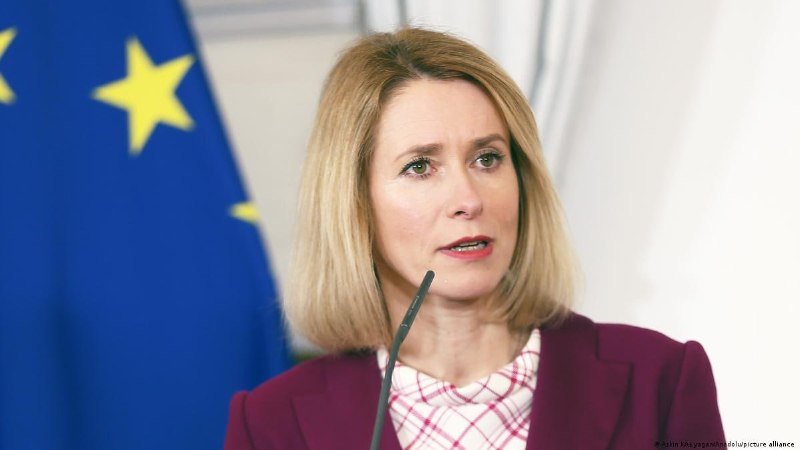
Iran's foreign ministry put a name and a place on the diplomatic confusion on 10 July 2026. Spokesperson Esmail Baqaei, speaking in Tehran that evening, said the Islamic Republic had not requested negotiations with the United States, even as it accepted a mediator's visit to the holy city of Mashhad in the country's northeast. The line — repeated almost verbatim by Tasnim and Fars within minutes of each other, at 20:32 and 21:19 UTC — was designed to settle one argument and start another.
The argument it settled is internal. Hardliners in Tehran have spent weeks muttering that any back-channel to Washington amounts to surrender. Baqaei's framing — we did not ask, we merely received — is the diplomatic equivalent of a shrug. Iran was a host, not a suitor. The argument it starts is the harder one. Baqaei used the same briefing to accuse Washington of breaching an existing memorandum of understanding and to warn that Tehran will not implement any commitment "without compensation." The qualifier matters. Tehran is signalling that the door is technically open, but every step through it will cost something.
What Baqaei actually said
The official line, as carried by Fars News International and Tasnim, runs in three movements. First, denial of initiative: "We had no request to negotiate with the United States." Second, procedural acceptance: the mediator's trip to Mashhad was hosted, not sought. Third, conditional re-engagement: the US has violated a memorandum of understanding, and Iran's "approach is commitment again" — meaning Tehran will honour its word only if the other side does, and only if breach is repaired. Each clause performs a different function. The first inoculates against the charge of capitulation. The second preserves the mediation channel. The third converts goodwill into a ledger item.
Why Mashhad, and why now
Mashhad is not a neutral venue. It is the shrine city of Imam Reza, the spiritual capital of Shia Iran, and a place where the Islamic Republic's symbolic authority is densest. Hosting a foreign mediator there is a way of saying that the conversation, if there is one, is being had on Iranian terms and on Iranian soil. The choice reads as deliberate. Western wire reporting on the visit has been thin, and Baqaei's briefing appears to be the principal public account of what was discussed. That asymmetry — Iran's state-aligned outlets driving the narrative while the mediator's identity and mandate remain opaque — is itself a feature, not a bug. Tehran wants the world to know a meeting happened; it does not yet want the world to know what was offered.
The structural frame, in plain language
What is unfolding is not a negotiation in the conventional sense. It is the choreography of a non-negotiation: a calibrated sequence of denials, acknowledgements and conditional clauses designed to preserve optionality on all sides. The United States, locked into a sanctions architecture that is difficult to roll back without domestic political cost, needs Iran to be seen as the party that came back to the table. Iran, locked into an economy that has been financially compressed for years, needs the United States to be seen as the party that asked. Baqaei's Mashhad line is engineered so that both claims can technically be true. The mediator, whoever they are, is the mechanism that makes the contradiction sustainable — present enough to justify the talk, vague enough that neither capital owns the initiative.
Stakes, and the part the sources do not settle
If the choreography holds, the two sides inch toward a working understanding without ever admitting they wanted one. That is the most plausible near-term outcome. The mediators — regional intermediaries acting under the implicit cover of Gulf state diplomacy — get credit for preventing escalation. Tehran gets partial sanctions relief without the domestic cost of a televised handshake. Washington gets a managed de-escalation that does not require a congressional vote. Everyone leaves with a face-saving formula.
The sources leave a great deal unresolved. They do not name the mediator, do not specify which memorandum of understanding Baqaei claims Washington has violated, and do not indicate whether the Mashhad meeting produced any document, agreed minute or follow-up date. The phrase "commitment again" is being translated in opposite directions by optimists and sceptics. The former hear Tehran signalling that it will honour past deals if compensated; the latter hear a warning that the breach will be priced, and the price has not yet been agreed. Either reading is consistent with the official text. That is the point. Diplomatic ambiguity is itself a deliverable in a relationship where neither side trusts the other's translation.
The next inflection point is easy to predict and hard to date. If a second mediator visit is confirmed, or if a named US or Iranian official acknowledges the Mashhad track, the non-negotiation becomes a negotiation in fact if not in name. If the silence holds through the end of the summer, the choreography will be read in hindsight as either a near-miss or a foundation. For now, the most honest reading of Baqaei's briefing is that Tehran has not moved closer to Washington, but it has built a slightly wider room in which to move.
— Monexus framing note: this article treats Iranian state-aligned outlets (Tasnim, Fars) as primary sources for the Iranian position, with the explicit caveat that they are state-aligned. Western wire coverage of the Mashhad visit has not been published in the thread context; the desk flags that absence rather than papering over it.
Wire provenance
This editorial synthesis draws on the following public wire/social posts:
- https://t.me/tasnimplus
- https://t.me/farsna
- https://t.me/FarsNewsInt