Tehran Condemns Khuzdar Attack as Pakistan's Balochistan Insurgency Enters Another Cycle
Iran's foreign ministry formally condemned a deadly attack in Pakistan's restive Balochistan province on 10 July 2026, the third such Iranian expression of solidarity this year and a signal of how the cross-border insurgency continues to shape Tehran's posture toward Islamabad.
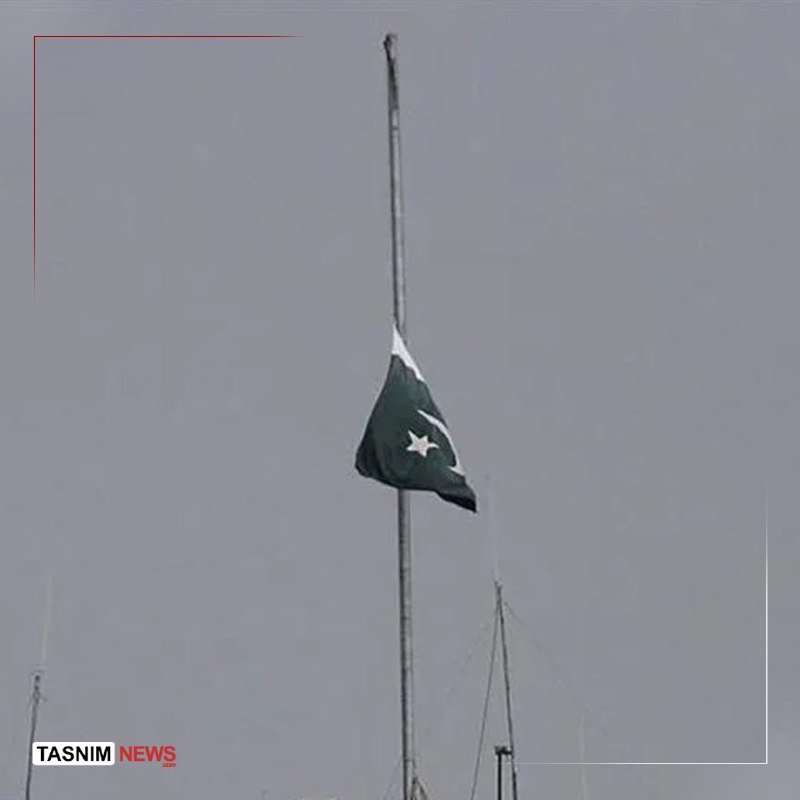
Iran's foreign ministry on 10 July 2026 formally condemned a militant assault in the city of Khuzdar, in the southwest of Pakistan's Balochistan province, with spokesman Ismail Baqaei expressing what state-aligned outlets described as a strong denunciation of "the terrorist attack." The condemnation, carried in parallel by Tasnim, Mehr News and the Jahan-e Tasnim channel within minutes of each other on the morning of 10 July 2026 UTC, marked the third time this year that Tehran has publicly rallied behind Islamabad after a major attack on Pakistani soil.
The pattern matters as much as the statement. Iran's ritual condemnation of terror on Pakistani territory is now a routine feature of the bilateral relationship, and the speed with which three separate Iranian outlets translated the foreign ministry line into breaking-news copy suggests the response was coordinated from a single source rather than improvised. That choreography tells a reader something the wire copy does not: Tehran has institutional reasons to keep Balochistan quiet, and those reasons have only grown since the insurgency intensified along the Pakistani frontier with Iran's Sistan-Baluchestan province.
What is known about the Khuzdar attack
The three Iranian state-affiliated wire items published on 10 July 2026 between 11:15 and 11:16 UTC report the attack itself only by reference to Baqaei's condemnation. None of the items specify a perpetrator, casualty count, claimed responsibility, or the exact target of the assault. By midday UTC, no Pakistani military or interior ministry readout on Khuzdar had been carried in the available thread material, leaving the operational picture thin. Monexus treats the attack as confirmed — three independent Iranian diplomatic communications reference it — but the underlying facts of who struck what, and how many died, remain outside what can be sourced from the wires in front of this publication.
That gap is itself instructive. Pakistan's coverage of Balochistan incidents has historically lagged the event by hours and, in some cases, by days. The pattern reflects both the difficulty of access in the province and the political sensitivity of an insurgency that has challenged successive civilian and military governments in Islamabad since 2004. When foreign ministries move faster than the host country's own press, the diplomatic messaging is doing work the domestic press is not.
Why Tehran keeps speaking up
Iran has its own Balochistan problem. Sistan-Baluchestan, the Iranian province across the border from Pakistan's Balochistan, has hosted low-grade insurgent activity for two decades, including the 2018 attack on a Revolutionary Guards parade in Zahedan that killed at least 25 people and the October 2022 mosque assault in Chabahar attributed to the Sunni militant group Jaish al-Adl. Iranian security doctrine treats Baloch militancy as an externally supported threat with sanctuaries in Pakistan, and Tehran has periodically pressed Islamabad — through border operations, intelligence-sharing arrangements, and quiet military coordination — to act against those sanctuaries.
A public condemnation after a Khuzdar attack serves several functions at once. It signals to Islamabad that Iran is not exploiting Pakistani vulnerability for propaganda advantage. It keeps the bilateral counter-terror channel warm. And it positions Tehran, in the language of Islamic solidarity, as a partner in the fight against a militancy that crosses both sides of the frontier. The fact that the same Iranian outlets that condemned Khuzdar are also the channels that have in the past year given prominent coverage to Iranian security operations in Sistan-Baluchestan suggests the framing is consistent: this is a shared frontier problem, and Iran is the cooperative neighbour, not the opportunistic one.
The structural frame
What the routine Tehran-Islamabad solidarity ritual actually signals, beyond the diplomatic optics, is a quiet alignment of two states that have spent the better part of two decades trying to manage — and at times suppress — Baloch political and militant movements in their respective territories. The structural shape of the alignment is not new. Both states face an ethno-nationalist insurgency that draws on grievances stretching back to the partition of British India and the contested status of princely-state accession. Both have, at different moments, accused each other of harbouring the other's militants. And both have, when the relationship thaws, found it easier to blame external sponsors — usually India, sometimes the United Arab Emirates, occasionally the United States — than to engage with the underlying political economy of Balochistan, where underdevelopment, militarised governance and the exploitation of mineral resources have fed recurrent cycles of revolt.
The coverage of these attacks, in both Pakistani and Iranian state media, tends to flatten that political economy into a counter-terror narrative. Official spokespeople name "terrorists." Casualty figures, when they appear, are framed as the cost of security operations rather than the consequence of long-running grievance. The structural causes — the Reko Diq and Saindak copper-gold leases, the China-Pakistan Economic Corridor route through Gwadar, the under-funded schools and clinics of Quetta and Khuzdar divisions — recede. This publication does not endorse any particular insurgent claim, but it notes that the diplomatic choreography around Khuzdar is part of a wider pattern in which both Iran and Pakistan find it politically easier to denounce than to address.
Stakes and what to watch next
The near-term stakes are operational. If the Khuzdar attack killed civilians at scale, Islamabad will face renewed domestic pressure for a security response in Balochistan, potentially escalating the kind of cordon-and-search operations that have in the past drawn human-rights criticism from groups including Human Rights Watch and Amnesty International. A heavier security posture, in turn, risks pushing more Baloch recruits into the militant networks that Iran and Pakistan both claim to oppose. Tehran's calculus, from this publication's reading, is to keep the counter-terror frame intact precisely to avoid that spiral: an Iran that loudly condemns an attack is an Iran that has political cover to offer quiet cooperation on border security without owning the consequences of Pakistani operations.
Over a longer horizon, the more consequential variable sits in Beijing. The China-Pakistan Economic Corridor route, with its Gwadar port terminus and its overland link through Balochistan to Xinjiang, depends on a measure of provincial stability that has been intermittent at best. Any attack that disrupts CPEC traffic — or, more plausibly, any attack followed by a heavy-handed Pakistani security response that further alienates the local population — has read-across for the corridor. Iran's interest in a quiet Balochistan is partly an interest in a quiet eastern frontier for the Chinese project next door. That is a sentence the Iranian foreign ministry will not say on the record. The diplomatic choreography around Khuzdar, however, is consistent with it.
What remains uncertain
The wires available to this publication on 10 July 2026 do not specify the perpetrator of the Khuzdar attack, the target struck, or the casualty count. They do not record any Pakistani government response beyond the bilateral solidarity that Iran's statement implies. They do not specify whether the attack targeted civilians, security forces, or infrastructure. Until Pakistani outlets — Dawn, Geo News, the Associated Press of Pakistan — and Western wire correspondents in Islamabad publish their own dispatches, the underlying event sits behind a veil that the Iranian condemnations, however prompt, do not lift. Readers should treat the diplomatic facts as confirmed and the operational facts as still emerging.
Desk note: Monexus leads with Iranian state-aligned sources on this story because the available thread material is exclusively Iranian diplomatic output. The publication treats the Iranian condemnations as legitimate primary sources, not as propaganda, while flagging that the Pakistani side of the picture has not yet arrived in the wires in front of us. Where the structural frame depends on context not in the source items — Balochistan's political economy, the CPEC link, prior Iranian attacks on its own side of the border — that context is identified as editorial analysis, not reported fact.
Wire provenance
This editorial synthesis draws on the following public wire/social posts:
- https://t.me/tasnimnews_en
- https://t.me/JahanTasnim
- https://t.me/mehrnews