Tehran pulls the diplomatic thread in Muscat as Hormuz returns to the table
Iran's foreign minister is in Muscat for consultations framed squarely around the Strait of Hormuz, as Tehran's foreign ministry publicly accuses Washington of breaching their memorandum of understanding.
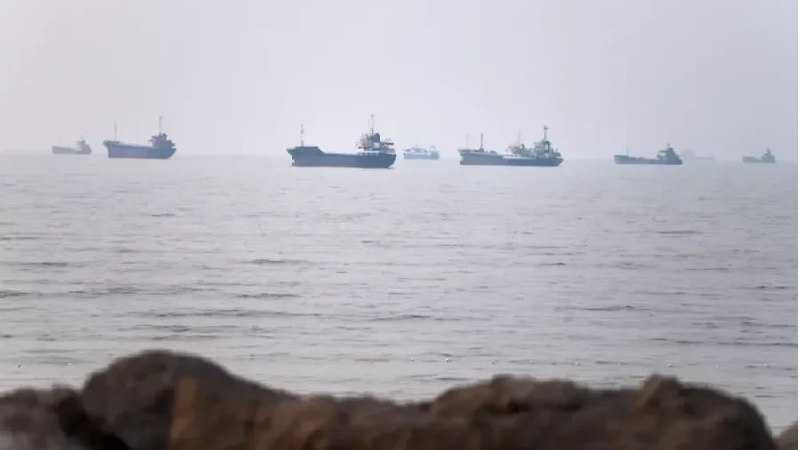
Iran's foreign minister touched down in Muscat on 10 July for what Tehran is framing as a focused round of consultations on the Strait of Hormuz, with the country's foreign ministry publicly accusing Washington of having violated their bilateral memorandum of understanding and reserving the right to suspend its own commitments until compensation is paid.
That pairing — a high-level diplomatic visit to Oman hours after a public rupture with the United States over the same MoU that nominally governs Hormuz-related behaviour — is the most concrete signal in days about where the Gulf security file is headed. The chokepoint through which roughly a fifth of global oil shipments transit is, once again, the contested ground over which the wider arrangement between Tehran and Washington is being argued.
The diplomatic itinerary, in Tehran's telling
Ismail Baqaei, the spokesperson of Iran's Ministry of Foreign Affairs, announced the official visit of Foreign Minister Abbas Araghchi to Muscat on 10 July. According to the readout carried by Iranian outlets, the consultations centre on the Strait of Hormuz and the broader regional file, with Oman — a long-standing mediator between Tehran and Western governments — once again cast in the convening role. The framing matters: the visit is publicly framed by Tehran not as a courtship but as working consultations on a transit corridor whose operating rules are simultaneously the subject of the same MoU Tehran is accusing Washington of breaching.
A second readout, distributed later the same evening, sharpened the subtext. Iran's foreign ministry said the United States had "violated the memorandum of understanding" and that "our approach is commitment for commitment, and we will not implement any commitment without compensation." The wording tracks the canonical Iranian formulation that has accompanied every escalation cycle of the past two years: a public reassertion of conditional compliance, paired with an insistence that any further movement requires matched movement from the other side.
What the MoU is, and what it isn't
The memorandum under dispute is the same instrument that has, for most of 2024 and 2025, served as the informal operating manual for Hormuz behaviour — commercial shipping unhindered, a quiet understanding on the pace of nuclear-related activities, and a procedural channel between Iranian and US military and diplomatic counterparts when incidents occur in the waterway. Iran argues Washington has breached it; Washington has not, in the source material available on 10 July, issued a direct public rebuttal of that specific charge. The asymmetry of the public framing — Tehran naming the breach, Washington not yet contesting it on the record — is itself a piece of leverage.
The Gulf monarchy angle: Oman has hosted several rounds of indirect US-Iran dialogue since the 2015 nuclear deal era, and Muscat's value to Tehran is precisely that it is not Washington. A meeting in Muscat can be substantive without producing the domestic-political cost in Tehran that direct bilateral talks currently impose. It also lets the Iranian side set an agenda — Hormuz — that binds any subsequent Washington engagement to the Iranian priority list before the conversation begins.
The Hormuz lane nobody can substitute
The structural fact that makes these consultations consequential is that the Strait of Hormuz cannot be rerouted. Roughly a fifth of the world's traded oil and a comparable share of LNG move through a channel roughly 21 miles wide at its narrowest, with two-mile-wide shipping lanes in each direction. A material disruption — whether through overt closure, harassment of commercial tonnage, or the credible threat of either — does not merely raise the price of crude. It forces insurance underwriters to redraw the war-risk premium map for the entire Indian Ocean basin, with knock-on effects in containers, dry bulk, and LNG freight that propagate into global goods inflation within weeks.
Which is why even a rhetorical escalation cycle inside the same week — public breach accusation, visit to the mediator, conditional-compliance formula — moves spot prices and shipping insurance. The market does not need Iran to physically close the Strait to pay for the risk that it might. The Muscat consultations are, in this sense, also a price event in real time, regardless of what is said at the table.
What Ankara, the Gulf monarchies, and Beijing are watching
The external audience for this round goes well beyond Washington and Tehran. Three weighty outside readers, in particular:
The GCC capitals. Saudi Arabia, the UAE, and Qatar each have Hormuz-dependent hydrocarbon export profiles and have, in recent years, invested heavily in pipeline and port bypass capacity. The UAE's Habshan–Fujairah pipeline, the Saudi East–West pipeline, and Qatar's ongoing investment in expanding its non-Hormuz LNG options are hedges against exactly the scenario Tehran is now publicly confronting the United States with. None of the three wants the Strait closed; none of them wants Tehran to feel cornered enough to consider it.
China. China is the single largest crude customer of the Gulf monarchies and a significant buyer of Iranian crude. A Hormuz disruption that extended beyond a few days would hit Chinese energy security far harder than it would hit US energy security (the US is now a net exporter of crude and refined products). Beijing's response is unlikely to be rhetorical alone: expect quiet pressure on all sides for the status quo to hold, expressed through the channel that has historically mattered most in Tehran — economic engagement and oil purchases.
India. Roughly 35% of India's seaborne crude and a larger share of its LNG transits Hormuz. India, like China, has an interest in neither escalation nor a US-Iran collapse that produces a sustained disruption. New Delhi's posture is most likely to be quietly facilitative of the Muscat process, again through the same kind of low-profile diplomatic channel Oman now finds itself hosting.
What remains uncertain on 10 July
The Muscat consultations are, on the public record, still unfolding. The Iranian side has telegraphed an agenda — Hormuz, the MoU — and a posture — conditional compliance — but has not, in the source material available as of 2032 UTC on 10 July, named a specific deliverable. The US side has not, in the same window, named the breach charge, responded publicly, or confirmed any parallel channel. What the sources agree on is narrower than what they imply: that the visit is happening, that Tehran has publicly framed it around Hormuz, and that Tehran has simultaneously accused Washington of breaching the same MoU that ostensibly governs Hormuz behaviour. What they do not yet settle is whether this is the opening of a managed de-escalation, the prelude to a more serious breach test, or a familiar cycle of public pressure followed by quiet repair. The answer, almost certainly, will be readable in the next 72 hours of statements from Muscat, Washington, and Tehran's foreign ministry spokesperson.
This article has been compiled by the Monexus newsroom. The principal inputs were Iranian state-affiliated wires — Tasnim and Fars — carrying the official readouts of the Foreign Ministry spokesperson on 10 July; the framing of the consultative visit and the public accusation against Washington are reported as the Iranian side presented them, in line with Monexus's standard practice of giving the relevant non-Western source its own full voice on its own framing.
Wire provenance
This editorial synthesis draws on the following public wire/social posts:
- https://t.me/tasnimnews_en
- https://t.me/JahanTasnim
- https://t.me/farsna
- https://en.wikipedia.org/wiki/Strait_of_Hormuz
- https://en.wikipedia.org/wiki/Habshan%E2%80%93Fujairah_pipeline