Iran's choreographed grief and the message Tehran is sending
A state funeral in Tehran is rarely just a funeral. On 10 July 2026 the choreography, the guest list and the camera angles are themselves the message — and the message is aimed as much at rivals abroad as at mourners at home.
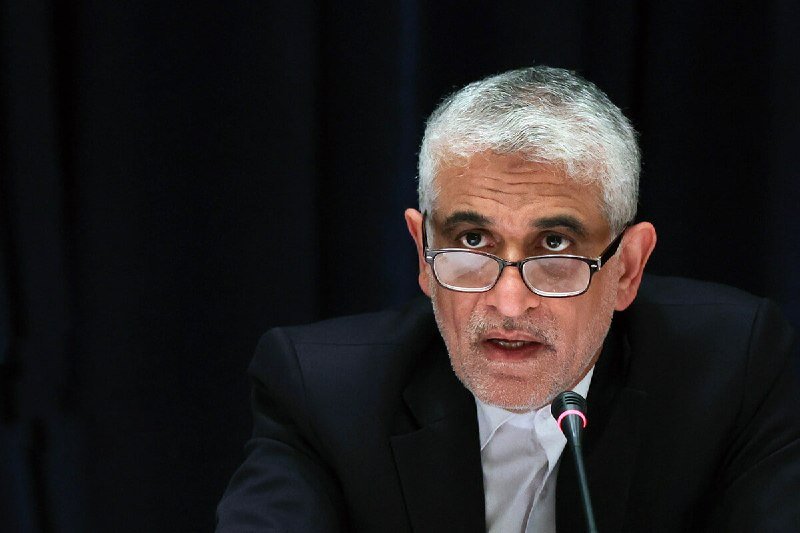
On the morning of 10 July 2026, a procession moves through central Tehran under the watch of state broadcasters and a carefully managed foreign press pool. The streets are lined not in the spontaneous disorder of popular grief but in the geometric precision of a regime that has spent four decades refining the political grammar of mourning. The coffin is real. The grief is, in many cases, real. The performance is also deliberate — and it is that performance, more than the death itself, that carries the day's signal. According to a long-form reading published by The Indian Express on 10 July 2026, the funeral and its choreography function as a stage-managed assertion of state authority at a moment when Iran is juggling sanctions pressure, a contested regional footprint and an internal succession debate it has not finished having with itself.
The argument worth taking seriously is not that Iranian state ritual is hollow — plenty of attendees mourn in earnest — but that the optics are engineered for an audience several time zones away. Every camera placement, every cleric in the front row, every foreign ambassador allowed close enough to be seen and far enough to be controlled, is a sentence in a longer diplomatic cable the regime is writing in images rather than in memos.
What the framing is
The dominant reading in Western coverage tends to treat Iranian state ceremonies as evidence of internal fragility: a regime performing unity because it cannot assume it. There is real material for that reading. Iran is operating under sweeping sanctions, its regional proxy network has taken heavy blows since late 2023, and its currency has been through several rounds of crisis. A leadership that felt entirely secure would not need to script its grief.
The other reading — and the one The Indian Express piece gestures toward — is that the choreography is not a symptom of weakness but a tool of statecraft in its own right. Funerals in the Islamic Republic have historically been used to consolidate elite coalitions, signal ideological continuity, and remind both domestic and foreign audiences that the system has institutional depth. The 2020 funeral of Quds Force commander Qassem Soleimani, drawing millions into the streets of several cities, is the obvious precedent. So is the 1989 funeral of Ayatollah Khomeini, the foundational ritual of the republic's political theology.
The two readings are not mutually exclusive. A regime can be under pressure and still be very good at converting that pressure into imagery. The question is which reading does the heavier explanatory work — and the honest answer is that the ritual itself is doing more of the political lifting than the foreign-policy analysts usually allow.
What a funeral is actually for in Tehran
Three functions, in plain terms. First, a succession test. When senior figures die in the Islamic Republic, the order of mourners, the length of the eulogies and the bodies represented at the ceremony all carry information about which faction is ascendant. Coverage of Iranian state ritual in outlets from Reuters to the state-affiliated Press TV has long treated the seating chart as a kind of political x-ray. The 10 July ceremony, as described in The Indian Express's reading, slots into that tradition: the guest list is the news, the deceased is the occasion.
Second, a regional signalling exercise. Iran does not need a war to project a posture; it needs a stage. Funerals supply one, free of the escalation risk of a missile test and considerably more photogenic. The visual vocabulary — black banners, Quranic recitation, the rhythmic chest-beating of professional mourners, the slow movement of the cortege through engineered choke points — is legible across the Arab world, across South Asia, and into the diaspora communities of Europe and North America.
Third, a domestic legitimacy audit. The state wants to be seen carrying its dead. That is partly sentimental, and partly a reminder that the institutions which bury are the institutions which rule. The Iranian state's social contract — uneven, contested, real — leans heavily on its claim to provide the rituals that hold a diverse society together. A well-run funeral is, in a meaningful sense, a piece of public infrastructure.
The counter-narrative worth hearing
The Western wire line on Iranian state ceremony tends to flatten this. Coverage routinely defers to the language of official spokespeople on one side, and to the language of exile opposition on the other, with little room between for the middle fact that a ritual can be both politically useful to the regime and genuinely meaningful to the people inside it. The flattening is partly a sourcing problem — Western newsrooms have thinner bench depth in Tehran than they did a decade ago, and they reach for familiar frames when the reportorial ground gets thin.
The Global South press, including the Indian outlets that carried the 10 July piece, is generally more willing to take Iranian statecraft on its own terms without either applauding it or treating it as a curiosity. That posture is not endorsement; it is closer to the basic analytical courtesy of assuming a state actor is competent at its own job. A regime that has survived four decades of sanctions, a brutal eight-year war, and the assassination of its senior military commander is, on the evidence, competent at certain tasks. Refusing to see that is its own form of bias.
The structural frame
The deeper pattern here is older than the Islamic Republic and bigger than any single funeral. State ceremony in the Middle East — and indeed in most of the world — is a form of currency. A regime that can fill a street, broadcast to a region, and choreograph the grief of millions is signalling to every counterpart across the negotiating table that it has reserves the sanctions ledger cannot capture. The image of an orderly Tehran is, in a real sense, a balance-of-payments entry.
The mistake to avoid is treating this as uniquely Iranian. The United States stages state funerals with comparable care — the 2018 casket of John McCain being a recent case study in how a single ceremony can be made to carry a foreign-policy argument. Israel does the same with national-memorial ritual. Russia has elevated the televised state funeral into a refined art form over the past three years. The Iranian version is more religious, more visual, and more exposed to a hostile press environment. It is not more cynical.
What remains uncertain
The sources do not specify the identity of the deceased, the scale of the procession, or the official guest list — those details sit inside the paywalled body of the original Indian Express long read. What is reasonably clear from the framing is that The Indian Express is treating the funeral as a piece of statecraft rather than as a domestic human-interest story, which is itself a signal about how an influential South Asian outlet is choosing to read the moment. Whether that reading travels — into Western wires, into the diplomatic telegrams that ultimately shape the next round of negotiation — is the open question. The ceremony will be over by the time those cables are drafted. The image, however, will be doing its slower work for months.
This publication treats state ritual as material evidence, not as backdrop. Where Western wire coverage tends to compress the analysis, the structural reading is usually the more durable one.
Wire provenance
This editorial synthesis draws on the following public wire/social posts:
- https://en.wikipedia.org/wiki/State_funeral#Iran