Burial, strikes and a fight over the story: Iran’s leadership transition enters a dangerous second week
Tehran buries Khamenei eight hours behind schedule, blames the delay on crowds, not US bombs — even as new strikes hit the country and Washington insists talks are still alive.
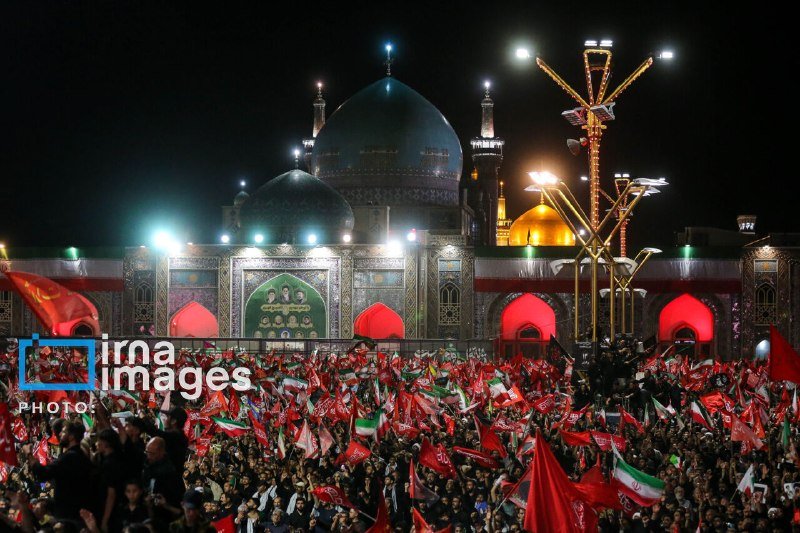
The eight-hour delay that pushed the burial of Ayatollah Ali Khamenei from the early hours of 10 July 2026 into the late morning was not, the Iranian authorities insisted, the work of American bombs. It was, they said, the weight of grief: an unmanageable crowd that took longer than any security plan could absorb. Middle East Eye reported on 10 July 2026 that Iranian officials attributed the schedule slip to the sheer number of mourners, explicitly denying that US strikes had forced a postponement.
The denial itself is the news. A state fighting for the legitimacy of its next transition is now also fighting for the right to narrate it — and the first battle of that second fight is over who, exactly, killed Iran's Supreme Leader.
A funeral, and the politics of who showed up
The burial unfolded against a backdrop the authorities had clearly hoped to script but could not quite control. South China Morning Post's reporting on 10 July 2026 carried the line that has since defined the day from the mourners' side: "only revenge can soothe the pain." That phrase, shouted by thousands on the streets of Tehran, tells you more about the political weather inside Iran than any official communique. The establishment wanted a funeral; it got a mobilisation.
The eight-hour delay matters beyond choreography. It is the first piece of evidence that the new leadership does not fully control the public story. A managed funeral would have ended at the scheduled hour; a funeral that overruns is one in which the crowd has, at least for a day, become the loudest voice in the room.
Strikes continue, and Washington says the diplomacy is alive
As mourners filled central Tehran, new strikes hit Iranian territory. Al Jazeera's live coverage on 10 July 2026 reported additional attacks on Iran on the same day as the burial — and, in the same breath, carried a US official's insistence that Washington was not behind those strikes and that technical talks with Iran were continuing.
That formulation is doing heavy lifting. "Not behind the latest strikes" is a careful phrase. It does not disavow earlier strikes. It does not name an alternative perpetrator. It simply carves out a sliver of deniability large enough for diplomacy to continue inside. The signal to Tehran is: we have not closed the door; the signal to allies is: do not yet assume escalation is automatic. Whether Tehran reads it that way is another matter.
The assassination file that nobody has seen
Into this brittle equilibrium, al-Alam Arabic — a channel aligned with the axis the United States routinely describes as hostile — reported on 9 July 2026 that two sources had told it "Israel" and Washington had shared intelligence indicating that Iran had recently developed a plan to assassinate US President Donald Trump.
The framing of that report is itself worth parsing. It positions the leadership transition not as a domestic succession but as the continuation of a tit-for-tat targeting operation. If true, it raises the stakes for any US administration weighing further strikes. If not true, it is the kind of leak that becomes useful to whoever wants the diplomatic track to fail. The reporting does not establish the underlying intelligence; it establishes only that someone wanted the allegation on the record.
Why the burial story, told this way, is the real story
The pattern here is familiar to anyone who has watched how states under pressure handle the death of a central figure. The new leadership has three jobs at once: it must demonstrate continuity, it must channel grief into loyalty, and it must keep external adversaries uncertain about whether the next move will be war or negotiation. The eight-hour delay exposes the limits of the first job. The street chant of "only revenge" strains the second. The simultaneous strikes and the simultaneous "talks continue" line from Washington are the test of the third.
What is structurally unusual is the simultaneity. Strikes on the day of a funeral, with talks nominally live, is not a posture any major power has wanted to maintain for long. Either the talks will produce a written arrangement within days — in which case the strikes were coercive bargaining — or they will collapse, in which case the funeral becomes a recruiting poster. There is no comfortable middle for either side to inhabit.
What the sources do — and do not — settle
The four source items in circulation this morning agree on a narrow set of facts: Khamenei was buried on 10 July 2026; the burial ran hours late; the Iranian government attributes the delay to crowd size; fresh strikes hit Iranian territory the same day; Washington denies responsibility for those strikes and affirms that technical talks continue; and a claim has surfaced, via al-Alam Arabic, that Iran had been developing a plot against President Trump.
They do not settle: who carried out the latest strikes; whether the assassination-file claim has any basis beyond the channel's own sourcing; what the technical talks actually cover; or what the new Iranian leadership intends to do with the public anger visible in the funeral crowds. On each of those questions, the dominant framing in Western wires (regime under strain, Washington in control of escalation) and the framing visible in the regional coverage (mourning as defiance, revenge as policy) point in opposite directions. The honest reading is that both contain a piece of the truth and that neither has the full picture yet.
Stakes, plainly stated
If the diplomatic track holds through the transition, the funeral will be remembered as a controlled release of pressure. If it does not, the same crowds, the same chants, and the same eight-hour delay will be remembered as the moment the new leadership lost the room. For Washington, the calculus is whether the strikes are buying leverage at the negotiating table or foreclosing it. For Tel Aviv and Tehran's regional rivals, the calculus is whether the next Iranian government will be more, or less, constrained than the last. And for the oil market, the insurance market, and every state bordering the Gulf, the next 72 hours will determine which version of the next month they prepare for.
This publication treats the funeral narrative as the news, not the background. Western wires have led on the strikes and the diplomacy; the regional press has led on the mourning and the defiance. Both are right to lead on what they lead on — and both are wrong to treat the other half as decorative.
Wire provenance
This editorial synthesis draws on the following public wire/social posts:
- https://t.me/alalamarabic