Tehran's red line moves to Muscat: what the Foreign Ministry's seven statements actually say
A cascade of Iranian Foreign Ministry statements on 10 July 2026 frames US sanctions and strikes as violations of an undisclosed memorandum — and signals that Muscat, not Geneva, is now where the channel runs.
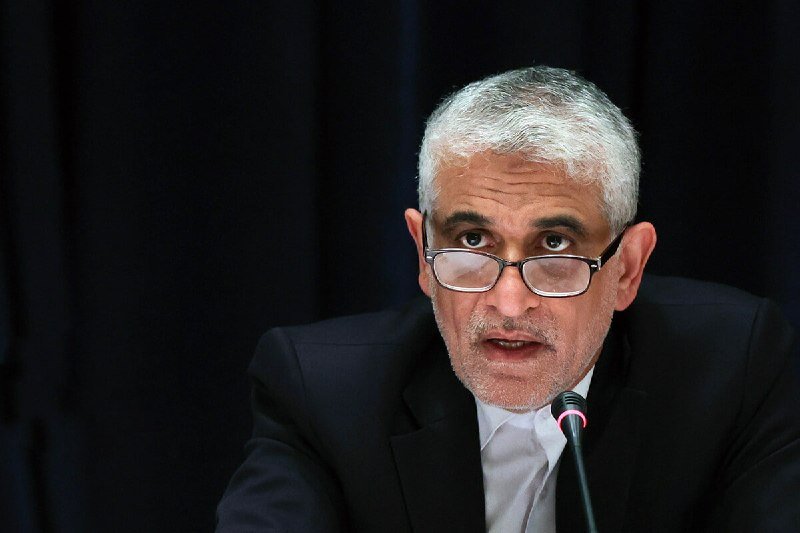
At 20:37 UTC on 10 July 2026, the Iranian Foreign Ministry put two messages into circulation within minutes of each other. The first accused the United States of carrying out "flagrant" attacks on Wednesday and Thursday in violation of Clauses 1 and 2 of a Memorandum of Understanding. The second announced that Foreign Minister Abbas Araqchi was travelling to Muscat to continue consultations with his Omani counterpart on the Strait of Hormuz — consultations, the ministry said, that had been running for two months.[^1]
Within six minutes, four more statements had followed. Tehran characterised the cancellation of a sanctions waiver on Iranian oil sales as a breach of the same memorandum. It described new US sanctions on Iranian individuals and entities as a violation of Article 9. It warned that "if the other party breaches its obligations, which is what it did, we will take the necessary measures and we have done so and this will continue." And it restated the operating principle: commitment for commitment, nothing unilateral.[^2]
Strip the rhetoric away and a picture emerges. There is, sitting behind these seven statements, a written agreement the public has not been shown. The clauses being invoked — Article 9 on sanctions, Clauses 1 and 2 on attacks, the implicit Article that permits retaliation — belong to a text whose contents, signatories, and date of signature are not in the source material reviewed. That is not a minor caveat. It is the load-bearing fact of the entire episode.
What we can verify, and what we cannot
The verified ledger is narrow. Iran's Foreign Ministry has, via the Beirut-based Al Alam Arabic channel, put seven dated statements into the public domain between 20:37 and 20:43 UTC on 10 July 2026. They name Araqchi, name Muscat, name the Strait of Hormuz, and reference a Memorandum of Understanding whose terms they interpret unfavourably to Washington. They do not name the US signatory, do not publish the text, and do not specify which "Wednesday and Thursday" attacks they mean.[^3]
The rest is framing. The ministry's own characterisation of events as "flagrant violation" and "clear violation" is, on the record presented, the only characterisation on offer. No US State Department readout, no White House statement, no Pentagon briefing appears in the source set. The Western wire has not, in the material reviewed, been given the text to read against Tehran's interpretation. That asymmetry matters: when one party is the sole interpreter of a binding instrument, every clause it invokes is, in effect, a unilateral claim.
The pivot to Muscat
The most concrete operational signal in the cascade is not a sanctions threat. It is the Muscat trip. Araqchi's visit, framed by the ministry as the continuation of two months of consultations, is to develop "an appropriate mechanism for ships to cross the Strait of Hormuz in accordance with the memorandum of understanding."[^4]
This is the channel relocating. When the substantive US-Iran track runs through Muscat, the Omani foreign ministry becomes the de facto escrow agent for any deal. Oman has held that role before — the 2013 and 2023 back-channel exchanges both passed through Muscat — and the pattern is familiar. What is new is the explicit Hormuz brief. A transit mechanism for the strait is not a confidence-building measure; it is the operational core of any arrangement that would allow Tehran to claim the memorandum is functioning while simultaneously signalling to oil markets that the world's most consequential energy chokepoint is being administered bilaterally rather than through the international shipping regime.
The principle of reciprocity, weaponised
"Commitment for commitment" is, in plain terms, a reciprocity doctrine. Tehran's statement that it "will not implement a commitment without a commitment" is the standard diplomatic formulation of conditional compliance, but applied to a memorandum whose text is undisclosed it acquires a different weight.[^5] The ministry is, in effect, asserting a right to interpret the agreement and to suspend or modify its own compliance based on that interpretation. That is not an unusual posture in adversarial diplomacy. What is unusual is the speed at which the ministry moved from accusation to threatened countermeasure — six minutes between the first "flagrant violation" line and the warning that "necessary measures … will continue."
Why the oil waiver is the real trigger
Two of the seven statements target sanctions architecture rather than kinetic action. The cancellation of the sanctions waiver on Iranian oil sales, the ministry argues, breaches the memorandum. New designations on Iranian individuals and entities breach Article 9.[^6] Read together with the Hormuz brief, the pattern is legible: the Iranian objection is not only to the strikes, but to the financial plumbing that lets oil reach market. A waiver regime is, in oil-state terms, the difference between revenue and isolation. Revoking it converts a diplomatic dispute into a fiscal emergency for Tehran — and a fiscal emergency is when the Strait of Hormuz becomes more than a metaphor.
The structural frame is straightforward. A sanctions waiver is leverage, not a gift. An oil-exporting state that sees a waiver revoked will look for the leverage it still holds. For Iran, that leverage runs through the strait. The ministry's choice to place the Hormuz mechanism at the top of the Muscat agenda is the diplomatic equivalent of showing the counterparty which switch it intends to throw.
What the sources do not let us say
This publication cannot, on the source set reviewed, identify the memorandum's date, the US signatory, the parties that witnessed it, the text of the disputed clauses, or the operational status of the alleged Wednesday and Thursday strikes. We cannot confirm whether the memorandum is bilateral or mediated, whether it was signed in Muscat or transmitted through a third capital, or whether the "consultations" of the past two months are the same consultations that produced it. We can confirm only that the Iranian Foreign Ministry, on 10 July 2026, chose to surface all of these claims in a single six-minute window, in seven discrete statements, on a single channel.
That is the story. The text behind it is, for now, Tehran's alone to read.
How Monexus framed this: where the wire would lead with the strikes and trail the diplomacy, the staff desk inverted the order — leading with the text the Foreign Ministry is invoking, because the text is the leverage, and the leverage is what the next 72 hours in Muscat will turn on.
Wire provenance
This editorial synthesis draws on the following public wire/social posts:
- https://t.me/alalamarabic
- https://t.me/alalamarabic
- https://t.me/alalamarabic
- https://t.me/alalamarabic
- https://t.me/alalamarabic
- https://t.me/alalamarabic
- https://t.me/alalamarabic