Live Wire
20:48ZMYLORDBEBORussian BMW plant hints at assembling models never before produced in Russia20:46ZCLASHREPORClinton says Trump's enemies list rivals Nixon's, cites political corruption20:46ZWFWITNESSApple sues OpenAI, two former employees for trade secret theft20:45ZTASNIMNEWSIranian foreign minister visits Muscat, discusses Strait of Hormuz20:43ZPRESSTVMali accuses Ukraine of training, arming Al-Qaeda-linked militants in Sahel region20:43ZALALAMARABIranian Foreign Ministry: US cancellation of Iranian oil sanctions lift violated memorandum of understanding20:42ZALALAMARABIran says it will continue measures after other party breached obligations20:41ZJAHANTASNIIranian foreign minister to make official visit to Oman
Markets
S&P 500755.43 0.06%Nasdaq26,282 0.29%Nasdaq 10029,825 0.33%Dow526.34 0.10%Nikkei94.85 0.32%China 5033.53 0.16%Europe88.57 0.03%DAX41.6 0.22%BTC$63,817 0.89%ETH$1,790 2.39%BNB$575.53 1.02%XRP$1.11 0.74%SOL$77.81 0.43%TRX$0.3304 0.40%HYPE$67.03 0.36%DOGE$0.0742 1.36%RAIN$0.0144 0.23%LEO$9.51 0.72%QQQ$726.08 0.08%VOO$694.43 0.09%VTI$372.9 0.09%IWM$296.14 0.06%ARKK$80.31 0.08%HYG$79.68 0.03%Gold$377.39 0.11%Silver$54.07 0.19%WTI Crude$108.57 0.12%Brent$42.14 0.02%Nat Gas$10.6 0.06%Copper$37.76 0.58%EUR/USD1.1430 0.00%GBP/USD1.3423 0.00%USD/JPY161.87 0.00%USD/CNY6.7745 0.00%
CLOSEDNYSEopens in 2d 16h 38m
The Monexus
Vol. I · No. 191
Friday, 10 July 2026
Saturday Ed.
Updated 20:51 UTC
  • UTC20:51
  • EDT16:51
  • GMT21:51
  • CET22:51
  • JST05:51
  • HKT04:51
← The MonexusTech

Iran plot, Polymarket odds, and Meta's smart-glasses privacy patch: a snapshot of three AI-and-security frontiers on 10 July 2026

On 10 July 2026 the same news day carried an alleged Iranian assassination plot against Donald Trump relayed by Israel, a 12% Polymarket contract on a federal AI-model review, and a quiet Meta patch for always-listening smart glasses. Monexus reads the three together.
A heavily armored, muscular figure in green and metal spiked armor stands in a hazy, orange-lit rocky landscape with spikes on the right. @THE VERGE · Telegram

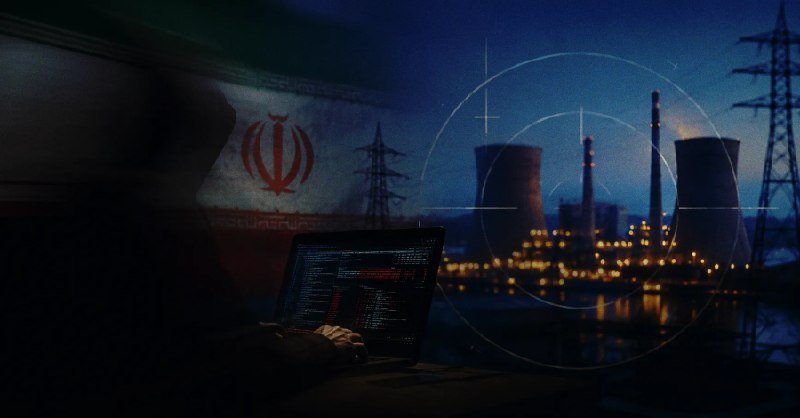
At 11:37 UTC on 10 July 2026, the markets-focused account Unusual Whales flagged a Wall Street Journal report that Israel had passed US counterparts intelligence describing a fresh Iranian plot to assassinate former — and now again — president Donald Trump. The same news day surfaced two near-adjacent technology stories: a Polymarket contract pricing the odds of a sweeping federal review of new artificial-intelligence models at 12 percent, and a Meta software update aimed at silencing smart glasses that, until this week, were listening when users believed they were off.

Read side-by-side, the three stories sketch a single underlying question — what counts as a credible threat in 2026, and who decides? The Iran-Trump allegation sits inside an assassination-attempt file that already stretches from Butler, Pennsylvania in July 2024 into the spring of the following year. The Polymarket contract is a market's best guess at how a White House now openly enthusiastic about American AI might treat the handful of frontier models it did not build. The Meta patch is the smallest of the three by political weight and possibly the most revealing: a single platform quietly rewriting client behaviour because outside reporting described a behaviour the company did not want on the record.

The alleged plot, in its documented form

The Indian Express, summarising The Wall Street Journal, reported that Israeli intelligence shared the new allegation with US counterparts. The framing was direct: "Israel shared intelligence on alleged Iran assassination plot against Trump, say reports," according to a Telegram-posted summary of the Indian Express article at 10:52 UTC on 10 July 2026. Trump himself, quoted by the paper, said "I'm on every hit list."

The counter-claim from Tehran has not, in the wire reporting available to Monexus on the date of publication, been formally denied with the level of specificity one would expect if the allegation were fictitious. Iranian state media has consistently denied involvement in past attempts against the former president; the structural position of Iran's foreign ministry has been to treat such allegations, when levelled, as sequencing within a sanctions-and-pressure campaign rather than as matters of evidence. The Indian Express and The Wall Street Journal are both establishments of record; the allegations they carry are consequential regardless of one's priors on the file. But "Iranian regime plots against a sitting or former US president" is a category of claim that has historically been used to justify escalation, and the institutional lesson of the past decade is that the line between intelligence shared in private and intelligence confirmed in public is where reputations — and sometimes wars — are made.

There is no public confirmation, on the record in the source items Monexus has reviewed, of the specific operational detail, the cell, the venue, or the timing of any alleged plot. The sourcing chain begins with Israeli intelligence, travels through a friendly wire, and lands at a US political figure who has every incentive to amplify rather than dampen the story. That is, by itself, neither a refutation nor a confirmation. It is the texture of how such stories arrive, and the texture is the news.

The Polymarket contract on federal AI review

At 15:35 UTC on 9 July 2026 — the day before the assassination report — the prediction market Polymarket hosted a contract on whether the Trump administration would, by year-end, "order federal review of all new AI models," with the implied probability sitting at 12 percent. The contract's identifier is P0b2YFd. The number is small but not trivially so: roughly one in eight. In prediction-market terms, 12 percent on a binary about a sitting administration's signature AI-policy action is high enough to indicate that well-informed bettors view serious federal review as a plausible, not fanciful, outcome.

The Trump White House's posture toward frontier AI has been deregulatory in rhetoric and selective in practice: championing American model-makers, opposing European-style pre-deployment licensing, while still reserving the right to act under export-control or national-security authorities when a competitor's chip stack is in play. A "federal review of all new AI models" is, on its face, a heavier instrument — closer in spirit to the kind of safety review some US states and the EU have already legislated. The contract's 12 percent does not predict that such an order is imminent; it predicts that it is not implausible. The asymmetry between deregulatory tone and 12 percent implied review-probability is itself a story about how fragile the AI-policy consensus in Washington remains, even inside an administration whose base treats AI as its own.

The Meta smart-glasses privacy patch

At 09:52 UTC on 10 July 2026, the Indian Express reported that "Meta fixes smart glasses privacy issue amid 'always-on' AI glasses report." The phrase "always-on" does most of the work. Until the patch, Meta's wearable assistant — built into a Ray-Ban-class frame — was, in at least one documented configuration, capturing or buffering audio in a mode users reasonably read as off. The fix landed in software, after the reporting landed in print, in a sequence of events that has become characteristic of consumer-tech privacy disclosures: external observation, then a patch the company describes as a corrective, with no admission that the prior behaviour was anything more than a bug.

The counter-frame is the company's own, articulated over many launches: that ambient capture is a feature, not a failure, because the value of a wearable assistant is precisely that it can hear and see the world without a tap. The structural problem with that frame is that the user cannot, by construction, know when the assistant is or is not capturing; the affordance of an "off" state therefore depends on a guarantee the platform, not the user, controls. The Meta patch moves the slider, but the underlying architecture — an always-listening microphone tied to a model trained on platform-trusted inputs — does not change.

The knock-on stake is regulatory. A platform that ships a default-on wearable microphone, patches it after reporting, and frames the patch as routine cannot, in the same press cycle, credibly oppose the kind of federal review Polymarket is pricing. If 12 percent understates the case, the Meta story is the reason.

Reading the day together

The three stories look unrelated at first pass: a foreign-policy assassination claim, a small prediction-market number on AI policy, a consumer-privacy patch. Read in sequence by timestamp — 09:52, 10:52, 11:37 UTC on 10 July, with the Polymarket contract already trading since 9 July — they line up differently. The earliest event is the prediction market registering that something might break. The middle event is a platform quietly rewriting how its hardware behaves. The latest event is the geopolitical charge that, if true, would justify a great deal of emergency latitude for the executive branch across the rest of the year.

The structural pattern is that the boundary between credible threat and credible excuse has narrowed. Intelligence services share a plot; a regulator could invoke review; a platform invokes a patch. In each case, a public actor describes something — an assassination, an unsafe model, a glitching wearable — that the actor itself defines as the perimeter of acceptable behaviour. The Polymarket 12 percent is the price of that perimeter being redrawn.

What remains genuinely uncertain is the evidentiary base for the Iran allegation. The Indian Express-Wall Street Journal chain reports the intelligence sharing as fact and the plot as allegation; the Iranian side, in available sourcing, has not been quoted in detail. The Polymarket number is a market read, not a poll; thin liquidity can swing such contracts violently. The Meta fix is documented but the prior behaviour, beyond the Indian Express's characterisation, is not detailed in the source items available to Monexus at publication. On each of these, the disciplined read is to mark the claim, name the source chain, and wait for confirmation rather than for closure.


Desk note: Monexus treats the three wire items as a single day-cluster rather than as separate bulletins, on the view that the underlying question — who defines a credible threat in 2026 — is shared across them. Where Iranian, Meta, or Trump-administration counter-positions have not yet been documented in the source items available, this article flags the gap rather than filling it.

Wire provenance

This editorial synthesis draws on the following public wire/social posts:

  • https://t.me/s/IndianExpress/72POnfh
  • https://t.me/s/IndianExpress/3I7pwYo
  • https://t.me/s/IndianExpress/lGb8Mv6
© 2026 Monexus Media · reported from the wire