Mashhad diplomacy and Bushehr mourning frame Iran's post-Khamenei opening
Indonesian Foreign Minister Sugiono's pilgrimage to Mashhad sits alongside a state memorial in Bushehr, signalling how Tehran is performing legitimacy — and reaching outward — in the days after Ayatollah Khamenei's death.
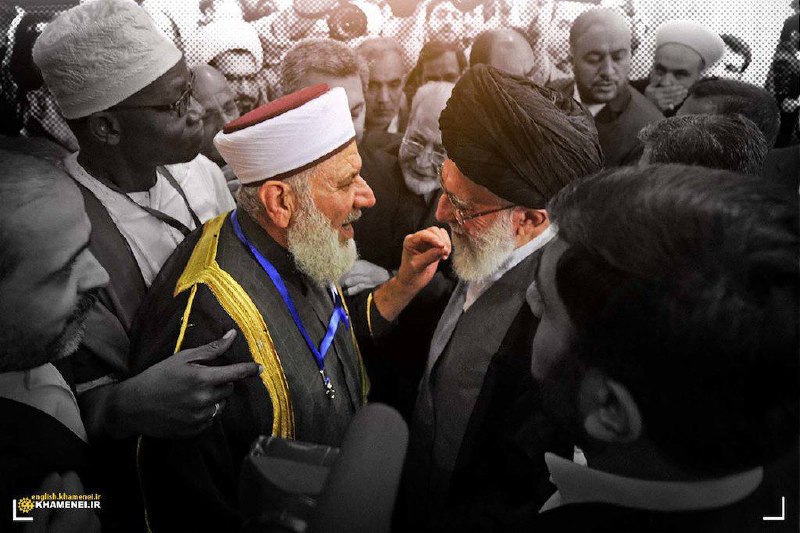
Indonesian Foreign Minister Sugiono landed in Mashhad on Friday and, before any camera-ready diplomatic agenda, joined Iran's foreign minister Abbas Araghchi at the shrine of Imam Reza. The visit, reported by Iranian state broadcaster PressTV on 10 July 2026 at 19:31 UTC, frames Indonesia as the first senior non-regional visitor to publicly mourn Ayatollah Seyyed Ali Khamenei on Iranian soil. Hours earlier, a separate PressTV dispatch at 21:33 UTC the same day placed a state memorial in Bushehr, the Gulf port city that became synonymous with Iran's nuclear programme, on the official commemorative calendar. The pairing is small in personnel terms and large in what it tells us about the choreography Tehran is staging in the opening chapter of its post-Khamenei era.
The pattern is diplomatic liturgy first, policy disclosure later. Iran is performing continuity outward — to Muslim-majority partners, to non-aligned capitals, to anyone watching who might have wondered whether the leadership transition would produce a hiatus. Sugiono's pilgrimage is precisely the kind of imagery the new Iranian leadership wants circulating: a fellow Muslim democracy, the world's largest, kneeling at the tomb of the eighth Shia imam in a city the Indonesian president himself elevated into a shared point of reference. Read together with the Bushehr commemorations, the day's coverage sketches a two-track mourning strategy — internal ritual in a provincial capital tied to national prestige, external outreach in the holy city of Mashhad.
Why Mashhad, and why now
Mashhad is not a routine diplomatic stop. Receiving a counterpart there, before official talks in Tehran, signals that Iran wants the optics of religion more than the optics of a green-sofa press conference. Indonesia is a useful first caller: it carries weight inside the Organisation of Islamic Cooperation, runs a calibrated middle-power foreign policy, and has no quarrel with Tehran that would generate awkward headlines. PressTV's framing of the Mashhad meeting — the Indonesian delegation paying tribute to a "martyred Leader," a phrase used across Iranian state media — couples the visitor's grief to Iran's preferred narrative of Khamenei's death as martyrdom rather than as a routine succession event. The Indonesian readout cited by PressTV went further: "millions" of Indonesians, the account claimed, are marking the passing. Even allowing for the inflationary prose of state reporting, the choreography is clear. Tehran wants Muslim-majority publics, not Western wire services, to be the primary audience for what comes next.
Bushehr, the other signal
The Bushehr memorial, dispatched from the southern petrochemical and nuclear-energy hub, reads differently. Bushehr's symbolism is not religious — it is industrial and strategic. The Bushehr Nuclear Power Plant, Iran's only operational civilian reactor, gave the city a unique place in the country's atomic narrative and its negotiations with the great powers. Holding a public remembrance there, hours before the Mashhad encounter, is a quiet reminder that the post-Khamenei order has not slackened its grip on the technical files that matter most to the outside world. The sequence — religious capital in the morning, nuclear capital in the evening — is a piece of stage management. It tells Iranian audiences that mourning is a national duty, not a private grief, and it tells foreign observers that the country's strategic assets remain under unified authority. PressTV's reporting does not specify who attended the Bushehr ceremony or which officials addressed the crowd; the framing places it inside the broader "#MartyrKhamenei" commemorative series that Iranian state media has been running. That silence on personnel is itself informative.
What the framing choices reveal
Iranian state broadcasters are not neutral observers of their own succession, and PressTV's coverage should be read as the production of a particular narrative rather than a wire report. Sources from outside Iranian state media have not, in the material available to this publication, independently confirmed either the Bushehr ceremony's scale or the Indonesian delegation's specific movements in Mashhad. Indonesian outlets covering their own foreign minister's travel have not, in this thread, been directly cited; PressTV is here a stand-in for an official readout the Indonesian side has yet to issue in English-language wire form. The broadcasts make three claims that should be marked as regime-curated: first, that the death is framed as martyrdom; second, that the geographic distribution of remembrance is reading as strategic, not spontaneous; third, that foreign visitors are being positioned as supplicants at shared shrines rather than negotiators at a foreign ministry.
Stakes over the next weeks
The work performed in Mashhad and Bushehr is preparatory, not substantive. No agreements on nuclear files, sanctions architecture, or regional posture were announced. The Indonesian meeting is a mood-setter, useful to Tehran if it can be cited later as evidence that an early cohort of Muslim-majority capitals recognised the new leadership without waiting for Western validation. Bushehr, by contrast, is a domestic-consumption gesture aimed at audiences who read national dignity into which cities grieve publicly and which do not. The substantive diplomacy — the kind that moves on the nuclear file, on the Strait of Hormuz posture, on Tehran's outreach to Gulf monarchies — is still ahead. The day closed without a release date for a first post-succession policy text from Iran's foreign ministry or from the office now leading the country. Watch Mashhad more than Bushehr for what comes next: religious framing opened the choreography, but the next Indonesian or OIC-level visit, if it arrives, will be the first credentialing of Iran's new direction by anyone other than Tehran itself.
How Monexus framed this: where most outlets will lead on the martyrdom angle alone, this desk separated the diplomatic-liturgy track in Mashhad from the symbolic-industrial track in Bushehr, and flagged the Iranian-state provenance of both dispatches rather than treating them as stand-alone reportage.
Wire provenance
This editorial synthesis draws on the following public wire/social posts:
- https://t.me/s/presstv/1
- https://t.me/s/presstv/2