Tehran rebuffs Islamabad talks as Ghalibaf frames US standoff as zero-sum
On 10 July 2026, Iran's parliament speaker said "total defense" awaits any US violation, while Tehran's negotiators privately pushed back on Al Arabiya and Fox reporting of imminent Islamabad talks.
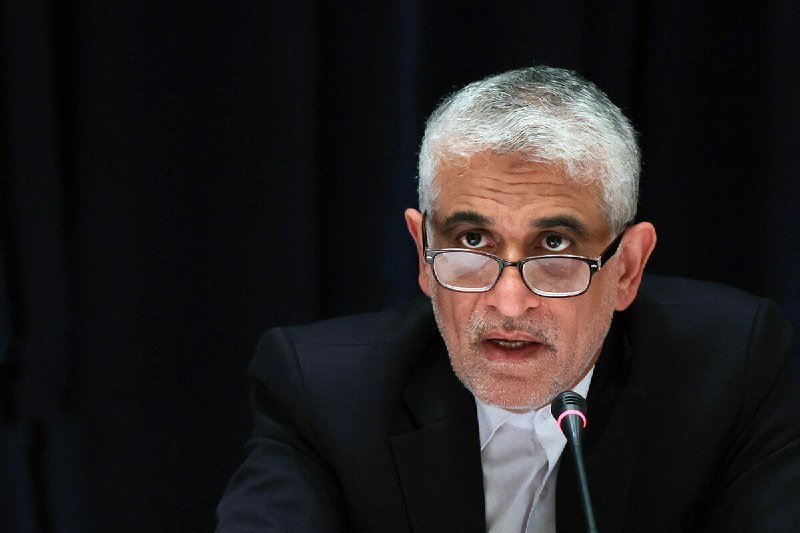
At 17:31 UTC on 10 July 2026, an Iranian parliamentary channel carried a message from one of the country's most senior officials that hardened, rather than softened, the diplomatic weather between Tehran and Washington. Mohammad Bagher Ghalibaf, speaker of Iran's parliament and a lead negotiator in the US–Iran file, declared that the latest round of confrontation "will never end with Iran surrendering," and that Tehran is prepared for "total defense" should the Americans cross a stated red line, according to monitoring accounts posted on the FotrosResistancee and osintlive Telegram channels at 17:21 and 17:15 UTC respectively.
The messaging matters less for its rhetoric than for its timing. Iranian sources moved within the same afternoon to publicly deny that any new round of talks was in the works, signalling an internal consensus that no face-saving climb-down was available. The pattern is familiar: when the public posture hardens, the negotiating room is usually empty.
What was said, and by whom
Ghalibaf's statement, as relayed through the FotrosResistancee channel, carried two distinct claims: a denial of Iranian capitulation ("the recent confrontation will never end with Iran surrendering"), and a conditional threat of escalation ("Tehran is ready for 'total defense' if the Americans violate the [red line]"). The osintlive channel, citing Tehran, reproduced the language almost verbatim, reinforcing the sense that the message was coordinated rather than spontaneous.
Ghalibaf is not just a parliamentary figurehead. As speaker of the Majles, he sits second in the country's formal line of succession after the supreme leader, and his standing as a former IRGC commander gives his security vocabulary a particular weight. That he chose to put himself on the diplomatic message — rather than leaving it to the foreign ministry or the presidency — signals that the file has moved up the Iranian chain of command.
The Islamabad-track denial
Sixteen minutes after Ghalibaf's words appeared, at 17:15 UTC, the wfwitness channel carried a denial attributed to Fars News, the outlet closest to Iran's security establishment. According to a "source close to the Iranian negotiating team," the reports by Al Arabiya and Fox News claiming a new round of Iran–US talks would take place in Islamabad "next week" were inaccurate. The same denial was carried on osintlive at 16:51 UTC, framing the Pakistani capital as a venue that, at minimum this week, is not hosting the diplomacy the Gulf-based and US outlets described.
The sequencing is significant. The denial did not come from Iran's foreign ministry spokesperson, and it was not delivered at a press briefing. It came from a negotiator-adjacent source speaking to a security-aligned outlet, and it explicitly named two Western-aligned news organisations whose reporting it sought to push back. That is the choreography of damage limitation, not the choreography of an opening gambit.
What the headlines had suggested
Al Arabiya, the Saudi-owned network headquartered in Dubai, and Fox News had carried — per the Iranian framing — the expectation that senior Iranian and US envoys would sit in Islamabad as soon as next week. Neither outlet's specific article was reproduced in the materials Monexus reviewed on 10 July 2026; the descriptions come from Iranian sources countering the claim. Two things follow from that. First, the underlying reporting, if accurate, was pitched as a confidence-building measure: third-party territory, a regional mediator, a defined date. Second, Iranian sources are now treating that reporting as either premature, fabricated, or politically inconvenient — the distinction between those three reads is not yet resolvable from open-source material alone.
The structural read, in plain terms
What is unfolding fits a recurring template in US–Iran pressure cycles. Official Iranian rhetoric hardens when leaks from the other side — about pending concessions, venue agreements, or prisoner exchanges — reach Arabic- and English-language wires. The leaks have the political effect of pre-committing Tehran to a position it has not yet signed off on, and the predictable response is a flat denial from someone whose authority cannot be questioned at home. Ghalibaf is a useful messenger precisely because he cannot be dismissed as a technocrat speaking outside his brief.
The second, harder pattern is the asymmetry of information. Iran's English-language rebuttals are framed as denials; the underlying reporting they deny sits inside paywalls and broadcast segments that the open-source community cannot directly inspect. The result is a posture of firmness in Tehran matched against an unverifiable expectation in Washington and the Gulf capitals that diplomacy is imminent. Either side could be right; the public material on 10 July 2026 favours the Iranian denial by weight of repetition.
Stakes and what to watch
If the Islamabad track is genuinely off for next week, the immediate losers are the diplomatic intermediaries — Pakistan's foreign office, which has invested in shuttle work, and the Omani and Qatari channels that have run parallel tracks. The immediate winner, on this reading, is the harder-line faction inside Iran's negotiating apparatus, whose position is strengthened every time a US-aligned leak can be repudiated at home.
The risk is that the same hardening language travels the opposite direction. A US administration that has been briefed to expect talks, and then has to manage the optics of their absence, faces its own domestic audience to satisfy. "Total defense" is a phrase with military content, not political content. What remains contested, and what the available sources do not resolve, is whether the red line Ghalibaf invoked refers to a kinetic strike, a sanctions snap-back, a designation action, or something the public channel has yet to specify.
The trajectory to watch into the second half of July 2026 is therefore not whether talks happen — the Iranian position on 10 July suggests they will not, on this schedule — but whether the absence of talks produces a quiet, off-camera de-escalation channel or whether it feeds a wider regional round. The materials monitored on this date point in one direction; the reporting they are pushing back against, if it was more than placeholder optimism, would point in another.
Desk note: wire coverage of US–Iran back-channel work has tended to foreground venue and date; Monexus is foregrounding the official Iranian counter-position, which on 10 July 2026 arrived in plain text, in the speaker's name, and within minutes of the report it was responding to.
Wire provenance
This editorial synthesis draws on the following public wire/social posts:
- https://t.me/FotrosResistancee
- https://t.me/osintlive
- https://t.me/wfwitness
- https://t.me/osintlive/2
- https://en.wikipedia.org/wiki/Mohammad_Bagher_Ghalibaf