Israeli drone strike kills in Kfar Rumman as southern Lebanon truce strains
An Israeli UAV strike on a vehicle near Kfar Rumman in south Lebanon's Nabatieh district on 10 July 2026 adds to a pattern of pinpoint hits that the post-November ceasefire has done little to silence.
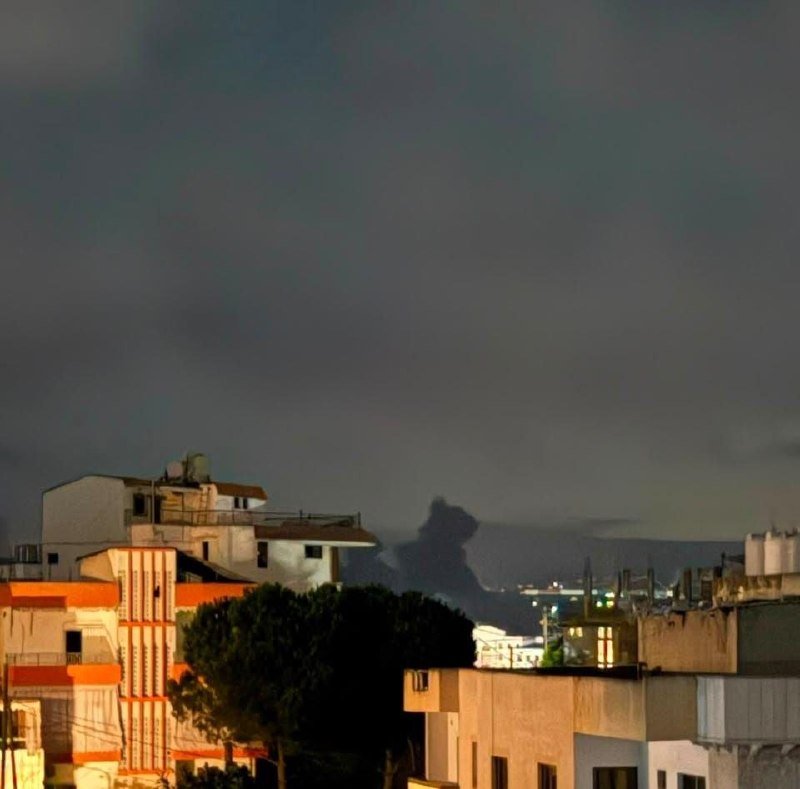
An Israeli drone struck a vehicle near the village of Kfar Rumman in south Lebanon's Nabatieh district on the morning of 10 July 2026, killing an undisclosed number of people on the Ali al-Taher ridge. Telegram channels linked to Lebanese field reporting and to Iranian state media carried the strike in near-real-time, with the first posts circulating before 11:30 UTC and follow-up confirmations through 12:47 UTC. The attack fell inside the geography — Nabatieh governorate, south of the Litani — that has been the operating theatre of Israeli precision strikes since the November 2024 ceasefire between Israel and Hezbollah was supposed to freeze the war.
Eight months on, the truce that Washington and Beirut announced as a strategic settlement is functioning more as a rhythm than as a binding instrument. Strikes still come. Casualty counts still arrive. The only thing that has changed is the tempo, not the practice. That distinction is now the operative fact of south Lebanon.
The strike itself
The earliest Telegram confirmation came at 11:24 UTC from the Clash Report channel, which reported "casualties" after an Israeli drone targeted a vehicle near Kfar Rumman in the Nabatiyeh district. Within two hours, the English-language account of Hezbollah-aligned commentator Ali Abuali al-Moussawi repeated the same strike — locating it on the Ali al-Taher ridge — while Iran's English-language PressTV framed the target as a "civilian vehicle" in "Kafr Rumman," a transliteration variant of the same locality. None of the three channels identified the occupants, the vehicle's registration, or the targeted group's affiliation by name. The convergent detail — district, time window, drone-launched munition — is what gives the account its initial weight.
The strike sits inside a pattern Israeli officials describe publicly and reserve on the record: a campaign of "targeted killings" against Hezbollah's reconstructed local infrastructure — vehicle-borne weapons, finance couriers, low-level commanders returning to south-Lebanon villages after the formal ceasefire. Israeli authorities have not, in public statements, claimed or denied the 10 July operation. Lebanese authorities and the United Nations Interim Force in Lebanon (UNIFIL) have not, as of the timestamps of the available reporting, issued confirmation.
What the ceasefire actually froze
The November 2024 arrangement was structured around two prohibitions and one ambiguity. Hezbollah was to halt rocket, missile and drone fire into Israel; Israel was to halt offensive ground operations into Lebanon and refrain from striking populated southern villages. The ambiguity — strikes against "terrorist infrastructure," defined unilaterally by Israel — was the clause both sides understood would continue to operate. Western coverage in late 2024 and 2025 framed the deal as a strategic settlement. Reporting from Beirut-based outlets and from the southern villages themselves described it as a pause, with a credible expectation that low-level Israeli action against Hezbollah's reconstitution would resume.
That expectation has been borne out. The October–December 2025 spike in Nabatieh strikes, the January–March 2026 wave around the residual Hezbollah command layer near the Litani, and the late-spring pattern of vehicle-targeting in the Bint Jbeil and Hasbaya sub-districts together form the operating record. The 10 July strike is the latest data point in that series, not an isolated incident. The structural point is that the post-ceasefire equilibrium is not equilibrium at all — it is calibrated violence within a negotiated ceiling.
The information environment around it
What is most striking about the 10 July reporting is not the strike itself but the absence of an Israeli comment. The Israeli Defence Forces have, in earlier waves, occasionally confirmed a south-Lebanon strike in a foreign-language thread within hours. The 10 July silence — assuming it persists beyond the immediate reporting window — leaves the field to three voices: Hezbollah-aligned Lebanese channels, the Iranian state broadcaster, and the open-source intelligence ecosystem. Each carries a different bias. The Lebanese channels emphasise civilian framing. PressTV's framing amplifies "civilian vehicle" as the headline noun. The open-source accounts, more cautious, name the strike and stop.
A reader of the Western wire would, on this evidence, struggle to find the incident at all in the first 90 minutes after impact. That asymmetry — between a fast, frame-heavy circulation in the regional Telegram ecosystem and a slower, more cautious Western wire — is itself part of the story. Local actors and their media ecosystems are setting the first draft of history. Western outlets, when they arrive, will be writing against an already-settled narrative frame.
What remains contested and unknown
The open questions are not small. The identities of the dead are not named in any of the available reporting — a fact that itself reads as information withheld rather than information unknown. Whether the target was a Hezbollah operative, a financier, a family member travelling with a Hezbollah-affiliated passenger, or an unrelated civilian, cannot be established from the source items. Israeli silence and Lebanese silence are different silences: the former often signals classification; the latter often signals the absence of a state investigative apparatus with the standing to call a strike lawful or unlawful.
The casualty count is similarly unconfirmed. "Casualties" — plural — appears in three of the five threads; none names a figure. The geographic specificity (Ali al-Taher ridge, Kfar Rumman, Nabatieh district) is consistent across the channels, which is what allows the events to be treated as one incident rather than two.
Stakes
The short-term stakes are local. A village in Nabatieh loses residents, a Hezbollah network loses a node — or both. The medium-term stakes are regional. Each strike that the November ceasefire did not prevent chips away at the political value of the deal inside Lebanese politics, where opponents of the disarmament track argue that the arrangement provides Israeli action without Israeli restraint. The long-term stakes are about the architecture of ceasefire diplomacy itself. If the United States, France and the UN can land a deal between Israel and a non-state armed group, and that deal cannot prevent a steady drip of unilateral strikes six months later, the diplomatic instrument itself is revealed as something weaker than its press releases suggested.
The pattern will likely continue for as long as it remains costless. For the southern Lebanese villages on the Ali al-Taher ridge and the surrounding valleys, that arithmetic is measured in funerals.
This article tracks the strike as reported by regional and open-source channels on 10 July 2026; it does not assert the identities of the killed, the affiliation of the target, or the legal characterisation of the strike, none of which can be established from the source items available at time of writing.
Wire provenance
This editorial synthesis draws on the following public wire/social posts:
- https://t.me/englishabuali
- https://t.me/presstv
- https://t.me/englishabuali
- https://t.me/ClashReport
- https://t.me/presstv