Israeli drone strike hits vehicle in southern Lebanon's Nabatieh district
An Israeli drone strike on a vehicle near Kfar Raman in the Nabatieh district on 10 July 2026 caused casualties, according to regional Telegram channels. The incident sits inside a months-long pattern of cross-border fire that has flattened confidence in any near-term de-escalation.
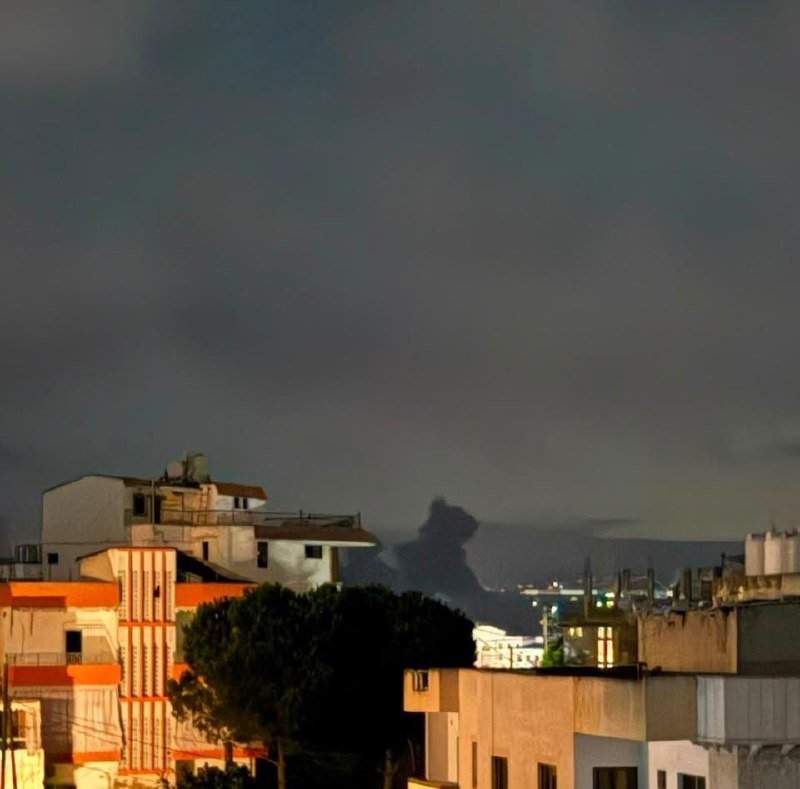
An Israeli drone strike hit a vehicle near the village of Kfar Raman in southern Lebanon's Nabatieh district on the morning of 10 July 2026, with regional channels reporting casualties and offering the same basic scene from several vantage points. The strike, which the outlets placed near the Ali al-Taher ridge, marks the latest in a continuing pattern of aerial action along the Lebanon-Israel frontier and underscores how routine such operations have become — reported in fragments, on a delay, with casualty figures that shift as the day proceeds.
What is striking is less the specific incident than the reporting architecture around it. Within roughly two hours of one another on 10 July 2026, four distinct channels — Iranian state outlet Press TV, the English-language Ali channel, the open-source-intelligence feed Clash Report, and the Ali Express bulletin — converged on the same coordinates and the same description: a drone strike on a vehicle, near Ali al-Taher, casualties reported. That convergence says something about how news of the southern Lebanon border is now produced. The story moves first through channels that frame the events as resistance activity or as routine Israeli escalation; mainstream wire confirmation, when it comes, arrives hours later, if at all, and rarely leads.
A strike, reported from four directions
The first alert reached the channels at 11:13 UTC on 10 July 2026, when Press TV reported that an Israeli strike had hit a vehicle in Kafr Rumman in the Nabatieh district, with casualties reported. By 11:15 UTC, the Ali Express bulletin was reporting the strike in the Kfar Raman area of Nabatia, near the Ali al-Tahar ridge. At 11:24 UTC, Clash Report — a channel that aggregates open-source footage from across the region — added that casualties had been reported after an Israeli drone targeted a vehicle near Kfar Raman. By 11:26 UTC, the English-language Ali feed had converged on the same coordinates, again placing the strike in the area of Kfar Raman in the Nabatieh district near the Ali al-Taher ridge.
The four accounts agree on what is knowable from outside the strike zone: an Israeli drone, a vehicle, a location, casualties. They do not — and cannot, from open-source channels alone — confirm who was in the vehicle, whether they were combatants, or how many casualties there were. Press TV and the Ali feeds typically frame such strikes as Israeli aggression against civilians or against the wider resistance infrastructure; Clash Report frames them in the neutral language of open-source intelligence. The divergence in framing is itself part of the story.
What the channels tell us — and what they do not
The Kfar Raman strike arrived with no claim of responsibility from any party and no immediate identification of the targets. Israeli security sources have, in past cycles of cross-border action, framed similar strikes as operations against Hezbollah infrastructure or against individuals involved in planning attacks on northern Israel. Lebanese official channels have generally framed such strikes as violations of sovereignty. Neither framing appears in the four accounts cited above; readers are left with coordinates and a casualty report, not with a who.
The absence of identifying detail is not unusual. Strikes on vehicles in southern Lebanon are reported in a compressed cycle: the event itself, then claims and counter-claims in the hours that follow, then a slow accretion of identity and motive. The pipeline that produces these reports is dominated by channels with an editorial position on the conflict. Press TV is an Iranian state outlet; the Ali feeds are aligned with the broader axis-of-resistance media ecosystem; Clash Report is an aggregator without an institutional alignment but with a habit of reposting footage from both sides. A reader trying to verify the strike from any single channel is, in effect, reading the conflict through that channel's politics.
A pattern, not an event
The Kfar Raman strike on 10 July 2026 sits inside a months-long pattern of Israeli aerial action in southern Lebanon that has produced repeated strikes on vehicles, on homes, and on what Israeli authorities describe as militant infrastructure. Lebanese authorities and international humanitarian organisations have, in past reporting cycles, documented civilian casualties in such strikes; Israeli authorities have framed their operations as targeted, with civilian harm described as incidental rather than intended. Neither side of that debate is resolved in the Kfar Raman incident itself.
What the pattern does suggest is that the threshold for aerial action in southern Lebanon has fallen low enough that a single vehicle strike can be reported across four channels within two hours without breaking the news cycle. Routine, in this corner of the border, has come to mean something different than it did two years ago. The structural question — whether the current tempo of strikes is a function of an Israeli campaign to degrade Hezbollah's reconstitution, a function of internal Hezbollah repositioning, or some combination of both — is not answerable from the open-source record. It is, however, the question that determines whether the next strike is treated as another datapoint or as an inflection.
What remains uncertain
The sources reviewed for this article do not specify how many casualties resulted from the Kfar Raman strike, nor do they identify the occupants of the vehicle. They do not record any claim of responsibility from Hezbollah, from the Israeli military, or from any intermediary. They do not record any immediate response from the Lebanese government or from UNIFIL, the UN peacekeeping force that operates along the Blue Line. Until those details emerge — through wire reporting, through Lebanese official statements, or through Israeli briefings — the Kfar Raman strike is best understood as an event with confirmed coordinates and confirmed casualties, and with the wider interpretive frame still under construction.
The editorial point worth holding onto is structural rather than incident-specific: when the same coordinates are reported by an Iranian state outlet, by an axis-aligned bulletin, by an open-source aggregator, and by an English-language channel within a two-hour window, the dominant framing of the strike will be set by whoever speaks first and most confidently. On 10 July 2026, that was the channels aligned with the resistance narrative. Whether the mainstream wire line catches up, and whether it catches up with the same confidence, is the open question the next 48 hours will answer.
Desk note: Monexus covered this strike as a confirmed coordinates-and-casualties event, declining to adopt the framing of any single channel. Where the wire eventually lands on identity and motive, this article will be updated; until then, the open-source record is the record we have, with its politics attached.
Wire provenance
This editorial synthesis draws on the following public wire/social posts:
- https://t.me/presstv/
- https://t.me/englishabuali
- https://t.me/ClashReport
- https://t.me/abualiexpress