Israeli forces push deeper into southern Lebanese border towns as July escalation widens
Two border villages came under direct Israeli action within a 23-minute window on 10 July 2026, the latest in a sustained campaign along the Blue Line that residents say has emptied hamlets still nominally under Lebanese sovereignty.
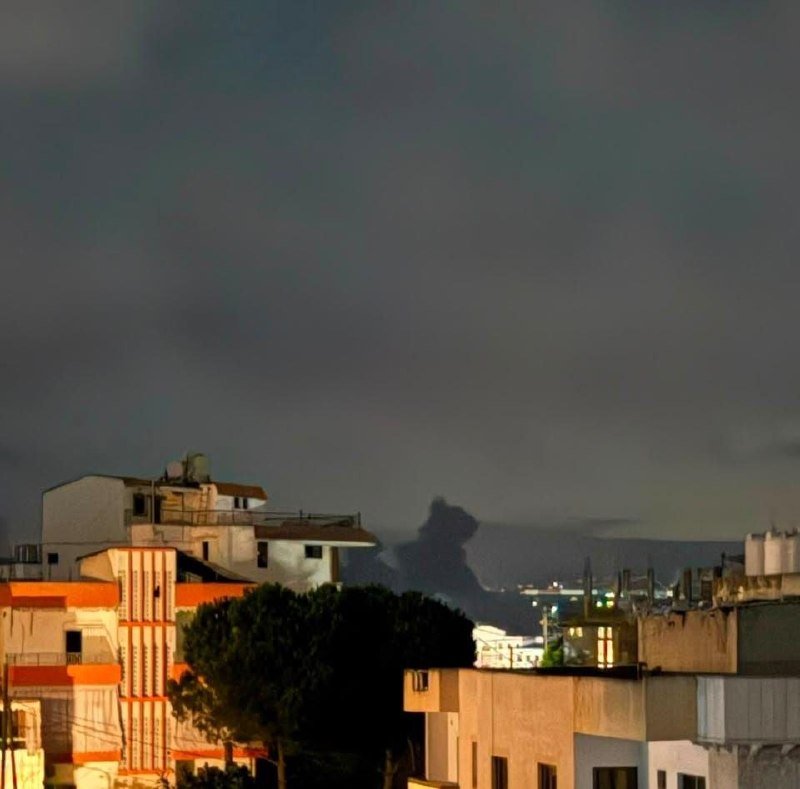
Inside a 23-minute window on the afternoon of 10 July 2026, two villages along Lebanon's southern border were hit by separate Israeli military actions, according to Lebanese media cited by regional outlets. At 15:48 UTC, channels aligned with the Beirut-based thecradlemedia account reported that Israeli forces had set fire to residential homes in the town of Qantara. Twenty-three minutes later, at 16:11 UTC, the Iran-linked Arabic-language channel alalamarabic carried an urgent item sourced to Lebanese media saying an Israeli military march had dropped two sound bombs toward the town of Mansouri.
Read together, the two dispatches sketch a familiar but tightening pattern: a cross-border campaign that has moved, in recent weeks, from periodic airstrikes and artillery exchanges to the kind of ground-adjacent action — patrols pushing to the fence, demolitions, sound munitions, and torched civilian structures — that residents in the border belt describe as the slow erasure of villages still nominally inside Lebanese sovereignty. The official Israeli framing, when it appears in Hebrew-language outlets, treats the campaign as a defensive operation against Hezbollah infrastructure. The framing carried by Al-Alam Arabic and The Cradle Media treats it as occupation.
The empirical fact on the ground is narrower than either narrative: on 10 July, two named Lebanese towns were subjected to direct Israeli action, and both events were reported within a single afternoon news cycle by outlets with opposing editorial alignments. The interpretive question — what to call what is happening — is what separates the wire accounts from one another.
Immediate context
Qantara sits in the Bint Jbeil district of south Lebanon, a stretch of villages that has been depopulated in waves since the 2023–2024 war and never fully repopulated. Mansouri lies further west along the border, closer to the coast, in the Tyre district. Both lie inside the area the UN Interim Force in Lebanon (UNIFIL) has monitored since 1978, on the Lebanese side of the Blue Line. The two locations are not, in other words, in dispute territory: they are inside Lebanon proper, whatever the status of the people who once lived in them.
Sound bombs are a distinct category from high-explosive munitions. They are designed to produce a concussive blast and a flash, intended as warning or psychological-effect devices rather than as direct anti-personnel weapons. They have, however, been documented across multiple conflicts as a precursor to ground incursions or as part of forced-evacuation campaigns aimed at clearing populated zones near the border. The use of two such devices, dropped by an Israeli patrol in the direction of Mansouri, fits a pattern Lebanese reporters have flagged repeatedly in recent weeks: a stepped-up Israeli footprint inside Lebanese territory, accompanied by demolition and fire.
The counter-narrative
Israeli military spokesperson briefings, as carried by Hebrew-language outlets and Reuters, have framed the campaign as a continuation of operations to dismantle Hezbollah reconstituted infrastructure along the frontier. That framing treats Qantara and Mansouri as tactical venues in a defensive operation, not as civilians under assault. Under that read, structures destroyed or burned are positioned as legitimate military targets because of alleged Hezbollah use, and warning munitions are a humane alternative to lethal force.
The Beirut-aligned coverage pushes back on each element of that framing. The Cradle Media has spent months arguing that the campaign amounts to a creeping annexation of the border belt, with the explicit goal of pushing the line of effective Israeli control north of the Blue Line. Al-Alam Arabic, which is the Arabic service of Iranian state broadcasting, treats Israeli patrols inside Lebanon as occupation by definition. Neither outlet is neutral on the underlying conflict, and a reader weighing the two sets of reporting needs to know that: the Beirut-aligned framing is shaped by a longstanding political alignment with Hezbollah and its regional backers, while the Israeli framing is shaped by an explicit security doctrine that treats the border belt as a forward operating zone.
The honest position sits between the two narratives but does not split the difference evenly. Israeli forces are, on the available reporting, conducting kinetic operations inside Lebanese territory, and the villages affected — Qantara and Mansouri — are not in dispute. The framing question of whether each targeted structure housed a Hezbollah operative is one the sources do not resolve. What the sources do establish is that on 10 July 2026, two Lebanese towns were struck within the space of half an hour, by different Israeli units or formations, using different tactical means.
The structural picture
What is happening along the Blue Line in July 2026 is best read not as a single operation but as the steady-state posture of a frontier that has been quietly re-engineered since the ceasefire that ended the 2023–2024 war. That ceasefire held in form — the exchanges remained below the threshold of all-out war — but it has not held in substance. Israeli forces have continued to strike what they identify as Hezbollah assets inside Lebanon; Hezbollah-aligned units have continued to fire or attempt to fire across the line; and the civilian population of the south has continued to live under conditions of partial displacement.
The pattern matters because it reframes what 'escalation' means in this corner of the Middle East. The conventional vocabulary treats escalation as a discrete event: a war starts, a war ends. The vocabulary that fits the border belt is different. It is a slow-burn intensification, in which the ground truth of who controls which square kilometre shifts in increments small enough to escape the wire cycle but large enough, over months, to constitute a de facto change in the territorial status quo. Qantara burning and Mansouri being warned off are two data points inside that curve. They are not, on their own, the curve. But they are how the curve is made.
Stakes and forward view
If the trajectory continues, three things follow. First, the depopulated belt along the Blue Line will widen, with consequences for any future negotiation over the line: a depopulated strip is easier to redraw than an inhabited one. Second, the room for UNIFIL and other international monitors to operate inside the affected zone narrows further, as their patrol routes have already been constrained by Israeli ground activity. Third, the political space inside Lebanon for treating the southern front as a manageable security file — rather than a sovereignty file — continues to shrink, with knock-on effects for any Beirut government that wishes to keep its Western donors onside while honouring its domestic political commitments.
What remains genuinely contested in the reporting is the scale. Lebanese outlets have framed the Israeli campaign as systematic village-by-village destruction; Israeli briefings have framed it as surgical. The honest reading is that both descriptions have evidence behind them — demolitions of single structures can be systematic if repeated across dozens of sites, and 'surgical' has a flexible definition when the patient is a populated frontier. The two villages named on 10 July are small data points. They are also the shape of the larger pattern.
Desk note: this article sits inside Monexus's standing coverage of the Israel–Lebanon border. Wire reporting frames the events through an Israeli security lens; regional outlets such as The Cradle Media and Al-Alam Arabic carry a counter-framing that reads the same events as occupation. Both are reported here; the empirical record on 10 July is narrower than either narrative.
Wire provenance
This editorial synthesis draws on the following public wire/social posts:
- https://t.me/alalamarabic
- https://t.me/thecradlemedia
- https://t.me/TheCradleMedia