Israeli drone strike on civilian vehicle in Nabatieh district kills and wounds as southern Lebanon strikes continue
An Israeli drone struck a vehicle near the Ali al-Taher ridge in southern Lebanon's Nabatieh district on 10 July 2026, the third reported strike in the area in a single day, with casualties still being tallied.
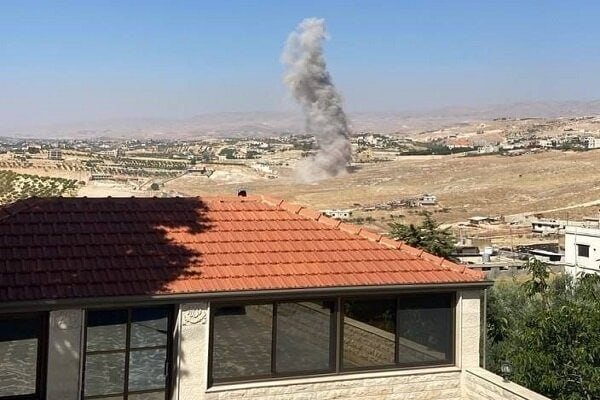
An Israeli drone strike hit a civilian vehicle near the Ali al-Taher ridge in the village of Kafr Rumman, in the Nabatieh district of southern Lebanon, on the morning of 10 July 2026. Initial accounts from a Telegram channel that tracks frontline activity in the south said casualties had been reported at the scene; the specific toll, the identity of those inside the vehicle, and whether any of them were affiliated with an armed group had not been made public by midday UTC. The strike is the third Israeli action reported in the Nabatieh district in the space of a few hours, and it lands inside a corridor that has hosted near-daily exchanges since the latest round of cross-border fighting began.
The pattern is no longer anomalous. It is the operating rhythm of the southern frontier: an Israeli airstrike on a target outside an established security zone earlier in the day; a drone-launched strike on a vehicle mid-morning; corroborating reporting from regional outlets and a steady churn of footage and witness accounts on social channels. Each incident, taken alone, is reported as a discrete tactical action. Taken together, they describe a campaign of calibrated strikes in a narrow band of territory, with civilian infrastructure — vehicles, homes, roadside positions — repeatedly inside the impact radius.
A morning of strikes in Nabatieh
According to a Telegram-based frontline witness feed, an Israeli airstrike targeted the town of Nabatieh al-Fawqa, just outside the security zone of southern Lebanon, at 13:04 UTC on 10 July 2026. Roughly fifty minutes earlier, at 12:15 UTC, Iranian state-aligned outlet PressTV reported an Israeli drone strike on a civilian vehicle in Kafr Rumman, also in the Nabatieh district, with casualties reported at the scene. A third account, from the Telegram channel of a correspondent covering the southern front and timestamped 11:26 UTC, said an Israeli UAV had struck a vehicle in the area of Kfar Raman in the Nabatieh district, near the Ali al-Taher ridge — the same general location as the PressTV report.
The geography matters. Kafr Rumman and Kfar Raman are rendered as two spellings of the same place across the three accounts, and the Ali al-Taher ridge is a known line of sight into the Litani river basin, the northern edge of the area the United Nations has, in earlier rounds, identified as the buffer between Israeli forces and Lebanese villages further north. Strikes on vehicles on the approaches to that ridge suggest an Israeli targeting cycle aimed at transit, not fixed infrastructure — an attempt to interdict rather than to demolish.
The wire-level detail — number of dead, identity of the occupants, the make and registration of the vehicle — has not been independently confirmed by an international news agency in the sources reviewed. PressTV, as an Iranian state-aligned outlet, carries its own framing assumptions about Israeli operations in Lebanon, and its casualty figures should be treated as preliminary until corroborated by the Lebanese authorities or a wire service on the ground.
What the counter-narrative says
Hezbollah-aligned channels and Iranian state media have, across multiple rounds of this conflict, framed Israeli drone and airstrike campaigns in southern Lebanon as targeting civilians under a counter-terrorism rationale — strikes, in this telling, that punish whole communities rather than disarm specific fighters. The 10 July incidents fit that pattern in narrative shape: a vehicle on a rural road, no claim of a specific military target, casualties from the surrounding population.
The Israeli security framing, where it has been articulated in past rounds and in adjacent coverage, treats vehicles in the Nabatieh hinterland as legitimate targets because the southern corridor has been used to move operatives, weapons and equipment north toward the border. From that standpoint, a strike on a vehicle in the lee of the Ali al-Taher ridge is preventative, not punitive.
The two framings are not symmetric. One describes a pattern of civilian harm in a populated district; the other describes a tactical response to a documented cross-border weapons and personnel infrastructure. A reader weighing them has to ask which account fits the cumulative evidence — how often the vehicles struck turn out to be carrying combatants, how often they turn out to be carrying civilians, how often the surrounding community is warned and how often it is not. The three reports from 10 July do not, on their own, answer that question. They record that a strike happened; they do not adjudicate who was inside.
The structural picture
What is unfolding along the Lebanon-Israel frontier in July 2026 is not a single operation but a steady cadence of localised strikes, each individually defensible under a counter-militant logic, collectively amounting to a sustained pressure campaign on a 30-kilometre band of territory. The cadence is the strategy. A handful of strikes a day, distributed across villages in the Nabatieh and Bint Jbeil districts, leaves the local population with no predictable safe corridor, displaces residents in increments, and degrades the logistical capacity of any armed group operating in the area.
This is also a media environment in which the strike is confirmed within minutes by Telegram channels close to the scene, narrated within an hour by regional outlets with their own alignments, and absorbed into the wider conflict frame within a day. The three Telegram-based sources cited here — the frontline witness feed, PressTV and the southern-front correspondent — are not equivalent in editorial standing to a Reuters or AFP dispatch, but they are often the fastest available record of what happened, and they shape how the incident is read in Beirut, Tehran and Doha before any wire confirmation lands. Coverage routinely defers to the language of official spokespeople; on the Lebanese side, official spokespeople are thin on the ground, and the informational vacuum is filled by channels with their own axes to grind.
Stakes and what to watch
The immediate stakes are local. Each strike on a vehicle in Kafr Rumman, Nabatieh al-Fawqa or a neighbouring village is a fresh entry in a ledger of displacement, injury and grief that compounds across weeks and months. The medium-term stakes are regional: a sustained strike cadence in the south raises the probability of a retaliatory rocket or drone attack into northern Israel, which in turn produces another round of Israeli escalation, which in turn produces another round of diplomacy in Cairo, Doha and Beirut.
Three things are worth watching in the days ahead. First, whether any of the three reported strikes on 10 July is retroactively claimed by an Israeli spokesperson as having hit a specific militant, or whether the vehicles remain unclaimed — the answer will tell readers whether the targeting cycle is producing verifiable operational returns or has drifted toward signature strikes on movement. Second, whether the Lebanese Armed Forces or the UN Interim Force in Lebanon (UNIFIL) issues a public statement on the morning's incidents; silence from those two institutions is itself a signal. Third, whether the casualty count from the Kafr Rumman strike is finalised by a wire service in the next 24 hours; until then, the figures circulating on Telegram and on Iranian state media should be treated as preliminary.
The sources reviewed for this article do not, on their own, establish a definitive casualty figure, identify the occupants of the vehicle, or confirm whether the strike was directed at a specific named target. They establish that an Israeli drone struck a vehicle in the Nabatieh district on the morning of 10 July 2026, that the strike was reported by at least three independent channels within roughly two hours of impact, and that it sits inside a day that has already seen at least one further Israeli airstrike in the same district. That is the floor of what can be said with confidence; anything more precise will have to wait for on-the-ground reporting from a wire service or a statement from the Lebanese authorities.
This publication's desk note: Monexus leads with the earliest verifiable cross-source account of the strike — the Telegram-channel timestamp — and treats PressTV's framing as a regional counter-narrative to be cited, not adopted. Wire confirmation is awaited.
Wire provenance
This editorial synthesis draws on the following public wire/social posts:
- https://t.me/wfwitness
- https://t.me/presstv
- https://t.me/englishabuali