The Kurdish card, the Iran question, and what Ankara and Washington are actually arguing about
A report claims Erdogan and JD Vance blocked a CIA-Mossad operation to open a Kurdish front against Tehran. The allegation matters less for its specifics than for what it reveals about who is willing to break with the conventional US-Israeli line — and on what terms.
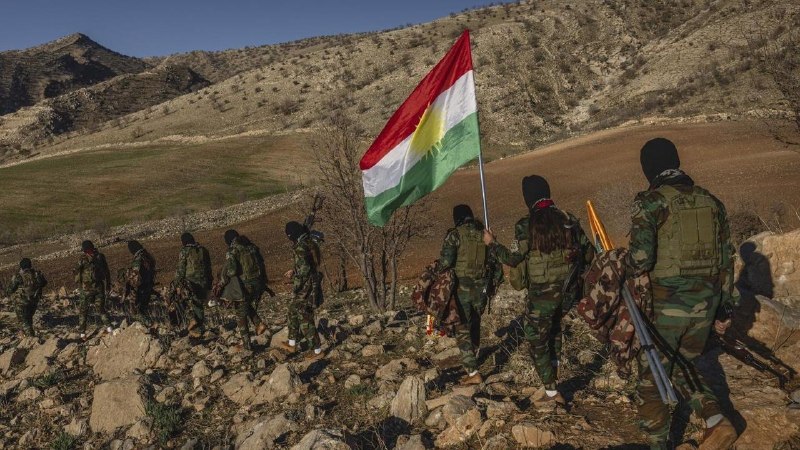
A report published on 10 July 2026 by The Cradle claims that Turkish President Recep Tayyip Erdogan and US Vice President JD Vance jointly blocked a CIA-Mossad operation designed to use Kurdish insurgent forces to destabilise Iran. According to the report, Ankara feared that the chaos that would follow a regime-change campaign in Tehran would spill across its own eastern frontier and create new security threats on Turkish soil. The allegation, if accurate, would be one of the more consequential splits inside the Western-aligned coalition in years — and a rare case in which a regional NATO member publicly overrode Washington's preferred menu for confronting the Islamic Republic.
The report's specifics should be treated with caution. The Cradle is an independent, Beirut-based outlet that has cultivated a strong network of regional sources but is not on the wire-tier list that the major Western broadcasters and newspapers rely on. The sourcing chain described — a Turkish government alarmed by its own intelligence partners — is plausible in its contours, but the underlying conversations between Ankara, Washington, Jerusalem, and the Kurdish parties in northern Iraq and north-east Syria have not been independently confirmed by Reuters, AP, the BBC, the Financial Times, or any other tier-one outlet that this publication could locate on 10 July 2026. Readers should hold the headline claim loosely while taking seriously the structural point it is trying to make.
What the report actually claims
The operative claim is narrow: that a CIA-Mossad operation, designed to activate Kurdish insurgent capabilities inside Iran, was prepared and then blocked. The alleged blocking coalition — Erdogan and Vance — is itself an interesting pairing. The Turkish state has been the most consistent military opponent of Kurdish armed politics in the region for decades. The Vance-aligned wing of the Trump administration, by contrast, is widely read in regional commentary as more sceptical of expensive Middle East entanglements than the Bush-era or first-term-Trump Republican mainstream. That two actors with very different ideological priors are reported to have converged on the same veto is the load-bearing detail. The report frames their convergence around a shared Turkish concern: that any destabilisation of Iran would open a long, violent, and strategically uncontrollable corridor along Turkey's southern border.
Why Ankara would block it
The Turkish reasoning is straightforward and does not require conspiratorial framing. The Kurdistan Workers' Party (PKK) has been in armed conflict with the Turkish state since 1984. Turkey has fought multiple cross-border campaigns into northern Iraq and north-east Syria to suppress Kurdish autonomous governance there. An opening of a Kurdish front against Iran would, from Ankara's vantage point, almost certainly strengthen the very forces that Turkey has spent four decades trying to crush — not weaken them. The PKK and its Syrian sibling structures have, throughout their existence, benefited from any moment when the regional order loosens. A destabilised Iran, in this view, does not produce a friendlier neighbour; it produces a more permissive environment for precisely the kind of ethno-nationalist armed politics that the Turkish security state considers an existential threat. The logic is realpolitik, and it is also broadly consistent with the public position Turkey has taken on the Kurdish question since at least the late 1990s.
Why the US side might have gone along
The Vance half of the veto is the more interesting and less obvious half. There is a coherent reading of Washington politics in mid-2026 that makes an American pullback on this file plausible. A renewed war with Iran — even a proxy war run through Kurdish clients — would, at a moment when the US administration is contending with other major theatres and a domestic political calendar, be a costly distraction. The lesson repeatedly drawn by the more non-interventionist wing of US politics since 2003 is that the costs of opening new Middle Eastern fronts are typically borne by the United States, while the strategic benefits are diffuse and the political benefits at home are thin. The Cradle's framing — that Ankara and Vance arrived at the same destination by different routes — fits the available public record on the Vance-aligned faction's scepticism of new entanglements more than it fits the older Cheney-era reflex.
The counter-read, taken seriously
The strongest counter-read is also the simplest. The Cradle's report may be a partial picture of a much larger ongoing arrangement that the report itself does not disclose. Intelligence relationships of the kind described are not built and unwound in single dramatic vetoes. It is at least as plausible that the US, Israel, and Turkey are running parallel tracks — with public blockage of one operation coexisting with quieter collaboration on others — as it is that the operation was stopped in the way described. A reader should be cautious about reading any single block as the end of a strategy; in the Middle East, blocked operations are more often shifted than abandoned. Sources of the kind The Cradle relies on sometimes see the visible veto and miss the quieter work that continues underneath it.
What the story is really about
Setting the headline question to one side, the underlying pattern is more important than the specific report. The conventional Western framing of the Kurdish question — Kurdish armed groups as a uniform US-Israeli asset, Turkey as a passive enabler — has been wrong for a long time, and the more accurate framing is messier. Kurdish armed politics in the region has, at various points, been supported by Washington, by Moscow, by Tehran, by Damascus, and by the various rivalrous Kurdish parties themselves, depending on the year and the conflict. The same is true of Turkish policy. Treating any of these actors as a stable instrument of another state's strategy is a category error. What the report gestures at, whether or not its specifics hold up, is a regional system in which the major capitals are running against one another on the Kurdish file even when they are nominally allied on the Iran file — and where vetoes are the normal mode of operation, not the exception.
Stakes
If the report's core claim is roughly correct, the most important downstream effect is not on Iran's regime — Tehran has survived worse — but on the credibility of the Western-coordinated pressure track. Each time an operation is prepared, coordinated, and then blocked by a regional ally, the marginal cost of the next similar operation rises. The states most exposed are the smaller Kurdish parties, who have historically been the ones who pay in blood for operations planned in capital cities far from their mountains. The states least exposed are the great powers, who can always claim, plausibly, that they were not actually behind what their clients did. That asymmetry is the durable feature of the region. It is also the part of the story the wire coverage is least likely to tell.
What remains uncertain
The Cradle report's specific chain of communications between Erdogan, Vance, the CIA, and Mossad has not been independently corroborated by tier-one Western reporting this publication could identify on 10 July 2026. The names of the Kurdish parties allegedly involved, the operational timeline, and the specific point at which the operation was blocked are not independently sourced. A reader is entitled to the structural argument — that the regional Kurdish file is contested within the US-allied camp, and that Turkey is the actor most consistently willing to break ranks on it — without being required to accept the operational detail of any single report.
Desk note: Wire coverage of the Kurdish file, when it appears at all, tends to flatten the regional politics into a single US-Israeli frame. Monexus read the same reporting and concluded that the more durable story is the one inside the allied camp — the daily work of veto, redirect, and quiet override that the public bulletins never quite capture.
Wire provenance
This editorial synthesis draws on the following public wire/social posts:
- https://t.me/s/TheCradleMedia
- https://t.me/s/thecradlemedia