Kyiv's long arm reaches Borisoglebsk while Moscow strikes at the pumps
A Ukrainian strike on a Russian airfield fuel farm and a Russian barrage against Kyiv gas stations on the same day expose the asymmetric logic of a war fought, increasingly, over fuel.
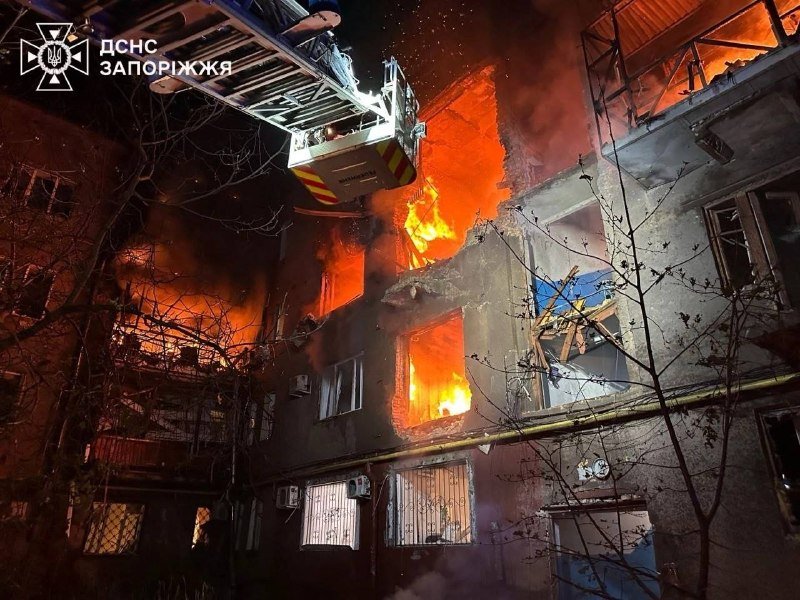
On 10 July 2026, two reports landed within ninety minutes of each other and described, in starkly different registers, the same underlying contest. At 09:29 UTC, the Telegram channel noel_reports carried aftermath imagery showing a fuel and lubricant storage tank farm at Borisoglebsk airfield in Russia's Voronezh region destroyed, the facility built in winter 2023 and visibly burning in satellite and ground photography. At 08:14 UTC, the channel DDGeopolitics relayed Ukrainian-side reporting that Russia had begun striking gas stations in Kyiv. The two events, taken together, sketch a war that is no longer principally about territory in the Donbas or the Kherson line. It is being fought, with growing intensity, over fuel.
The asymmetry is the point. A Ukrainian deep strike against an airfield roughly 250 kilometres inside Russia, against infrastructure that directly enables Russian combat aviation, is a battlefield interdiction in its purest form. A Russian barrage against retail fuel infrastructure in a capital city of several million people is something else: pressure on civilian logistics, on the daily economy, and on the political bandwidth of a government trying to keep the lights on and the pumps dry. Read separately, each incident is a single data point. Read together, on the same day, they describe a doctrine of mutual attrition aimed not at armies but at the energy systems that feed them.
The Borisoglebsk strike: what was actually hit
Borisoglebsk is a long-established Russian airbase in Voronezh Oblast that has hosted combat aircraft through the full course of the invasion. The facility struck on 10 July was a fuel and lubricant storage tank farm, not a flight line, meaning the target was the ground logistics that allow sortie generation rather than the aircraft themselves. Reporting from noel_reports, citing after-action imagery, said the storage facility had been built in winter 2023, suggesting it was a wartime expansion to support the intensified tempo of glide-bomb and Shahed launch operations that Russia has run from forward airfields since 2023. Destroying fuel storage degrades sortie rates over weeks, not hours. It is the kind of target that does not produce a viral video but produces a quiet, cumulative effect on Russian air tasking.
The Kyiv pump strikes: pressure where Ukrainians feel it
The Russian counter-move reported the same morning, hitting fuel stations in Kyiv, follows a pattern Ukrainian officials have documented repeatedly through the war: long-range strikes aimed not at military depots but at thermal power stations, transformer yards, and the retail fuel network. Gas stations in a major capital are soft targets. They are also politically loud. Queues at the pump move faster than front-line communiqués through any urban information environment, and the resulting pressure on city administration, fuel imports, and emergency services is immediate. Ukrainian reporting carried by DDGeopolitics on 10 July does not specify the number of stations hit, the weapon used, or casualty figures; the framing the channel uses — "started hitting gas stations in Kiev" — implies an opening move in a campaign rather than a one-off retaliation.
Why the two together describe the war's new centre of gravity
For the first eighteen months of the full-scale invasion, the dominant imagery was artillery and trench warfare in the east and south. That imagery has not gone away, but the operational centre of gravity has migrated. Both sides now run layered drone programmes, deep-strike cruise and ballistic missile arsenals, and growing one-way attack inventories aimed at the rear echelons of the other. The Russian system has historically been optimised for industrial depth and redundancy; the Ukrainian system has been optimised for precise, deniable long-range penetration with Western-supplied and domestically produced systems. Striking a fuel tank farm 250 kilometres across the border is a demonstration of the latter. Striking fuel stations in a capital of three million is a demonstration that Russian deep strike retains the capacity to impose pain on civilians, a fact that no amount of Ukrainian air-defence reporting can entirely neutralise.
Stakes and what remains uncertain
If the trajectory continues, both sides are likely to spend more of their diminishing deep-strike inventory on the other's energy and logistics backbone rather than on tactical targets at the line of contact. That shifts the war's economic burden further onto civilian populations and raises the political cost of the conflict on both sides of the border. The Ukrainian calculus appears to be that degrading Russian sortie generation is worth expending scarce long-range munitions; the Russian calculus appears to be that imposing visible fuel scarcity on Kyiv shapes domestic Ukrainian patience faster than any ground advance. Each is making a wager about which economy breaks first.
What remains genuinely uncertain is whether the 10 July events are isolated or the opening chord of a coordinated campaign. The thread material does not specify ordnance used, attribution with evidence beyond the channel-level reporting, casualty counts, or Russian-side confirmation of the Borisoglebsk damage. Independent verification through satellite-based services and Ukrainian General Staff briefings will be needed before the operational significance is fixed. For now, the day's two reports sit as a single frame: a war in which fuel has become a primary battlefield, and both sides know it.
Desk note: the wire frame for 10 July will lead with the Borisoglebsk imagery as a discrete Ukrainian strike story and the Kyiv fuel-station reports as a Russian escalation story. Monexus runs them together because the operational logic on both sides is the same — energy as target — and that symmetry is the news.
Wire provenance
This editorial synthesis draws on the following public wire/social posts:
- https://t.me/noel_reports
- https://t.me/DDGeopolitics