Beirut's guardian problem: how a Hezbollah MP's broadside exposes Lebanon's vanishing sovereignty
Five Telegram statements from Hezbollah MP Ibrahim Al-Moussawi on 10 July 2026 frame Lebanon's leadership as a client of Washington and Tel Aviv — a claim that deserves more than dismissal.
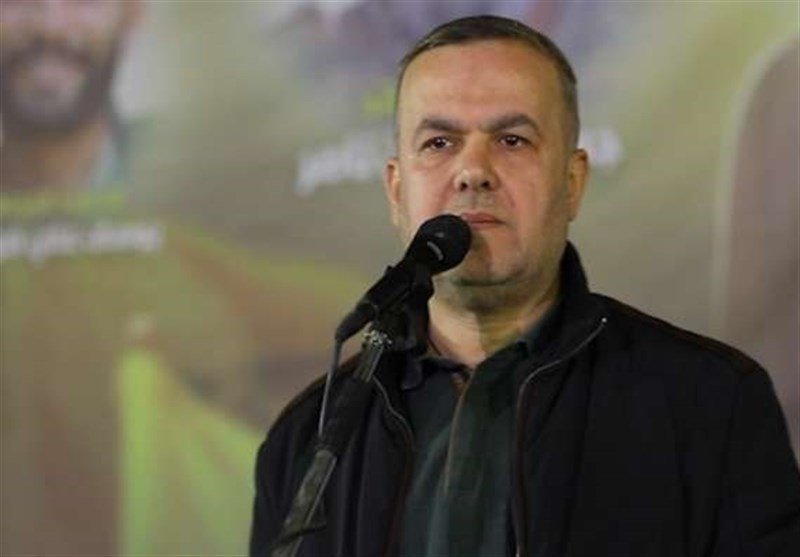
At 18:56 UTC on 10 July 2026, Hezbollah MP Ibrahim Al-Moussawi stepped before a camera and delivered a sentence that, in Lebanon's fractured political grammar, lands like a dropped match: "Lebanon has become completely under American guardianship." Within four minutes he had added that "the Lebanese decision is not to put the country's interest in the hands of America and Israel," that "the authority in Lebanon must not exacerbate the internal division," and that "the Lebanese authority has conceded and must not give up more of the country's rights" — five urgent statements in five minutes, all carrying the same load-bearing accusation against Beirut's own leadership. [alalamarabic, 2026-07-10]
The opposition is not making a foreign-policy argument. It is making a sovereignty argument — and the distinction matters. Al-Moussawi is not complaining about American behaviour in Washington. He is naming the Lebanese state as the instrument through which that behaviour is now expressed, and telling it, in the language of an internal opposition bloc, that the bill has come due.
What the words actually say
Read in order, the five statements move. The opening line — guardianship — names the relationship. The second — that Lebanon's decisions should not be handed to America and Israel — sets the test. The third and fourth warn the Beirut leadership against deepening internal division at a moment when Hezbollah says it expects a "reaction" to government policy. The fifth — that the Lebanese authority has already conceded and must not concede further — is the threat implicit in the entire sequence. [alalamarabic, 2026-07-10]
The pattern is familiar from Beirut's long factional wars: a closing of rhetorical ranks around a single word — here, guardiania, guardianship — used to convert an external power relationship into an internal legitimacy crisis. What is unusual is the speed, and the choice of venue. The statements were filed urgent, back-to-back, on a channel whose editorial line tracks closely with Tehran and the broader Axis of Resistance media ecosystem. That is not a coincidence. It is a signal of where the framing is meant to travel next.
The counter-narrative the wires will not print
Western wire reporting on Lebanon in 2026 has tended to treat Hezbollah's political interventions as either atmospherics or as spoilers to a technocratic rescue script — IMF programme, presidential compromise, ceasefire diplomacy. The Moussawi broadside punctures that frame. The claim is not that Lebanon has too many militias. It is that the formal Lebanese state, in the opposition's reading, has been so thoroughly co-opted by an external patron that the distinction between "the state" and "the patron" has collapsed. Read that way, the guardianship line is not sabre-rattling. It is a constitutional critique.
The wire-house counterpoint is straightforward and not without evidence: successive Lebanese governments have, in fact, negotiated ceasefires, border protocols and security arrangements through American-mediated channels. The argument that Beirut is acting under American cover is not invented; it is a description of how Lebanese diplomacy has actually functioned for the better part of two years. The dispute is over whether that is surrender or survival.
Sovereignty as a structural problem
A small state's sovereignty is rarely a binary. It is a series of trades — airspace control here, currency access there, ceasefire terms somewhere else — accumulated into a posture. Lebanon in mid-2026 sits at the sharp end of that accumulation. The Lebanese pound's near-total collapse, the central bank's dwindling reserves, and the country's continued dependence on external financing for basic state functions have, in practice, reduced the menu of decisions Beirut can take unilaterally. Al-Moussawi's point — translated out of factional idiom — is that a government which cannot pay its own civil servants, set its own border policy, or refuse external dictates on demilitarisation is not sovereign in any operational sense. [alalamarabic, 2026-07-10]
This is not a uniquely Lebanese problem. It is the structural condition of a large part of the smaller Middle East: states whose formal independence survives while the practical levers of policy have migrated outward — to Washington, to Tehran, to Gulf capitals, to Brussels. The interesting question is not whether Al-Moussawi's framing is correct in every detail. It is why the framing has acquired enough resonance inside Lebanese Shia politics to be deployed in a single five-minute burst.
Who wins, who loses
If the framing travels, Hezbollah wins domestically: a mobilised base, a clear enemy, and an indictment of rivals who accept the patron-client arrangement. The Lebanese state loses — not because the accusation is novel, but because it has now been articulated in the formal language of parliamentary opposition. The United States loses the cleanest version of its Lebanese policy: the official line of a sovereign partner coordinating on shared security has been displaced, in this telling, by the unofficial line of a protector dictating to a dependency. Israel loses the quiet utility of a Beirut that can be leaned on rather than fought.
The open variable is whether the framing stays rhetorical or hardens into institutional action — a parliamentary bloc, a cabinet fracture, a street mobilisation. On the evidence of the five statements alone, the threshold has not been crossed. But the direction has been set, and the date to watch is the next session of the Lebanese cabinet in which the words "American" and "Israeli" appear in the same sentence as any negotiated arrangement.
What the available record does not show — and what a careful reader should hold open — is whether Al-Moussawi is speaking for the full Hezbollah leadership, for its parliamentary bloc alone, or for a faction within the faction. Telegram statements filed as urgent on a single channel are a signal, not a roll-call. Until the line is echoed from other quarters of the party's institutional voice, treat it as one MP's framing — and as a framing that, in a country this exposed, is unlikely to remain one MP's for long.
This publication treats Lebanese sovereignty as an operational question, not a ritual one. The Moussawi broadside is newsworthy precisely because it forces that distinction onto the front page.
Wire provenance
This editorial synthesis draws on the following public wire/social posts:
- https://t.me/alalamarabic
- https://t.me/alalamarabic
- https://t.me/alalamarabic