Beirut stops pretending the war is over
For the first time since the 2024 war, Lebanon's president and the leader of its principal Christian party are publicly owning direct talks with Israel. The framing in Beirut has shifted from denial to damage control.
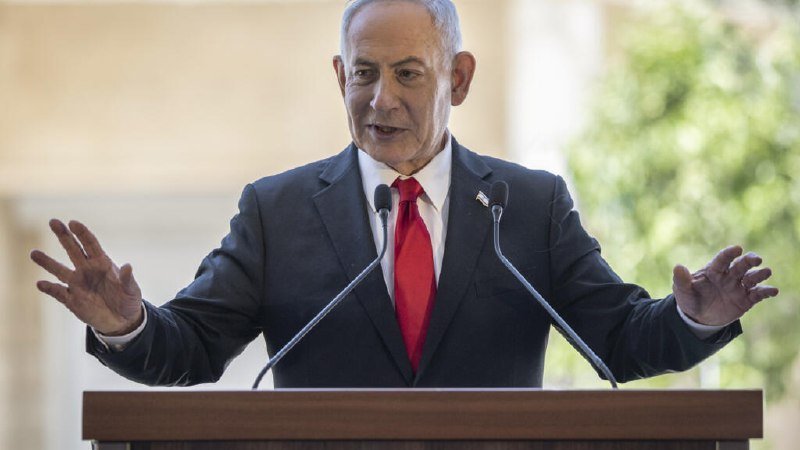
For two years the official line in Beirut was that Lebanon was not talking to Israel. On 10 July 2026 that line collapsed in public. President Joseph Aoun told a press conference that "criticism of direct negotiations with Israel does not deserve a response," and Samir Geagea, the leader of the Lebanese Forces and the country's most consequential Christian politician, followed from Baabda with a parallel message: Lebanon "cannot remain in the unknown" and needs "a genuine international presence" before anything more substantive can move (telegram: wfwitness, 12:56 and 12:24 UTC).
The signal is not that talks are new. Back-channel contacts between Beirut and Israeli intermediaries have been reported for months. The signal is that two of Lebanon's most establishment figures are now willing to say so on the record, in daylight, in the middle of a domestic political season. That is a different kind of event.
What Aoun actually conceded
Aoun's phrasing was deliberately small. He did not announce a treaty, a framework, or even a confirmed round. He did something narrower and more politically expensive: he legitimised the premise of direct contact. The Lebanese political class has spent two decades treating any direct engagement with Israel as a coalition-breaking act. Aoun is now telling his critics, including Hezbollah and its residual allies, that the premise itself is no longer in question.
Geagea's intervention sharpened the offer. His condition — a genuine international presence in Lebanon before further steps — is not a rejection of the talks. It is a price. Read together, Aoun and Geagea are sketching a sequence: direct contact is acceptable, but Beirut wants a multilateral backstop, presumably American and French, before any visible deliverable.
Why this is awkward for the resistance axis
The framing is uncomfortable for the Shia parties and their allies, who have built two decades of domestic legitimacy on the proposition that Lebanon does not negotiate with Israel. Aoun's phrasing leaves them three options: accept the talks, denounce the president, or stay quiet and watch the political centre drift. None of those is cheap.
The complication is that the Iranian-backed axis in Lebanon is structurally weakened. Its military deterrent in the south has been degraded; its domestic veto has eroded; its regional patron is overstretched. Aoun is reading the balance. Geagea, the longtime hawk on Hezbollah disarmament, is reading the same balance from a different ideological position. When both ends of Lebanon's Christian–Sunni establishment converge on a tactic, the resistance axis is being outflanked rhetorically before it is outflanked at the table.
What the international presence means in practice
Geagea's specific demand — a "genuine international presence" — is the kind of phrase that can mean almost anything. In the Lebanese context it usually means one of three things: a UN Security Council mandate expanding or replacing UNIFIL, a US-brokered monitoring mechanism attached to any future deal, or a French-led contact group along the lines of the 2024–2025 donor arrangements. The fact that he did not pick one of the three is itself a tell. Beirut is keeping the architecture undefined to preserve leverage.
Aoun's "no response" formulation is doing the same work at a different altitude. He is not selling the public a peace. He is signalling to Washington, Paris, and Tel Aviv that Beirut will not, this time around, be the side that walks out because of domestic politics.
What could still break this
Two things can derail the track before it produces anything. The first is a security incident in the south that reopens the war and resets domestic politics. The second is an Israeli decision, already signalled by several ministers, that the terms on the table are insufficient and that unilateral action is preferable to a negotiated file.
The most plausible reading of 10 July is that Lebanon is laying the rhetorical groundwork for a deal whose terms have not yet been written. That is a fragile position. Aon's confidence depends on the assumption that the next provocation will not come from the border. Geagea's confidence depends on an international backstop that has not been agreed. Neither man controls those two variables. The negotiations, in other words, are now real — and so are the things that can kill them.
Desk note: Monexus is treating the Aoun and Geagea statements as primary signals of a shift in Lebanese elite framing, not as a confirmed negotiating track. The wire on this story is thin; the framing inside Lebanon is still being negotiated, sometimes literally, as this article files.
Wire provenance
This editorial synthesis draws on the following public wire/social posts:
- https://t.me/s/wfwitness
