Beirut's 'pilot zones' reveal the lie at the heart of Israel's southern Lebanon narrative
Reports from Beirut describe 'pilot zones' the Israeli army never occupied, sold to Western media as a withdrawal. The gap between framing and cartography is the story.
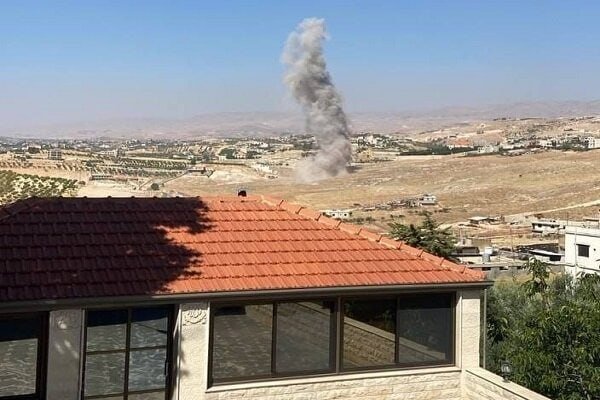
The map tells the story that the press conference does not. On 10 July 2026, The Cradle reported that at least two of the so-called "pilot zones" the Lebanese army is preparing to enter in south Lebanon were, on the available cartography, never under Israeli ground occupation to begin with. Tel Aviv is continuing to push the framing as a withdrawal. Beirut is happy to play along. The discrepancy between what is being announced and what is actually on the ground is where the realignment of the southern front is being negotiated.
What is being sold, in Western and Israeli wire coverage, as an Israeli pullback is in several locations the appearance of one — a sequence of staged Lebanese deployments into terrain the IDF never held in numbers, backed by political language that lets each side claim the win it needs. The Lebanese state gets restored sovereignty on the optic. The Israeli government gets a "withdrawal" credit it can bank in Washington and at the UN. The villages caught in between get a checkpoint and a flag.
What "pilot zone" actually means
A pilot zone, in the framework now being operationalised, is a defined strip of south Lebanese territory into which the regular Lebanese Armed Forces (LAF) deploy on a stated timetable, with stated force ceilings, and from which armed non-state actors — principally Hezbollah — are expected to absent themselves. The model has been on the table since the November 2024 ceasefire arrangement; what is new is the rollout. Beirut, according to the reporting, has accepted deployment into at least two areas where the Israeli army did not maintain a continuous ground presence and where the headline of "Israeli withdrawal" therefore describes a movement that, strictly speaking, has not occurred.
That matters because the optics of withdrawal do political work in three capitals at once. In Beirut, the LAF's return to the south ratifies the post-2024 order — the army as the sole armed authority south of the Litani. In Tel Aviv, the announcement allows the government of Benjamin Netanyahu to claim the security dividend of the operation without the visual cost of a defeat. In Washington, the framing gives the administration of Donald Trump a deliverable to take into the autumn diplomacy on the Iran file, where a quiet Lebanon border is treated as a precondition for any wider regional concession.
Why the framing holds anyway
Coverage in the Western wire services has generally accepted the Israeli framing as written. Headlines describe "Israeli withdrawal," "pullback," or "phased redeployment." The cartographic question — whether the IDF was actually in the location it is being described as leaving — has gone largely unasked. This is not because the information is unavailable. Satellite imagery of south Lebanon is published weekly by a range of open-source intelligence accounts; the line of Israeli positions was a matter of record throughout the winter and spring operations. The reason the framing holds is structural. Official spokespeople, on both sides, have a shared interest in the announcement being received as described. Reporters under deadline take the description. The cartographic question is filed as a pedant's footnote.
The Lebanese source material — including the Cradle reporting referenced above — frames the same events differently: as a managed optic in which the LAF occupies terrain that was already going to come back under Beirut's control in the natural course of the ceasefire clock, packaged for Western consumption as an Israeli concession. Both readings can be partly true. The honest answer is that the announcement is being used as a piece of political theatre, and the maps and the press releases are not quite talking about the same thing.
The structural read
What is unfolding in south Lebanon in July 2026 is a microcosm of how ceasefires are now being staged across the post-October 2023 landscape: not as the end of a war but as a continuous production of images that allow each party to claim victory while the underlying architecture of force remains largely intact. The Israeli air and intelligence dominance over the south does not end with a pilot zone. The Lebanese army's deployment is welcome but limited; its force ceiling, rules of engagement, and the prohibition on it acting against residual armed groups mean that "state sovereignty restored" is, in operational terms, a slogan. The same script is being written in Gaza, in the West Bank, in the Syrian borderlands. The pilot zone is a brand.
This is also a story about who frames a border. The Israeli government and its Western wire interlocutors set the dominant vocabulary — "withdrawal," "buffer," "security zone," "Hezbollah threat" — and Beirut's room for manoeuvre is largely confined to whether to accept the vocabulary or to refuse the deal. The Cradle's reporting is itself an intervention in that contest: a deliberate effort, on the regional and Global-South press side, to put the cartographic facts back into the conversation before the announcement hardens into received wisdom.
Stakes
If the framing holds, the next round of diplomacy in the region — including any Iran-track negotiation Washington wants to open before the end of 2026 — proceeds on the assumption that Israel's southern front has been stabilised by its own military decision. That assumption feeds a permissive environment in Tel Aviv for the next escalation, whether in the West Bank, in Gaza, or in a renewed strike campaign against Iranian assets. If the framing is contested — if it becomes received wisdom in major outlets that the "withdrawal" is in several places a description without a referent — then the political credit Israel can bank from the operation is materially smaller, and the constraint on the next escalation is correspondingly heavier.
There is a third possibility worth naming. The sources available do not specify whether the LAF deployments will actually take place on the announced timetable, or whether Hezbollah's residual presence in the zones — which Lebanese sources concede is the politically sensitive variable — will in fact clear. The pilot-zone framework is a forecast, not a measurement. The map on the ground, six months from now, will tell us whether the announcement was a beginning or a prop. Until then, the honest read is that what is being staged at the Litani is less a withdrawal than a choreography — and the choreography is, for the moment, working exactly as designed.
This article reads the same events through a wire-service lens and through regional reporting that contests the official framing; Monexus treats the cartographic discrepancy as the story rather than the footnote.
Wire provenance
This editorial synthesis draws on the following public wire/social posts:
- https://t.me/thecradlemedia
- https://t.me/s/thecradlemedia