Ten years on, Lin-Manuel Miranda is still smiling — and still working
A decade after writing the music for Disney's Moana while still performing in Hamilton, Lin-Manuel Miranda is back in awards contention with the film's sequel — and reading the moment as one of gratitude, not coronation.
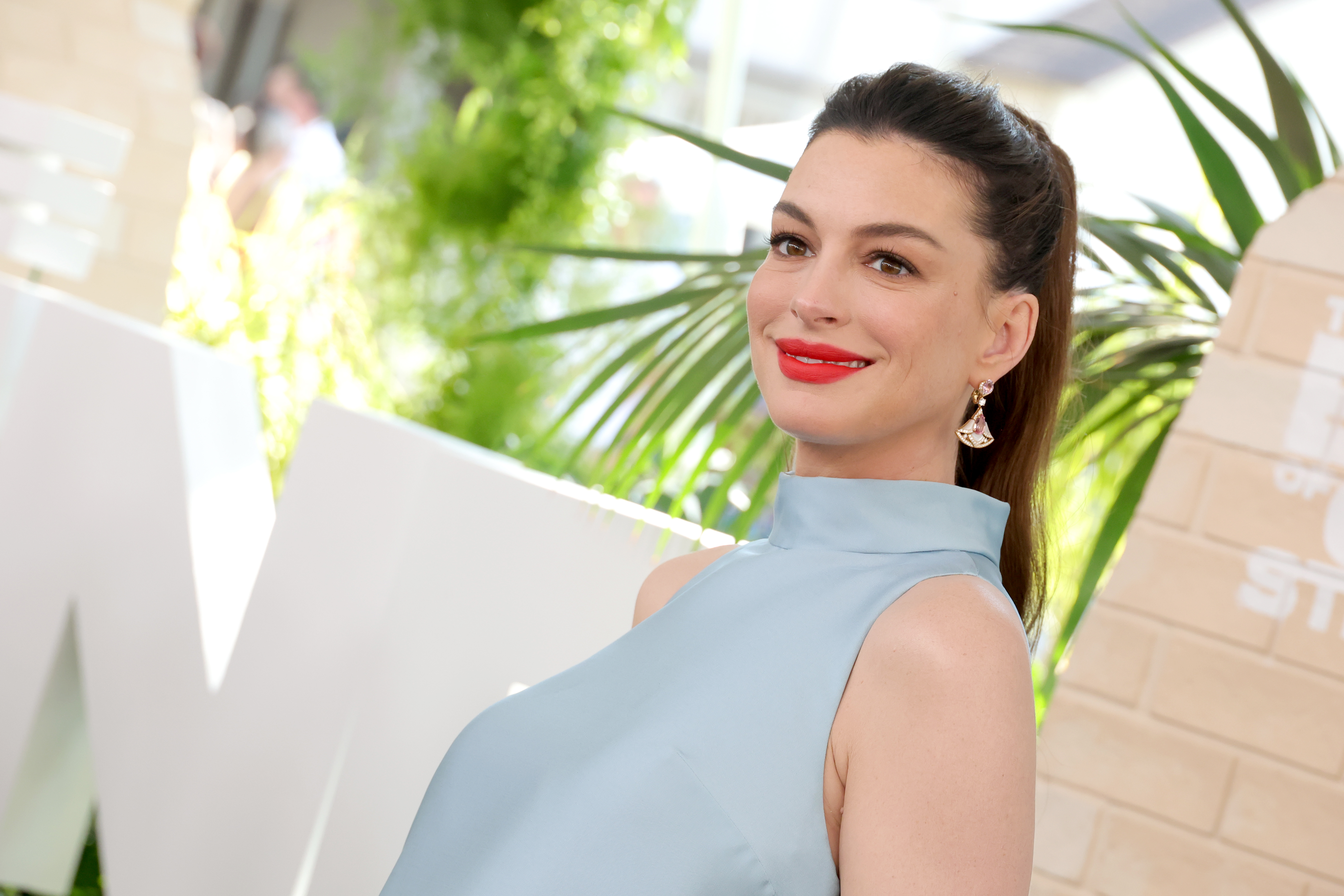
On 10 July 2026, Lin-Manuel Miranda sat for an unusually long interview with Variety, much of it given over to a number he keeps returning to: ten years. A decade ago this summer, he was eight performances a week into Hamilton's Broadway run and, somehow simultaneously, handing in songs for Disney's Moana. The first film has grossed more than $643 million at the global box office, according to Variety, and Miranda is now back in awards-season conversation with its sequel — sharing the conversation with the kind of company he has spent a decade pretending not to notice.
"It can't be overstated," Miranda tells Variety of the sequel's position this Oscar cycle, "how delightful it is to be in the company of those artists." The framing is deliberate. He is not chasing. He is, by his own account, relieved to still be in the room.
The song that almost wasn't
The new piece of business that brought him back into Variety's conversation is "Along the Way," written for Moana 2 in roughly a week during what Miranda describes as a compressed production window. The song carries the narrative weight the sequels have leaned on: long voyages, tests of identity, the slow realisation that the mythological figure you have been chasing is your own family. Miranda's account of the week-long turnaround is not boastful. He treats it as logistics — the schedule of a working songwriter rather than the mystique of a once-in-a-generation talent. The interview, Variety reports, returns repeatedly to that flat affect, as if the man who wrote the Hamilton score wants to be read as a foreman on a film crew rather than its marquee name.
That self-effacement is itself the story. A writer-performer who could plausibly have walked away from major-label Disney work a decade ago as the highest-grossing songwriter of his generation chose, instead, to keep producing at the pace of a staff composer. The numbers bear it out: $643 million in theatrical gross on the first Moana, according to Variety's reporting, with the sequel now in contention the same year as the Hamilton tenth anniversary and alongside artists whose commercial gravity he speaks of with genuine, almost startled pleasure.
A crowded field, read sideways
Miranda's competitors this season include Taylor Swift, whose Eras Tour-era economic footprint has been treated by the financial press as a sector indicator rather than a pop moment. To be in the same conversation, by Miranda's account, "can't be overstated." The Variety interview is careful to underline the asymmetry: Swift operates in a stadium-scale touring economy; Miranda operates principally in narrative film and stage musicals. Their collision in the awards conversation is less a competition than a snapshot of how a studio awards season now accommodates a wider range of commercial-cultural peaks than it did a decade ago. Miranda reads his own presence there as an accident of timing rather than a claim on parity. Variety does not contradict him.
The structural read is more interesting than the humility. Studio awards campaigns in 2026 are no longer organised around a small handful of prestige live-action dramas, the way they were when Miranda was still in his twenties. They have to make room for animated sequel-shoulder seasons, for the residual cultural gravity of pop tour economies, for streaming-platform prestige releases that compete for the same voter attention. Miranda's presence in that field is partly a function of the Disney machine's continued investment in the Moana IP, and partly a function of the Hamilton decade — a body of work that gives awards voters a feel-good narrative of continuity.
What the sequel is actually for
Variety's reporting does not dwell on plot, but the interview makes the commercial logic of Moana 2 plain. The first film crossed $643 million theatrically. Disney has built a sustained merchandising and theme-park layer on top of it. A sequel in 2026 lands inside a release calendar that Disney has been rebalancing since the post-pandemic theatrical recovery: fewer middle-budget originals, more sequelised animated tentpoles whose appeal is global on opening weekend. Miranda is the connective tissue between that strategy and the Hamilton-era audience that first learned his name outside Broadway.
The interview, read closely, is also a quiet negotiation about what Miranda is not doing. He is not publicly attached to a new original musical in the way he was in the 2015-2018 window. He is producing songs for hire, appearing in conversation as a Disney ambassador, and letting the awards-season framing apply to him as a kind of grace note rather than a campaign. The shape of the career — composer-for-hire, occasional performer, regular awards presence — is one a 2015 Miranda would have found unimaginable.
The numbers behind the gratitude
There is a temptation, in coverage of Miranda, to treat the Hamilton decade as an aberration and the Moana returns as a return to form. Variety's framing suggests the opposite: the decade is the form. Hamilton set the commercial terms — a hit Broadway musical whose cast recording behaved like a pop album, whose cachet travelled into film scoring, whose lead became a Disney composer almost by osmosis — and Moana is the system that was built to monetise that crossover at global box-office scale. The $643 million figure is the smallest part of the picture; the sequel is the proof that the system still works.
Miranda, for his part, keeps returning to gratitude. Variety lets him. The interview, for all its commercial scaffolding, ends on the note that a songwriter who has done this for ten years is still slightly amazed that anyone wants to hear about it.
This publication framed Miranda's place in the 2026 Oscar conversation as a labour-economy story disguised as a comeback — Variety, more straightforwardly, read it as a songwriter pleased to be in the room.