Locarno bets on curated eccentricity as a smaller festival fights for relevance
Giona A. Nazzaro's third Locarno arrives with Isabella Rossellini, Darren Aronofsky and Caleb Landry Jones in tow, and a programming philosophy the festival is calling 'curated diversity' — a wager that distinctiveness can still win against larger European rivals.
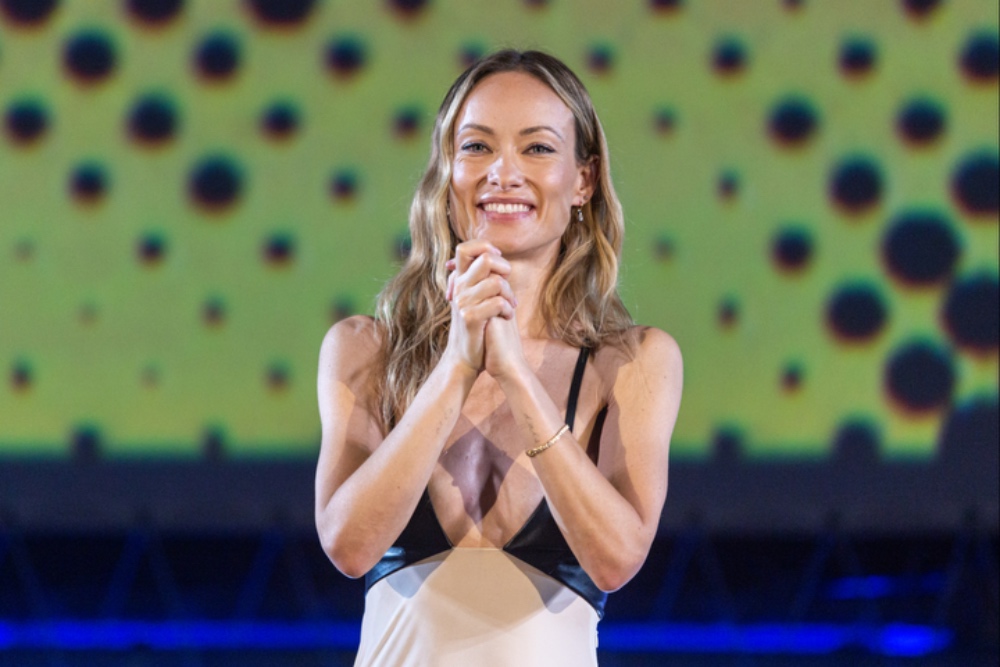
At 14:41 UTC on 10 July 2026, Variety published an interview with Giona A. Nazzaro from the lawn of the Locarno Film Festival, three days before this year's edition opens on the shores of Lago Maggiore. The artistic director used the conversation to do something festival programmers rarely do in midsummer: explain the spine of his programme in plain editorial terms, naming names — Isabella Rossellini, Darren Aronofsky, Olivia Wilde, Caleb Landry Jones — and framing the work as an argument about what a mid-sized European festival is for in 2026.
Nazzaro is now in his third year at the festival's helm, and the Locarno he has been quietly reshaping is smaller than Cannes, less market-driven than Venice, and less institutional than Berlin. Yet every summer the Swiss event has punched above its weight by offering something its bigger siblings have trouble matching: an audience that actually turns up, that queues without complaints, and that treats the Piazza Grande as a public square rather than a red carpet. The question hanging over this 79th edition is whether that contract still holds when the pressure on European arthouse film has visibly intensified.
A lineup built around the personalities
Nazzaro's framing word for the year is "curated diversity" — Variety reports him using the phrase to describe a programme that draws on star-led showcases, genre provocation, and auteur-driven sidebars, held together by editorial conviction rather than market logic. Rossellini receives an honorary career tribute; Aronofsky and Wilde are reportedly attached to projects screening in the programme; Caleb Landry Jones appears both as a performer and, in Nazzaro's telling, as the scorer of a personal passion project.
The choice is deliberate. European festival calendars have spent the last decade thinning out in the middle. Cannes and Venice have grown more defensive about their marquee value, hoarding premieres and protecting brand economics. Smaller events such as Locarno, San Sebastián, Karlovy Vary, and Rotterdam have had to choose between imitating that defence or leaning into the alternative asset they actually possess: a willingness to programme films that don't already have a buyer attached. Nazzaro, by his own account, has chosen the latter.
There's a structural argument underneath the rhetoric. Mid-sized European festivals survive not by competing for the same ten premieres but by holding onto a specific function — discovery, risk, idiosyncratic curation — that the bigger events have partly outsourced to streaming platforms and sales agents. Locarno's claim, as Variety's interview lays it out, is that this function still matters and that a festival built around a piazza and a 10,000-seat outdoor screen can defend it on its own terms.
The counter-narrative
The counter-read is straightforward and worth taking seriously. European cinema as an industrial sector is contracting; arthouse theatrical windows are shrinking; the cohort of festival programmers who can greenlight a six-figure acquisition has thinned to a few dozen buyers worldwide. Under those conditions, a festival that defines itself by what it rejects — blockbusters, market-driven premieres, IP-driven tentpoles — risks mistaking aesthetic discipline for financial irrelevance. Variety's piece does not press this point, but it hovers at the edge of the conversation: the people paying for the rights to most of what Locarno will screen in 2026 are increasingly platform executives, not national distributors.
Nazzaro's response, implicit in his Variety remarks, is that this is precisely why curation matters. If a festival cannot outbid the streamers for hype, it can out-curate them for taste. That is an honest wager — and an unfalsifiable one, because neither side can prove it wrong inside a single edition. What can be measured is whether the films Locarno premieres this July still find their way into cinemas, broadcasters, and subscription queues within twelve months, and whether the audience numbers on the lakeshore hold against weather, currency pressures, and the slow drift of younger viewers toward short-form content.
Structural frame: festival economics in 2026
The deeper story is about the geometry of European cultural funding. Locarno draws roughly a third of its budget from Swiss federal sources, with the balance from canton Ticino, the city of Locarno, sponsors, and ticket revenue. That public-heavy mix gives the artistic director unusual latitude compared with peers in Cannes or Berlin, where commercial partners have more leverage. It also makes Locarno unusually exposed to political shifts in Bern.
In 2026, with several European governments tightening cultural budgets and reallocating arts funding toward industrial and security priorities, the question of who pays for a festival that programmes for curators rather than for markets is no longer abstract. Nazzaro's push for "curated diversity" — a phrase that reads as a coded defence of festival autonomy — is, in this light, also a pitch to funders who increasingly want to see what their money produced.
The Locarno argument, made implicitly across the Variety interview, is that distinctiveness itself is the deliverable. A festival that screens twenty premieres no one else in Europe will touch, in front of an audience that engages with them in real time, is producing something that Netflix, Disney+, and the major European broadcasters cannot easily replicate: a public.
Stakes
If the wager pays off, Locarno consolidates its position as the European festival where programming still means what it says — a useful counter-weight to the Cannes-Venice-Berl triangle, and a reliable home for the kind of mid-budget auteur cinema that streaming has quietly deprioritised. If it doesn't, the festival becomes a heritage attraction, beloved but gradually hollowed out, with curatorial autonomy preserved but practical influence shrinking year over year.
The next 12 months will tell. The Piazza Grande, in the meantime, fills up again. Nazzaro, in his Variety remarks, is plainly counting on the audience noticing what he has done before anyone asks him to do it again.
— Monexus framed this against the structural pressures on mid-sized European festivals rather than the conventional red-carpet preview, on the grounds that the news in Nazzaro's Variety interview is not the names on the bill but the editorial philosophy underneath them.