The Middle East policy video that won't tell you which Middle East
A 19:08 UTC post carrying only the words 'US foreign policy towards the Middle East' is now travelling further than the actual policy proposals it gestures at. The gap between the label and the argument is the story.
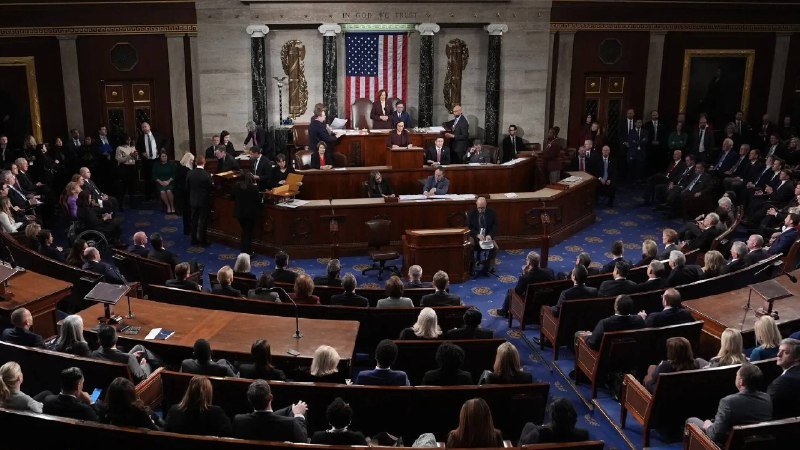
At 19:08 UTC on 10 July 2026, an account going by @sprinterpress posted a video bearing the single line of text "US foreign policy towards the Middle East." No country named. No administration identified. No date range. No thesis in the caption itself — only a heading, a thumbnail, and an algorithmic bet that the gap between those two things will fill itself.
That bet, more than any policy in the video, is what this piece is about. American Middle East policy is no longer a body of doctrine one can read; it is a content vertical, fought over by accounts whose product is the frame in which Washington acts. The frame travels further than the act. The act travels further than the doctrine. The doctrine, increasingly, is whatever survives the frame.
The caption as policy document
A 19-word caption is unusual only for its emptiness. The structural problem it exposes is not new. For years, commentary about Washington's Middle East posture has operated on the same trick: invoke "the policy" as a singular noun, gesture at a region, and let the audience's priors do the rest. Gaza hawks hear a green light for the next phase of the war in Gaza. Iran doves hear a de-escalation signal. Gulf-state realists hear a normalisation timetable. Everyone hears confirmation. None of them, on this evidence, hears the same thing.
The post therefore functions less as a claim about American strategy than as a stress test for the audience it already knows it has. A policy video without a stated policy is a coherence test on the viewer. The verdict is rarely interesting — only the way the verdict propagates is.
Why the frame outruns the doctrine
There is a straight-line economic explanation for why this register has become the norm on policy commentary accounts. Generative video production has collapsed the cost of a 90-second explainer; algorithmic feeds reward certainty over specificity; and "the Middle East" as a noun phrase comes pre-loaded with the audience's existing positions. A specific claim — "the administration will condition arms deliveries on refugee corridor access by Q4" — is falsifiable, and therefore risky. "US foreign policy towards the Middle East" is unfalsifiable, and therefore safe.
The result is a content layer that is increasingly policy-themed and increasingly policy-empty. The accounts that win are those that have learned to sound like analysts while functioning as mood boards. Their product is not argument; it is the permission to hold an opinion. That is a different product, with different economics, and a different politics.
Who pays for the blur
The audience is not the only constituency. The blur is also useful to the policy class it purports to describe. A foreign-policy establishment that no longer has to defend a single legible position can keep multiple options open indefinitely, while commentary accounts — on left, right, and the long Gulf-state realpolitik middle — supply the cover for whichever option becomes operational. The recent pattern of US engagement in the region, where Israeli-Palestinian ceasefire diplomacy, Iran nuclear posture, and Gulf normalisation tracks have run on visibly parallel but rarely converging tracks, is hard to read as a unified doctrine precisely because the public commentary around it is engineered to be unreadable.
Two readers watching the same 19:08 UTC video are not receiving the same broadcast; they are receiving two different broadcasts from the same transmission. That is the underlying media economy of American Middle East policy in 2026, and it predates the current administration and will outlast it.
What a serious caption would have to look like
A genuinely useful caption at 19:08 UTC on 10 July 2026 would have named: a country, an instrument, a counterparty, and a date. "State Department, regarding the Iranian nuclear file, between now and the September UNGA window." That is a sentence. It is falsifiable. It can be checked against what officials actually say in the coming weeks. It is, accordingly, almost never the form a viral policy video takes.
Until the form flips — until commentary accounts are rewarded for being specific enough to be wrong — the reader is left to do the work the caption refuses to do. That work is not forbidden. It is merely offloaded, and the cost of offloading it falls on the public, while the upside accrues to the accounts that do the offloading.
The unstated stake
What remains genuinely uncertain is whether Washington itself has a coherent doctrine to caption. The video may not be evasive so much as descriptive: a reflexive admission that the policy is, at present, the running sum of its captions. If that is the case, the right response from readers is not better commentary but better demands — for documents, dates, and officials willing to put a position on the record. The medium is not the message. The caption is.
This publication finds that the working product of "US foreign policy towards the Middle East" is now a content vertical, not a doctrine — and that the accounts selling the frame are paid more cleanly than the doctrine itself has ever been written.
Wire provenance
This editorial synthesis draws on the following public wire/social posts:
- https://t.me/s/sprinterpress