A ghost story for grown-ups: Signature drops the UK trailer for 'Momo and the Time Thieves'
Signature Entertainment has released the UK trailer for its long-gestating adaptation of Michael Ende's 'Momo', with Martin Freeman voicing the lead. The cut leans into the book's quiet, time-horror.
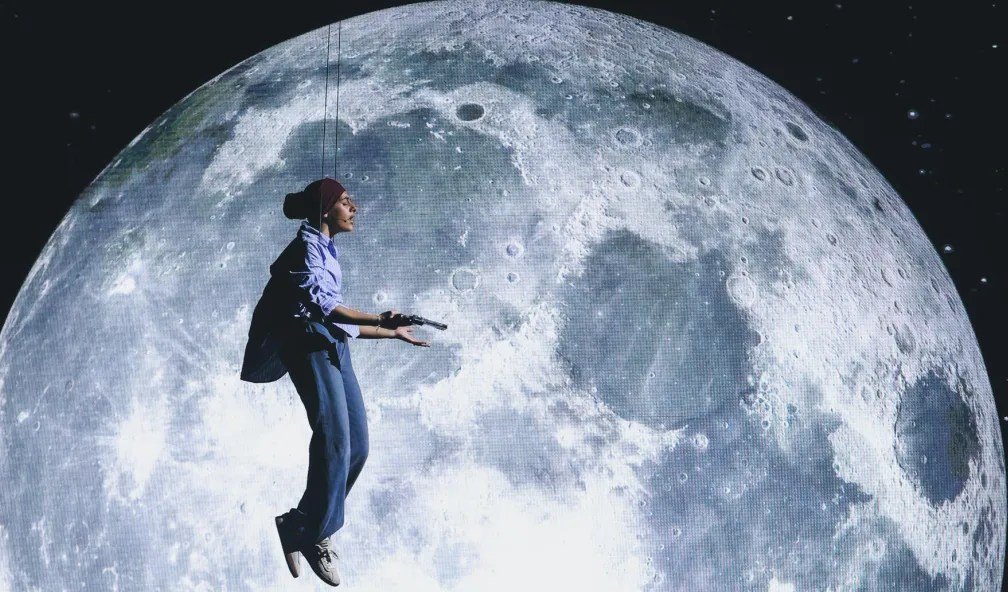
Signature Entertainment dropped the UK trailer for Momo and the Time Thieves on 10 July 2026 at 21:17 UTC, handing British audiences their first proper look at the long-gestating adaptation of Michael Ende's 1973 novel Momo, also known as The Grey Gentlemen. The cut, surfaced by the First Showing Telegram channel, opens on a child in an empty amphitheatre being told, in Martin Freeman's voice, that she is about to be shown "where time comes from," before cutting to a sun-bleached Mediterranean town slowly being hollowed out by a conspiracy of grey-suited figures who buy time from people too harried to notice what they're selling.
That this film is reaching British screens at all is the more interesting story. Ende's book was written as a quiet polemic against what its author called the theft of life's duration by efficiency culture, a theme that lands harder in 2026 than it did in 1973. The adaptation's release also lands in a German fantasy lineage that has had a peculiar afterlife on screen: The Neverending Story became a global touchstone in 1984; Momo did not, and the gap is itself a small lesson in how some books get the screen treatment they deserve and others wait.
What the trailer actually does
The Signature cut positions itself as a more grown-up register than the 1980s Momo TV and film adaptations that followed Ende's death. The opening beat is a riddle — the amphitheatre, the circling grey figures, the question to the child — before the camera pulls back to show a town whose baker has stopped baking, whose painter has stopped painting, whose children have stopped playing in the ruined amphitheatre at the centre of the square. The rhythm is slow and the palette is the colour of old plaster. Freeman, cast in what the trailer frames as the role of the street storyteller and guide figure rather than the lead child, narrates in a register closer to a bedtime story for adults than a children's film.
What the trailer withholds is as telling as what it shows. There is no clear look at the antagonists — the Grey Gentlemen, formally dressed time-vultures who, in the source novel, seduce a city's adults into surrendering hours of their lives in exchange for saving schemes and stress-free futures — only their hats and briefcases. There is no clear look at the turtle Cassiopeia, Ende's cryptic narrator-figure. The cut runs long on atmosphere and short on plot, which is either a sign of confidence in the material or a sign of marketing caution; either reading is defensible.
The Michael Ende problem, restated
Ende is the German author whose work Hollywood learned to love selectively. The Neverending Story was filmed in 1984 by Wolfgang Petersen and produced by Bernd Eichinger; the film became a worldwide hit, and its imagery — the Childlike Empress, Artax drowning in the Swamps of Sadness, the Nothing — entered the popular vocabulary. Momo, by contrast, has had a more stop-start screen life: a 1986 German television film directed by Johannes Schaaf, a 2001 Italian-German animated adaptation, and various stage and radio treatments across Europe. None of them became the global reference point that The Neverending Story did. The 2026 Signature release is, in effect, an attempt to correct that record.
The book itself is a children's novel about time, trust, and attention. The plot turns on a small girl, Momo, who listens rather than speaks, and whose capacity to give people her full attention turns out to be the only thing standing between a nameless city and a polite, bureaucratic invasion by the Grey Gentlemen. The villains do not seize time by force; they convince the citizens to deposit it, hour by hour, into savings plans, and to forget that they ever had it. Ende wrote the book in a country still digesting its postwar reconstruction and the consumer culture that came with it, and the satire lands on the bureaucratic middle manager as readily as on the capitalist. A 2026 audience, saturated with subscription services and attention-economy platforms, will not struggle to map the analogy.
The politics of a quiet release
Signature Entertainment is a UK distributor with a track record in genre and family titles, and its choice to release the trailer without the kind of months-long teaser campaign associated with the major American studios is itself a positioning statement. The release window — mid-July, with no announced theatrical run yet on Signature's public schedule at the time of writing — suggests a home-platform-first distribution, which is the route that smaller European fantasy adaptations have increasingly travelled in the post-pandemic marketplace. The 1986 Momo adaptation, by contrast, was a state-broadcaster co-production in West Germany; the 2026 version is, by Signature's framing, a UK-led release of an international production, and the institutional lineage is different.
The film also arrives into a market where European fantasy for adults — Denis Villeneuve's Dune adaptations, the Lord of the Rings streaming slate, The Witcher — has rarely been hotter. What none of those properties share with Momo is the explicit ideological core: a children's book that takes the position that time saved is time stolen, and that the institutions offering to take it off your hands are not your friends. Whether a 2026 audience sits with that argument, or simply enjoys the spectacle of grey men in hats, will determine whether Signature has a franchise on its hands or a one-off curiosity.
What to watch for
Three concrete points will tell us whether the Ende estate and Signature have a hit on their hands rather than a prestige release. First, the box-office or platform-data footprint in the first four weeks; Signature's recent UK titles have tended to be measured in low millions rather than tens of millions. Second, whether the German and pan-European distributors pick the film up on the same release terms; Momo is, after all, German intellectual property before it is anything else, and the German reception will frame the rest. Third, whether the studio's editing choices — and specifically how much of Ende's philosophical bite is preserved — survive contact with English-language review coverage. The trailer suggests confidence on that third point. The release date will tell us whether the confidence was warranted.
This article traces a single trailer release surfaced through First Showing's 10 July 2026 Telegram post. Casting, plot beats, and institutional framing are drawn from the trailer cut and from the prior screen history of Ende's work; the absence of a confirmed theatrical release date in the public Signature schedule at the time of writing is noted as a live uncertainty, not a presumption.
Wire provenance
This editorial synthesis draws on the following public wire/social posts:
- https://t.me/FirstShowing/19783
- https://en.wikipedia.org/wiki/Momo_(novel)
- https://en.wikipedia.org/wiki/Michael_Ende
- https://en.wikipedia.org/wiki/The_Neverending_Story_(film)