NATO's Turkish summit lands under the shadow of an Iran funeral and a French rupture
Allied leaders met in Ankara on 9 July as state funerals in Tehran and a court ruling against Le Pen redrew the political weather across NATO's southern and eastern fronts at the same moment.
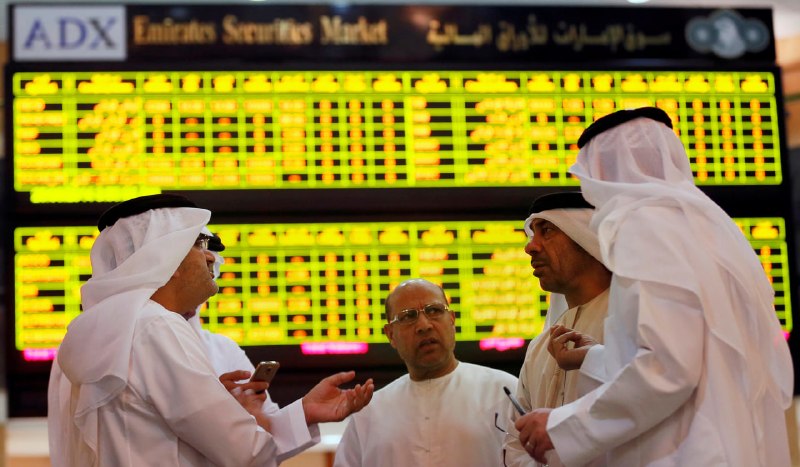
Ankara hosted NATO heads of state and government on 9 July 2026, the day a state funeral in Tehran drew senior Iranian officials into the open and a French court moved against Marine Le Pen. The convergence was unwritten but unmistakable: the alliance's southern and eastern flanks answered on the same calendar, and President Donald Trump's questioning of NATO's purpose landed in a room already processing two disruptions it had not invited.
The summit's stated business was burden-sharing and the alliance's posture after two years of grinding support to Ukraine. Its actual business was whether the United States still treats the treaty as binding, whether the European members can fund the substitution if it does not, and whether two crises outside NATO's formal remit — an Iran in mourning and a France in judicial crisis — quietly harden the political weather for the communique that follows. None of those questions are new. What is new is that they are being decided in the same week.
The Turkish chair, the American guest
The location was Ankara's, the agenda item that drew most attention was Washington's. Trump used the platform to revive long-standing doubts about the alliance's value to the United States, a posture his first administration adopted in 2018 and 2019 and that has been a recurring feature of allied summitry ever since. Reporting from France 24's 10 July morning brief described the intervention as "questioning the alliance's long-term relevance," language that captures the diplomatic register without overstating it; allies treated the remarks as a price of attendance rather than an ambush.
For Turkey, the host, the optics matter. Ankara has spent two years repairing ties with the European Union and the United States after a long stretch in which it sat closer to Moscow on the Syrian file and bought the Russian S-400 air-defence system. A NATO summit on Turkish soil, with the American president in the building, is a credential the government of Recep Tayyip Erdoğan intends to spend. The Turkish read is that NATO needs Ankara more than Ankara needs NATO — a posture that has been true since 2022 in the Black Sea and the Eastern Mediterranean but had not previously been aired at this volume.
The funeral in Tehran
Outside the summit hall, Iran held a state funeral for figures killed in the 12-day Israel–United States war of June 2026, with senior officials, including President Masoud Pezeshkian, in attendance. The ceremony was a domestic ritual but also a signal: the Islamic Republic treated the dead as martyrs of a war it frames as having been imposed on it, not started by it. The Western wire framing of that war is well known. The Tehran framing — that Iran absorbed an unprovoked strike and absorbed it on Iranian terms — was given equal airtime at home and, through state media, to the region.
The NATO summit read that framing carefully. Turkey, Qatar and the Gulf monarchies, all represented at Ankara, have reasons to manage rather than confront a regime that is wounded but intact. European members, particularly France and Germany, are recalibrating an Iran policy that for two decades assumed a Western-led sanctions architecture could produce behaviour change. That assumption is now openly contested inside European foreign ministries, even where it is not yet contested in public. The funeral in Tehran is the visible peg for a quieter reassessment.
The Le Pen verdict and the European question
A French court ruling against Marine Le Pen, the long-time leader of the Rassemblement National and the country's most consistently polling presidential candidate, ran on the same news day as the Ankara summit. France 24's brief flagged it as one of three political stories defining the week, alongside the NATO gathering and the Iranian ceremonies. The ruling's specifics — what it bans, fines, or disqualifies, and over what duration — were not detailed in the source material and remain to be verified in primary court reporting; what is firm is that a French court has moved against the country's principal opposition leader during the active run-up to a presidential cycle.
The European read is uncomfortable on two sides. Governments that regard Le Pen as an extremist will treat the ruling as a long-delayed accountability measure. Governments that depend on her party's parliamentary arithmetic will read it as constitutional over-reach. Either way, the decision lands at a moment when France's diplomatic weight inside NATO — its nuclear deterrent, its Sahel posture, its Mediterranean presence — is harder to substitute than at any point since 2003. A weakened or polarised French presidency is not a French problem alone; it is an alliance problem, and the Ankara summit was the first venue at which that fact became a working assumption rather than a background worry.
Stakes for the next four summits
Two trajectories run out of this week. The first is the American one: if Trump treats the Ankara questioning as a negotiating posture and returns to rhetorical baseline, allies absorb the cost and refund the alliance. If the questioning persists into the 2026 midterm cycle and the 2027 NATO leader-level meeting in The Hague, the European members — Germany above all — are on the clock to fund the substitution themselves, a fiscal proposition that runs through Bundestag votes France, the United Kingdom and Italy cannot easily mirror.
The second trajectory is the southern one. An Iran in mourning, with a security services establishment that has just absorbed a major kinetic shock and is reorganising around that shock, is harder to deter and harder to negotiate with than the pre-war Republic. A Turkey that has hosted this summit and used it well will have more leverage, not less, in any subsequent crisis over Syria, Cyprus or the Eastern Mediterranean pipeline question.
For France, the political calendar will not wait for the alliance. The Le Pen ruling, whatever its precise legal force, will test whether the French Fifth Republic can absorb a decisive judicial intervention in a presidential cycle without a delegitimising backlash from the party's voters. The NATO communiqué cannot and will not speak to that, but the room in Ankara will have read the French morning papers before the closing session.
Monexus framed this as a single-week convergence rather than three separate stories because the calendar made the connection unavoidable. The western wire line on each piece — Trump's NATO posture, the Iran funeral, the Le Pen ruling — was treated as one input among several; Iranian state media's framing of the funeral and the European press's framing of the French ruling were given equal weight, then a structural read.