Nicholas Meyer looks back on the long shadow of 'Wrath of Khan'
At the Italian Global Series Festival, the director revisits 'Star Trek II,' the film Paramount tried to stop him from making — and the franchise logic it set in motion for the next four decades.
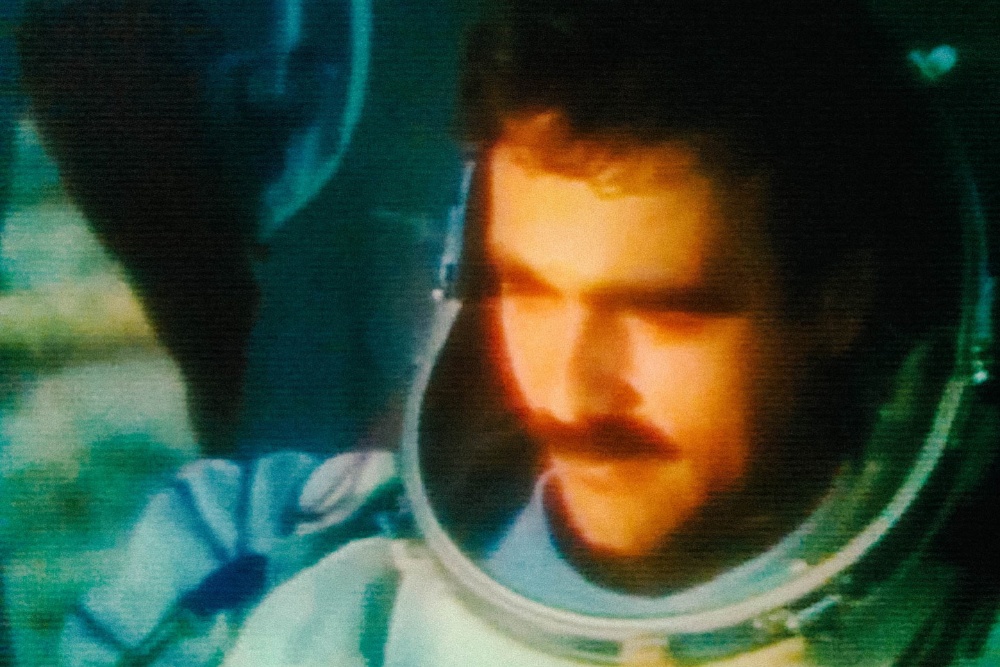
Forty-four years on, Nicholas Meyer still sounds mildly surprised that Paramount let him direct Star Trek II: The Wrath of Khan. Speaking to Variety on 10 July 2026 from the Italian Global Series Festival in Rimini, where he appeared ahead of a sneak peek of Star Trek: Strange New Worlds Season 4 and a wider celebration of Star Trek at sixty, Meyer described the production as a quiet rebellion against a studio that had grown tired of the property. "They were ready to cancel the whole thing," he said, in remarks published by Variety. The film, released in 1982, became the second-highest-grossing entry in the franchise at the time and the template against which every subsequent Trek feature has been measured.
The point of revisiting Meyer now is not nostalgia. It is that Wrath of Khan is the clearest articulation of how a major American studio IP was rescued from internal obsolescence by a writer-director who treated the source material as literature, not product — and that the business of the franchise has never quite recovered from the lesson.
A studio ready to be talked out of itself
Meyer told Variety that Paramount, by the late 1970s, regarded Star Trek as a near-finished asset. The original 1960s series had been an unremarkable performer in its first run; its syndication afterlife and the conventions that grew around it had built a fanbase the studio now felt it had adequately monetised. The 1979 feature, Star Trek: The Motion Picture, had been a deliberate special-effects showcase — director Robert Wise, long production schedule, a story that audiences respected and then declined to return to. By the time Meyer was approached to write, and then to direct, the sequel, the prevailing view inside the studio was that the brand had run its course.
Meyer's intervention was structural. He brought in the spine of Herman Melville's Moby-Dick — a man whose grievance had become indistinguishable from his identity — and grafted it onto a Cold War naval-procedural frame. Ricardo Montalban's Khan Noonien Singh was not, in Meyer's telling, a moustache-twirling villain so much as a Captain Ahab figure returning to settle a decades-old account. The film worked because it gave an aging cast permission to age on screen, and because it treated the audience as readers rather than consumers.
The counter-read: the sequel cycle was always going to happen
The standard studio-history line is that Wrath of Khan is the exception that proves the rule — that studios were always going to keep mining Trek as long as the convention circuit kept showing up, and that Meyer's film simply happened to land at the right moment. There is something to that. The Motion Picture had opened to strong business even if word of mouth was muted, and the brand's value to Paramount's syndication arm was not zero. A second feature would have been greenlit regardless.
But the counterfactual is less interesting than the actual record. Wrath of Khan overperformed the studio's own expectations decisively. It established a sequel cadence — The Search for Spock, The Voyage Home, The Final Frontier, The Undiscovered Country — that ran through 1991 and turned the original-cast films into the franchise's commercial backbone for the next decade. Whatever Paramount's default plan was, Meyer's film changed it.
Why a literary spine mattered
Meyer's Variety remarks sit inside a longer pattern in franchise filmmaking that rarely gets named plainly. The most durable studio properties since the 1970s — Star Wars, Alien, Indiana Jones — have been built on borrowings from older narrative traditions, applied with enough craft that audiences experience the result as original. The borrowings themselves are not the secret. The secret is treating the borrowed material as load-bearing, not decorative.
That is what Wrath of Khan did with Melville and with the Aubrey-Maturin tradition of naval fiction that runs through Patrick O'Brian (Meyer directed an O'Brian adaptation, The Last of the Mohicans's successor features, and later the Hornblower television films). The film is not Melville-themed; it is Melville-structured. Khan is Ahab. Kirk is Starbuck — the second-in-command who cannot save his captain from himself. The climax is the white whale: the Genesis Device and the detonation that costs Kirk his son.
Audiences in 1982 did not need to know any of that to feel the film land. They needed to feel that the people making it took the material seriously enough to give it architecture. That is the harder thing to manufacture, and it is the thing Paramount has been trying to engineer back into its franchise pipeline ever since.
The stakes for a 60-year-old franchise
The Italian Global Series Festival programming underlines the corporate present of the property. Strange New Worlds Season 4 is the flagship; the sixty-year anniversary is the marketing frame; and Meyer, now in his eighties, is the brand's living memory. The question the festival is implicitly asking is whether Star Trek can continue to be the property that treats its audience as readers.
The honest answer is that the modern Trek production apparatus is doing two things at once. The prestige work — Strange New Worlds in particular, and the Lower Decks writing room at its best — is operating in the lineage Meyer describes. The platform work — the international co-productions, the animated spin-offs, the licensing deals that keep the IP legible across streaming storefronts — is operating in a different lineage entirely. Both are needed for a sixty-year property to remain solvent. They are not always in sync.
What Wrath of Khan demonstrates, viewed from 2026, is that the literary version of Star Trek is the version the studio's own internal economics keep trying to talk itself out of, and the version audiences keep rewarding when it arrives. The pattern is old; it is also unresolved. Meyer's presence in Rimini this week is, in effect, a reminder — delivered by the director the studio once tried to ignore — of which version of the property actually works.
What remains uncertain
Variety's piece is a career-spanning conversation, not a market analysis, and Meyer's own framing of his tenure with Paramount is necessarily partial. The internal studio dynamics he describes — the assumption that the franchise was finished, the surprise at the sequel's performance — are reconstructed through his lens and that of the writers he worked with. Independent accounting of Paramount's 1981-1982 internal projections, and the precise sequence of greenlight decisions between The Motion Picture and Wrath of Khan, would require access to the studio's archived development memos, which have not been released. The reading offered here treats Meyer's account as credible on the merits and consistent with what is publicly known about the production timeline, while flagging that the studio's own contemporaneous paperwork would settle some of the open questions.
What is not in dispute is the result. Wrath of Khan reset the franchise's commercial and creative trajectory in 1982, and the brand's current custodians — at the festival, on Paramount+, on the convention circuit — are still working within the architecture Meyer and his collaborators put down.
Desk note: this piece is built around a single on-the-record Variety interview published 10 July 2026. Wire coverage of Meyer's remarks has not yet been paralleled by an independent studio-side accounting; readers seeking the Paramount internal perspective will need to wait for the next round of archival disclosures.