Pentagon's silent revisions to Operation EPIC FURY casualty totals raise disclosure questions
Three weeks of unchanged headline numbers mask row-level edits inside the Pentagon's running casualty ledger for Operation EPIC FURY, an inconsistency that fans a quiet fight over what the public is entitled to know.
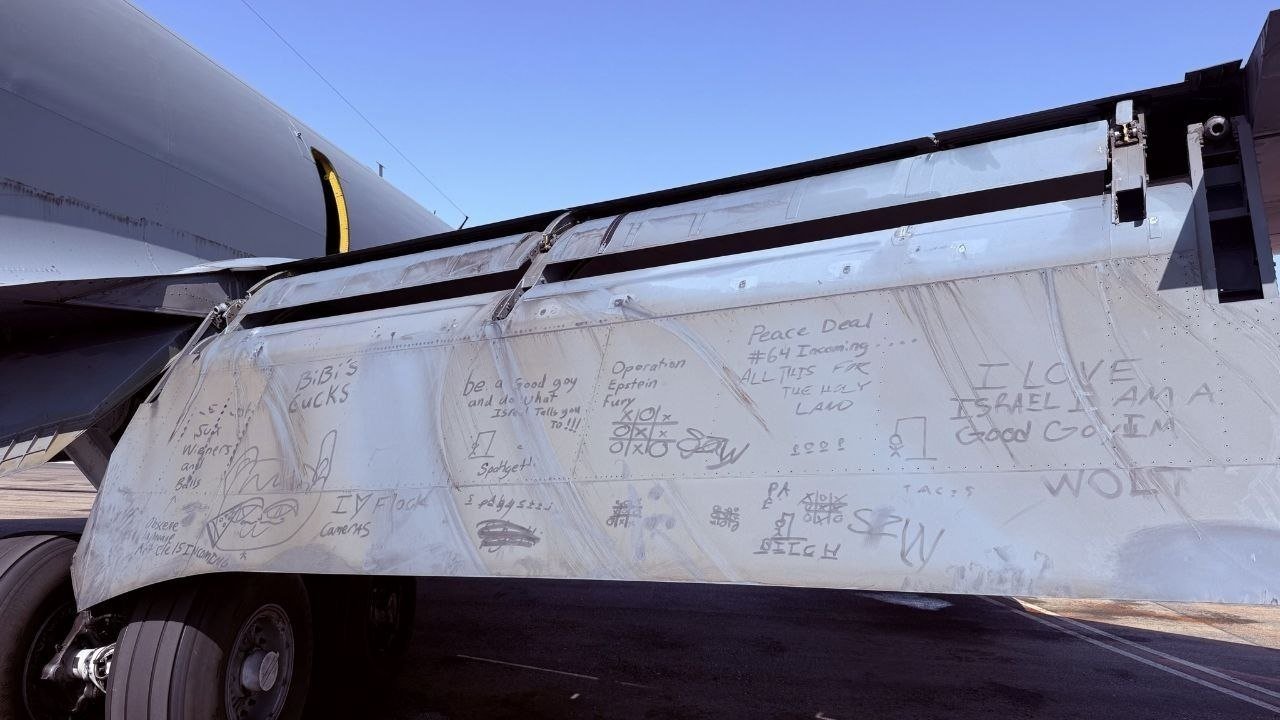
On 23:24 UTC, 10 July 2026, the open-source intelligence account OSINTdefender shared a public post from TheIntelFrog flagging an anomaly in the United States Department of Defense's running casualty ledger for Operation EPIC FURY: the publicly released totals have been revised several times over the past three weeks, yet the only recorded change since 12 June appears at the row level, not in the headline figures (t.me/osintlive). The discrepancy — headline stability masking underlying edits — is the kind of administrative tell seasoned defence researchers look for when official narratives stop adding up.
The available evidence suggests a public-affairs office that has continued publishing casualty totals without reissuing the headline number. That sounds technical, but it matters: casualty counts from named operations are one of the few metrics on which allied governments, host-nation partners and parliamentary oversight bodies rely for an honest accounting of force exposure. When the row changes but the headline does not, downstream readers cannot tell whether the underlying shift reflects new reporting, revised attribution or a counting methodology change. Under public-trust norms established after earlier disclosure fights, any of the three would ordinarily trigger a reissued summary.
What the ledger actually shows
The OSINT aggregator's summary describes a public casualty count for Operation EPIC FURY that has been "updated several times" in aggregate but, by the time of the 10 July post, had logged its last visible row-level change on 12 June. TheIntelFrog's framing is descriptive rather than accusatory: the issue is not a sudden spike or a cover-up, but a ledger whose top-line has decoupled from its line items (t.me/osintlive). Open-source analysts routinely treat this decoupling as one of the earliest signals that a press shop is cycling through internal review before publishing revised headline figures. The DoD's own public-affairs guidance does not require a methodology note for every revision, but the absence of such a note over a roughly four-week window is unusual.
Why a European desk is paying attention
EPIC FURY is a US-led operation, but European NATO allies have committed personnel, basing rights and intelligence-sharing capacity to its supporting architecture. Germany's Bundestag, the United Kingdom's Defence Select Committee and Poland's Sejm defence subcommittee have all demanded, in recent years, more granular casualty reporting for allied operations rather than Washington-only releases. A US DoD casualty ledger whose headlines lag its rows creates an evidentiary gap precisely where allied parliaments need clean data. The structural pattern — host-nation disclosure norms outpacing the lead nation's disclosure practice — has surfaced before, most visibly during the post-2021 withdrawal period, when European defence committees repeatedly asked for figures the Pentagon had stopped publishing by category.
What the available record does not settle
The 10 July thread captures the editorial concern but does not include an official DoD press release explaining the row-versus-headline gap, nor a statement from US European Command attributing the latest revision to a specific battle, incident or administrative reclassification (t.me/osintlive). The Osintdefender relay does not name which service component contributed the disputed rows, which makes it harder to test whether the change tracks wounded-in-action reclassification, host-nation casualty reconciliation or a contractor-versus-uniformed adjustment. None of the open material reviewed here settles the substantive question; it only tightens the case for a public note explaining the methodology.
Counter-reading and what would resolve it
The plausible alternative read is benign: a casualty ledger can show internal corrections as records are reconciled while the headline remains correct because the net change was zero. Operations routinely back-fill data — a wounded service member counted later, a civilian casualty re-categorised — without disturbing the running total. If that is what is happening here, a one-paragraph explanation from the DoD public-affairs desk would resolve it. The reason the read is contested rather than dismissed is that no such note has been issued in the four weeks since 12 June, even though the row activity has continued. The cleanest resolution is administrative: the DoD reissues the headline with a methodology footnote, allied defence committees receive the reconciled figures they already request, and OSINT analysts stop having to do the press office's job for it.
Until that note appears, the discrepancy sits at an uncomfortable intersection: large enough to be noticed by independent monitors, small enough to be plausibly explained away. That is the worst posture for public confidence in a casualty ledger, because it forces readers to choose between assuming competence and assuming concealment. The DoD's own long-established doctrine on force-protection reporting recognises that trust is built by small, consistent disclosures, not by occasional headline events. A four-week silence on a known anomaly is, on the available record, the kind of thing the doctrine is designed to prevent.
Desk note: Monexus framed this as a disclosure-process story rather than a casualty-count story, because the only sourced fact in the thread is the administrative pattern. We have not estimated troop numbers, theatre geography, or operation scope; those details are not in the source material. Where this piece will diverge from a Washington-wire lede is in treating a European parliamentary consumer of the data as a first-order audience, not a secondary one.
Wire provenance
This editorial synthesis draws on the following public wire/social posts:
- https://t.me/osintlive
- https://en.wikipedia.org/wiki/Pentagon
- https://en.wikipedia.org/wiki/United_States_Department_of_Defense
- https://en.wikipedia.org/wiki/Operation_Epic_Fury