Pakistan walks a tightrope between Tehran and Doha as US-Iran diplomacy wobbles
Within four hours on 10 July 2026, Prime Minister Shehbaz Sharif spoke separately to Iran's President Masoud Pezeshkian and Qatar's Emir Sheikh Tamim bin Hamad Al Thani, signalling Islamabad's effort to position itself as a courier between Gulf capitals and Tehran.
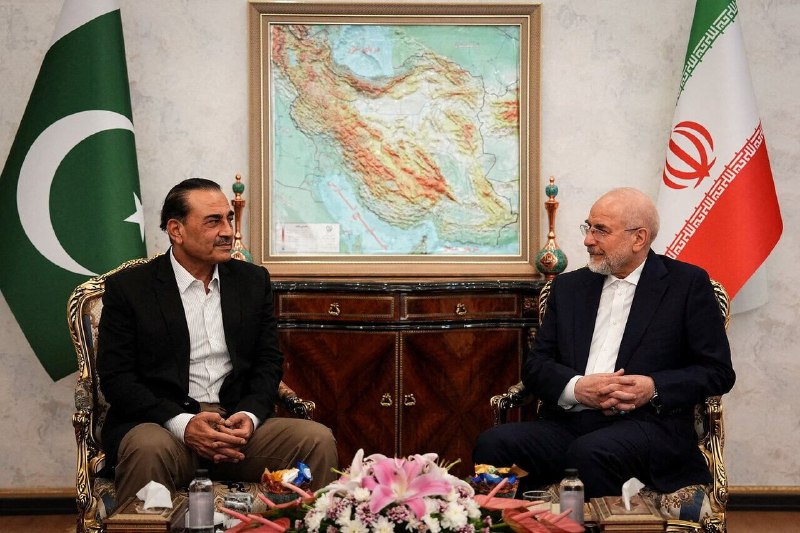
Two phone calls placed within four hours on 10 July 2026 have placed Islamabad at the visible centre of a Gulf-Iran diplomatic backchannel. At 13:40 UTC, Pakistan's Prime Minister Shehbaz Sharif spoke by phone with Iranian President Masoud Pezeshkian, calling on Tehran and "all other parties" to exercise restraint, according to the office of the Prime Minister, as carried by Al Alam Arabic. Less than ninety minutes later, at 15:15 UTC, Qatar's Emir Sheikh Tamim bin Hamad Al Thani took a separate call from Sharif in which the two leaders discussed "regional developments" and US-Iran talks, with both sides stressing the need for dialogue, as relayed by World Footprint via Telegram.
The pattern is the story. Pakistan is positioning itself as a convenient intermediary between the Gulf monarchies most exposed to an escalation between Washington and Tehran, and an Iranian leadership that has few remaining lines of communication with the United States. The two calls are not equivalent. One is a public appeal for restraint to an Iranian president whose room for manoeuvre is constrained by hardliners in Tehran. The other is a private coordination with a Qatari emir who has already proved his usefulness as a mediator between Iranian and American negotiators. Pakistan is offering to be useful to both.
Two channels, two audiences
Sharif's call to Doha, as described in the World Footprint relay, was built around "regional developments and US-Iran talks," with both sides emphasizing the "need for dialogue." That phrasing mirrors the language Qatar has used since 2023, when Doha brokered the prisoner-exchange and unfreezing-of-funds arrangement that briefly brought Iranian and American negotiators into the same room. Emir Sheikh Tamim's diplomatic stock in Tehran has long rested on exactly this utility. By lending his weight to a coordination call with Sharif, Doha widens the circle of interlocutors Iran can draw on without engaging Washington directly.
The earlier call to Pezeshkian, by contrast, was conducted with the official Pakistani readout framed in the language of de-escalation. The Prime Minister's office, as carried by Al Alam, said Sharif "called on Iran and all other parties to exercise restraint." Read narrowly, this is a restatement of Pakistan's standing public position: an Iran-Pakistan border that runs for more than nine hundred kilometres, a Shia Iranian neighbour to the west, and a Sunni Gulf patron network to the south, all insist that Islamabad cannot afford a hot conflict on either side. Read more broadly, it signals that Pakistan is prepared to carry messages rather than take sides.
An old intermediary in a new geometry
Pakistan has form in this role. From the 1979 Iranian revolution onwards, Islamabad has tried to combine a working relationship with Tehran's Islamic Republic with deep security ties to the Saudi and Emirati monarchies. The 2019 de-escalation between Riyadh and Tehran, mediated by the late Iraqi president, briefly looked like a model of regional self-mediation. It did not survive the 2020 Qatar boycott, which Pakistan navigated carefully.
What has changed in 2026 is the underlying geometry. Iran's external projection now runs through Iraqi Shia militias, Lebanese Hezbollah's depleted remnant, and a Houthi movement that has lost the Red Sea initiative it held in early 2024. Pakistan itself has become a more visible diplomatic actor in the wider Middle East, partly because the Gulf states have needed partners who are neither American nor Iranian, and partly because Islamabad's chronic financial pressure gives its leaders an incentive to be useful. According to both the Qatar and Iran relays, Sharif himself is making both calls from a position of need.
What remains uncertain
The two Telegram channels give no readout of who initiated either call, no direct verbatim quote from Pezeshkian or Sheikh Tamim, and no indication of whether any third-party message was passed. The Al Alam text on the Iranian call is paraphrased from the Pakistani prime minister's office; the World Footprint relay on the Qatari call is similarly paraphrased. Neither channel reports a follow-up, a joint statement, or a named American counter-party. If a substantive US-Iran negotiating track is running through Doha via Islamabad, the evidence so far only shows Pakistan leaning on both doors at once, not that anything has moved between them.
What is not in dispute is the diplomatic choreography. Within four working hours, the Pakistani prime minister spoke to the leader of the country Washington most wants to de-escalate with, and to the Gulf monarch most trusted by Tehran to carry discreet messages. Sharif will be hoping that visibility itself counts as a service, deliverable to donors and Gulf creditors alike.
This article was produced under the Asia desk's staff-writer voice. The wire relays were World Footprint via Telegram (15:15 UTC) and Al Alam Arabic via Telegram (13:40 UTC), each carried on 10 July 2026; both paraphrased from Pakistani, Iranian, and Qatari official readouts, none of which were independently published as standalone transcripts at the time of writing.
Wire provenance
This editorial synthesis draws on the following public wire/social posts:
- https://t.me/wfwitness
- https://t.me/alalamarabic
- https://en.wikipedia.org/wiki/Iran%E2%80%93Pakistan_relations
- https://en.wikipedia.org/wiki/2023_Iran-Saudi_Arabia_deal