In Parachinar, a procession staged for a guide who hasn't died: reading Iran's theatrical mourning in Pakistan's tribal belt
A Telegram channel tied to the office of Iran's Supreme Leader organised a 'symbolic funeral' for him in a Pakistani tribal city. The theatre says more about Tehran's foreign-policy reach than about any single procession.
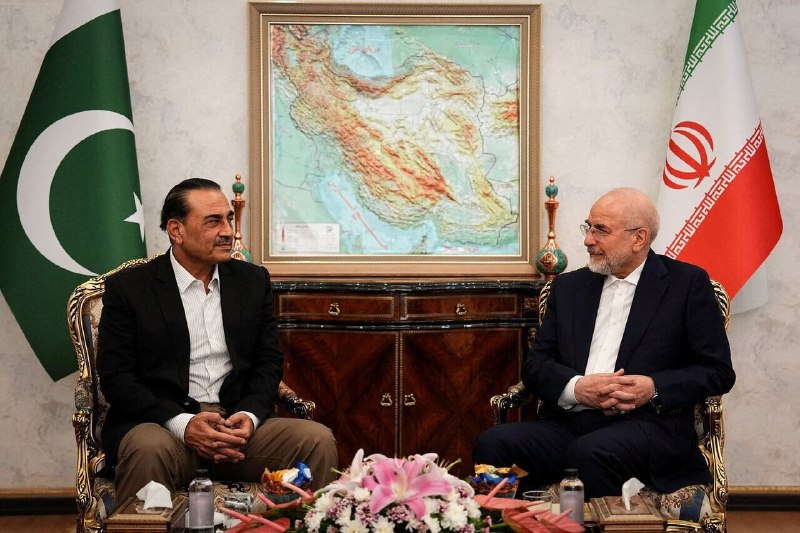
On the afternoon of 10 July 2026, a Telegram channel affiliated with the office of Iran's Supreme Leader published photographs of a "symbolic funeral procession" in Parachinar, Pakistan, staged in honour of Imam Sayed Ali Khamenei. The channel's own caption frames the gathering as coinciding with official funeral ceremonies in Iran. The qualifier "symbolic" is the operative word. The man being mourned is alive.
The procession is best read not as a news event but as a piece of religious-political theatre. It tells the reader where Tehran's soft-power reach is most responsive, and where its rituals can be reproduced on foreign soil without the friction that usually attends Iranian activity in Sunni-majority Pakistani territory.
A town that already mourns loudly
Parachinar is the administrative centre of Kurram district in Khyber Pakhtunkhwa, bordering Afghanistan's Khost and Paktia provinces. It is one of the few Shia-majority enclaves in Pakistan's federally administered tribal belt, and one of the most violence-prone. Kurram has been the site of recurring sectarian flare-ups, road blockades and displacement episodes for the better part of two decades.
A community that already organises public Ashura commemorations at scale does not need external prompting to fill a street. That a procession under Khamenei's name could be staged there at all is the story. The choreography — green banners, portraits, slow cortège through a bazaar — mirrors the visual grammar of state funerals in Tehran, but the actors are Pakistani Shia faithful acting in solidarity with a living patron, not pallbearers.
What the Iranian framing buys
Tehran's foreign-policy grammar has long used Shia ritual space as a diplomatic surface. Annual Arbaeen coverage, Friday sermons beamed by satellite, and the careful labelling of foreign clerics as "representatives of the Supreme Leader" extend the Iranian state's institutional reach without requiring consulates or trade offices.
A "symbolic funeral" sharpens the register. It converts grief-as-ritual into grief-as-loyalty, in a town where loyalty is contested ground. By circulating images through a Khamenei-affiliated channel, Tehran also produces evidence of foreign reverence for domestic consumption: a frame Iranian state media can quote back to its own audiences as proof that the Supreme Leader's authority extends beyond Iran's borders.
Why Parachinar, and why now
Two structural pressures make the choice of venue legible. Inside Pakistan, the formal religious-sectarian politics of Kurram have, over the past two years, sat alongside a quieter diplomatic opening between Tehran and Islamabad: barter arrangements to manage border unrest, intermittent energy talks, and a shared interest in keeping the road between Zahedan and Quetta open. A visible Iranian-aligned ritual in Kurram does not contradict that opening. It stages Iranian moral authority in a space where Pakistani Shia religious networks already operate with relative autonomy.
Regionally, the second half of 2026 has carried its own signals of strain. Iranian-aligned mobilisation rituals have become a recurring feature of coverage from outlets reporting on Shia communities in Lebanon, Iraq and the Gulf littoral. Holding one in Parachinar — geographically remote, politically quiet in international wire terms — lets the gesture land without inviting the kind of state-to-state complaint that a Baghdad, Beirut or Sanaa edition would.
What the photograph cannot settle
A single Telegram post cannot tell the reader whether the procession was organised by local clerics, Iranian cultural attachés, religious-tourism operators, or a coalition of all three. The channel that published the images is an advocacy surface, not a documentary one. The number of attendees, the ethnic composition of the crowd, the relationship between the organisers and the office of the Supreme Leader — all remain unspecified.
What the post does establish is that the choreography is now exportable. A living leader can be given a foreign funeral in absentia, and the ritual can be carried on a channel that bears his name. For an Iran looking to project continuity across a difficult year, that is the usable residue of an otherwise unusual image.
This piece reads Tehran's soft-power ritualism through a single Telegram post, rather than over-reading it as a regional shift. Monexus's frame: theatre is the signal; the question is which audience it was staged for.
Wire provenance
This editorial synthesis draws on the following public wire/social posts:
- https://t.me/fr_Khamenei