Doha steps into the gap as Washington and Tehran edge back from the brink
Qatari negotiators flew to Tehran on 10 July 2026 to try to lower the temperature and reopen a US-Iran channel — a familiar Gulf-state role that says as much about American diplomacy's appetite as about Tehran's.
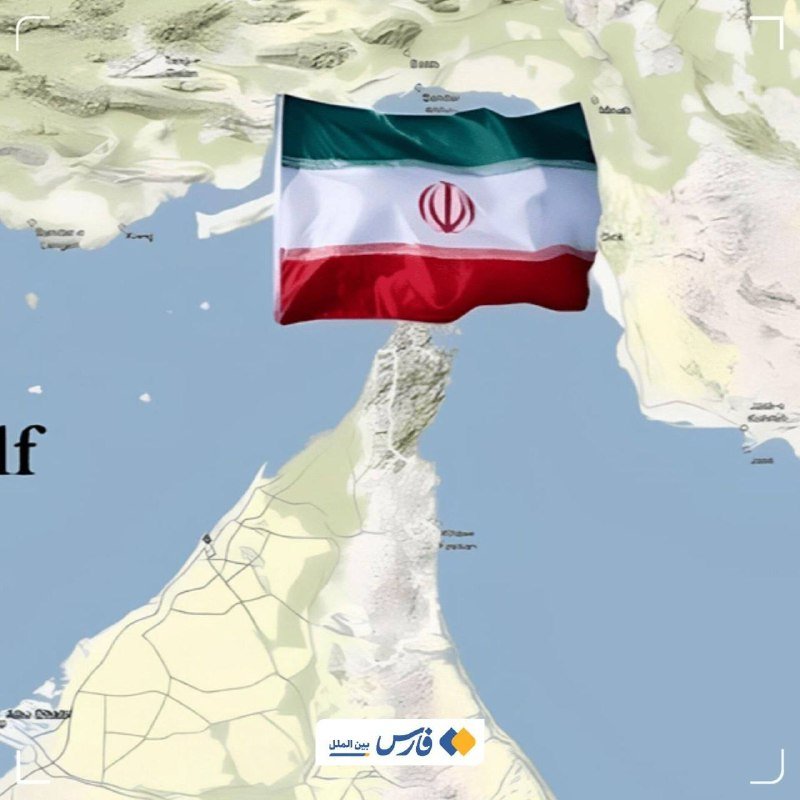
Qatari negotiators were in Tehran on 10 July 2026, the same day the New York Times confirmed Doha was holding parallel talks with Washington and the Islamic Republic, working to dial down a flare-up that had pulled the region back toward open confrontation. CNN reported the trip had been coordinated with the United States; the New York Times, cited by Open Source Intel on X, said Qatar was speaking to both sides to ease tensions built up over recent days. The choreography — Doha as messenger, escort and host — has become the default regional circuit-breaker whenever the US-Iran channel freezes, and its reappearance says something unflattering about the state of that channel.
The Qatari intervention matters less for what it announces than for what it implies: Washington has not yet rebuilt a direct, functioning line of communication with Tehran, and is once again routing diplomacy through a Gulf monarchy with its own reasons to keep the Strait of Hormuz open and its LNG exports flowing.
The familiar geometry
This is the third time in five years that Doha has played this role. In the late 2010s it underwrote a secret back-channel that produced the 2020 Doha accord between the US and the Taliban. In the spring of 2024 it helped broker the first round of indirect US-Iran talks that produced a brief, unofficial understanding on prisoner exchanges and a five-hundred-million-dollar release of frozen Iranian funds. The pattern repeats because it works — Qatar hosts Iran's main Gulf diplomatic presence, shares a massive North Field/South Pars gas reservoir with it, and can absorb the political cost of engagement that the UAE or Saudi Arabia cannot, given Riyadh's ongoing rapprochement with Tehran.
The current crisis predates the 10 July trip. Iranian-aligned media had carried warnings of retaliation for Israeli strikes on Iranian nuclear and military sites; the US had reinforced its Gulf naval posture. Doha's value is precisely that it can move between the two without either side losing face.
Why Washington needs Doha more than Doha needs this
The State Department's preferred direct line — the back-channel that ran through Oman and produced the 2015 framework and the 2023 interim understandings — has been quiet since the collapse of the May 2024 talks. The Omani channel produced results when the prize was a narrow nuclear file; the current crisis is broader and the political ceiling in Washington lower. In a US election cycle, any visible deal with Tehran carries a domestic cost that even a transactional Gulf monarchy cannot fully underwrite.
That asymmetry gives Doha leverage it would not otherwise have. Qatar is not a neutral broker; it is a stakeholder with a multi-decade LNG partnership with Tehran, a major US airbase at Al Udeid, and a sovereign-wealth posture that thrives on regional stability. Its mediation is sincere — and self-interested — in roughly equal measure, which is what makes it durable.
The Iranian read
Tehran's incentives are straightforward. The economy remains under heavy primary and secondary sanctions; reconstruction after Israeli strikes on military and nuclear infrastructure proceeds at the speed of insurance underwriters and spare-parts suppliers; and the regional deterrent posture — built around Hezbollah, the Houthis and Iraqi militias — has been meaningfully degraded since late 2024. Accepting Qatari-hosted talks lets Iran re-open a sanctions-fracture line without formally conceding on enrichment or missile files, and lets it test whether the incoming or current US administration is willing to do a narrow nuclear-for-sanctions-relief swap.
The risk for Tehran is that Doha's good offices entrench a slow-rolling process that delivers partial relief without resolving core disputes — the same outcome that produced the stalemate after the 2015 Joint Comprehensive Plan of Action collapsed.
What Doha is actually buying
For Qatar the arithmetic is cleaner. A US-Iran detente removes the largest single risk premium priced into Qatari LNG forward contracts, secures the North Field expansion pipeline, and gives Doha a continuing leadership claim in Gulf security that no Saudi-Emirati-Egyptian alignment can easily crowd out. The same arithmetic explains why Al Udeid remains the indispensable US airbase in the Gulf despite periodic Qatari-Saudi friction. Doha is not buying peace; it is buying itself a seat.
The structural frame
What is unfolding is not a multilateral peace process in any conventional sense. It is a single small state with a gas field and a US airbase using both as collateral to keep a great-power confrontation from happening on its coastline. Coverage routinely frames Qatar as a "neutral mediator" — a useful fiction that flatters Doha and absolves Washington of having to repair its own direct line. The mediation is real. The neutrality is overstated.
The stakes are concrete: a Hormuz closure would push Brent above one-hundred-and-fifty dollars a barrel within weeks; a sustained US-Iran exchange would pull Iraqi Shia militias and the Houthis back into active denial-of-shipping operations. Doha's mediators are the cheapest insurance policy the US is currently underwriting in the Gulf, which is precisely why their trip on 10 July 2026 is newsworthy and why, if past cycles hold, no headline-grabbing breakthrough will follow before the calendar forces a choice.
What remains uncertain
The sources do not specify which Qatari official is leading the Tehran delegation, what written terms — if any — Qatar is carrying, or whether the talks are aimed at a specific de-escalation package or simply at preventing miscalculation over the coming week. The New York Times reporting cited via Open Source Intel describes parallel engagement; the CNN wire describes a US-coordinated trip. Neither describes a negotiating framework. The most plausible read — that Doha is buying time, not brokering a deal — is consistent with the public evidence but not yet confirmed by it.
This publication's framing differs from the wire: the Al Jazeera English and CNN coverage foregrounds Qatari diplomatic leadership; Monexus reads Doha's role as the visible expression of a US-Iran channel that has not been repaired, and that distinction shapes the stakes.
Wire provenance
This editorial synthesis draws on the following public wire/social posts:
- https://t.me/ClashReport
- https://t.me/osintlive
- https://en.wikipedia.org/wiki/Qatar%E2%80%93United_States_relations
- https://en.wikipedia.org/wiki/Al_Udeid_Air_Base