The Strait of Hormuz Just Became a Two-Front Standoff
Tanker traffic is thinning through the Strait of Hormuz after US-Iran clashes widened the target list beyond oil infrastructure, with Tehran's Revolutionary Guards now telling foreigners the waterway is not their business.
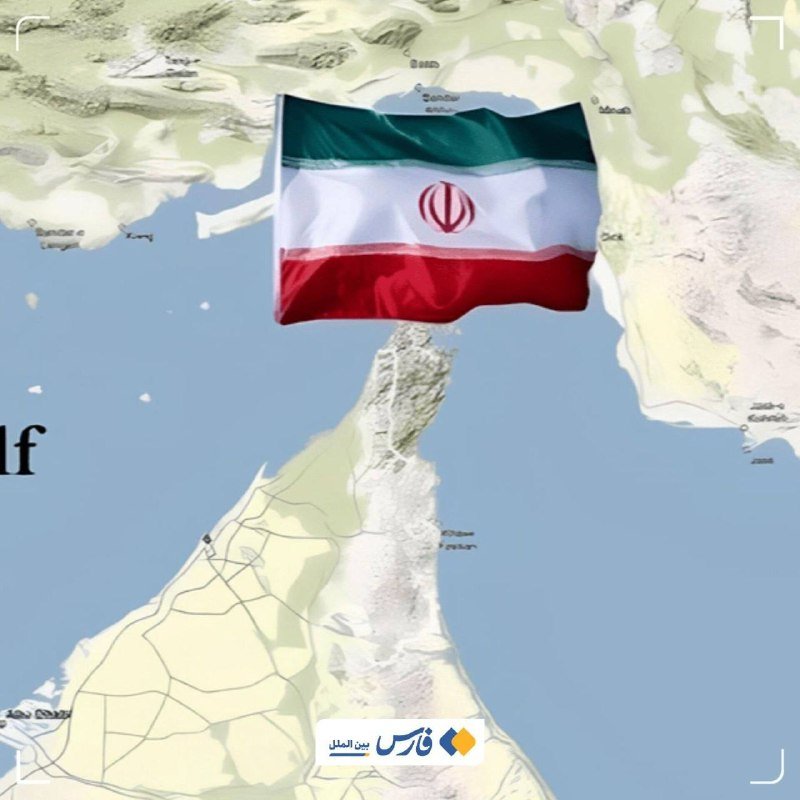
Tanker traffic through the Strait of Hormuz is slowing. Reuters reported on 10 July 2026, 12:15 UTC, that the deceleration followed a fresh round of US-Iran clashes and that the remarks accompanying the incident widened the target list beyond oil and electric infrastructure, putting renewed pressure on a chokepoint that handles a substantial share of seaborne crude exports. The same dispatch, tracked by the market-data desk at Unusual Whales, noted that the confrontation has begun to bleed into civilian-grade targets, including desalination plants — a category of strike that does not show up on pipeline tickers but lands directly on a population's access to water.
The framing matters. A shadow war that stays above the oil layer can be priced, hedged, and largely absorbed. A shadow war that reaches utilities, water, and the movement of civilian cargo through a 21-mile-wide channel cannot. The Strait is not a battlefield; it is a service that the global economy rents by the hour. The bill is now going up.
What changed on the water
Reuters' reporting describes a measurable slowdown in tanker traffic through the Strait in the immediate aftermath of the 10 July incidents. That is the operational story. Maritime chokepoints do not need to be closed to be weaponised. A 10% reduction in transit pace, layered on top of war-risk premia and revised routing, is enough to push freight rates and insurance premiums higher within a single trading session. The shipping data is the leading indicator; the oil tape is the lagging one.
The expansion of the target list is the second-order story. Strikes on energy infrastructure are legible to markets because they translate directly into barrels-forgone. Strikes on desalination plants are legible to populations because they translate into drinking water. That is a qualitatively different kind of pressure: it pulls a domestic Iranian audience, already living under sanctions strain, into the front line of a confrontation whose costs Washington can design but not fully anticipate.
Tehran's message to foreign shipping
On 9 July 2026, 15:17 UTC, the Islamic Revolutionary Guards Corps Navy put out a statement — circulated and summarised via the Unusual Whales wire — that foreigners have no stake in the Strait of Hormuz. Read literally, it is a jurisdictional claim: the waterway belongs to the littoral state and those who transit it do so at its sufferance. Read in context, it is something more pointed. It is a warning that the legal scaffolding under which commercial shipping has passed for decades is, in Tehran's telling, contingent.
The practical effect is to convert a transit corridor into a permissioned one. Shipowners, charterers, and the insurers who sit between them now price in a political premium on top of the war-risk premium. That is the part that does not require a single additional shot to be fired.
Why this is structural, not episodic
For two decades, the operating assumption in Gulf shipping has been that even at the worst moments of US-Iran tension — the tanker wars of the 1980s, the 2019 limpet-mine campaign, the 2024 shadow-fleet crackdowns — the Strait itself remained commercially usable. That assumption is what built the current insurance market, the current routing algorithms, and the current pricing of Middle Eastern crude. The Iranian message, paired with the broadening of the target list, is a quiet renegotiation of that assumption.
This is the pattern worth watching: not whether any single incident closes the Strait, but whether the cumulative cost of transiting it pushes commercial operators toward alternative corridors, longer-haul routings, or simply thinner schedules. Once a marginal cargo diverts, the system rarely pulls it back. Insurance markets are sticky in the wrong direction.
The stakes, plainly stated
The winners in a sustained Hormuz slowdown are short-cycle oil producers outside the Gulf — West African and North Sea barrels become more valuable the moment a barrel from the Arabian Peninsula carries a transit surcharge. The losers are the importing economies of South and East Asia, several of which source the majority of their crude through the Strait and have thin strategic reserves. Iran itself absorbs the cost in sanctions-tightened form, which is precisely why the IRGC Navy's posture is calibrated as much for a domestic audience as for foreign shipowners.
The White House's bet appears to be that pressure on the target list — energy, electricity, now water — will force a recalculation in Tehran. The Iranian bet appears to be that the cost of transit can be made high enough, and the legal basis for foreign passage uncertain enough, that Washington will be the first to blink. Both bets can be wrong at once. That is the configuration markets should price.
What we do not yet know
The sources do not specify the precise tonnage of the slowdown, the identity of the vessels diverted, or the magnitude of the war-risk premium repricing that has already occurred. Reuters' reporting confirms the direction of travel; the data layer behind the headline will take 24 to 72 hours to filter through shipping analytics. Any claim of a specific percentage decline in transit is, for the moment, the trading desk's estimate rather than the wire's confirmation.
Desk note: Monexus is treating the 10 July slowdown as a structural renegotiation of Gulf transit, not as an episodic market wobble. The wire frames it as a kinetic event; the more durable story is the cost of using the Strait being repriced in real time.
Wire provenance
This editorial synthesis draws on the following public wire/social posts:
- http://reut.rs/4pcziob