Syria's new diplomat is doing something the old regime never tried — talking to everyone
Foreign Minister Asaad al-Shaibani has logged more capitals in months than his predecessors did in years. The diplomatic map is being redrawn — but the substance is thinner than the optics.
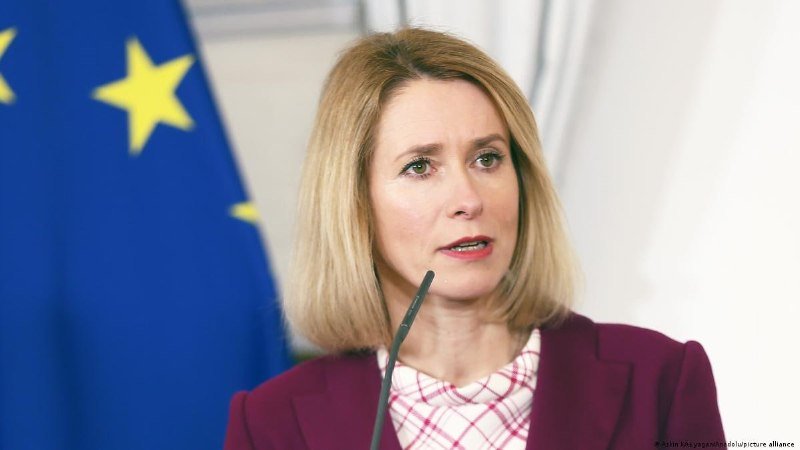
Syria's new top diplomat has been everywhere, and the list keeps growing. Since his appointment following the collapse of the Assad government, Foreign Minister Asaad al-Shaibani has shuttled from Riyadh to Beirut, Washington to Moscow, clocking meetings in the Gulf, the Levant and beyond at a pace that would have been unthinkable under the previous regime. France 24's profile, published 10 July 2026, lays out a diplomatic map that the Syrian foreign ministry had not drawn for the better part of two decades.
The thesis worth stating plainly: the young foreign minister is selling a refurbished Syria to anyone who will listen, and the buyers are at least willing to take the meeting. Whether the purchase becomes a deal is a different question entirely.
The travel schedule as the story
There is no mystery in what al-Shaibani is doing. He is rebuilding a relationship map that the Baathist state tore up — or had torn up for it — through decades of alignment with Iran, Russia and Hezbollah, and through two decades of pariah status after 2011. The diplomatic tempo is the message: a Syrian government that talks to the Saudis, the Americans and the Russians in the same calendar quarter is signalling that the post-Assad order intends to be a participant, not a client.
The route itself, as documented by France 24 on 10 July 2026, is the substance of the news. The mere fact of a Syrian foreign minister on a plane to Riyadh — and being received — is a shift in regional choreography. The same applies in the other direction: a Syrian minister landing in Washington and being treated as a head of state on a working visit, rather than as the emissary of a sanctioned government, is the kind of optic that resets conversations inside foreign ministries from Ankara to Amman.
What the old regime would not, and could not, do
The pre-2024 Syrian foreign service was, in practice, an extension of a security apparatus. Its diplomatic bandwidth was narrow by design: maintain the Russian veto at the UN, coordinate with the Iranian axis, manage a handful of Arab re-engagements when a neighbour needed it. Outreach to Western capitals was crisis-management, not statecraft.
Al-Shaibani's itinerary inverts that posture. The early signals — meetings in multiple regional capitals, a willingness to be photographed in settings where the previous Syrian foreign minister would not have been welcome — are doing the rhetorical work of normalisation before any of the harder policy questions have been settled. Sanctions architecture, the status of foreign fighters, the question of returning refugees, reconstruction financing, and the unresolved dispute over Syrian territory in the south and north-east all remain on the table. The shuttle diplomacy is not resolving them; it is buying time and attention while domestic and regional actors work out what a reconstituted Syria is supposed to be.
The structural read
The pattern is familiar in the region: a transitional government accumulates foreign-ministry mileage as a substitute for hard policy delivery. The travel schedule functions as proof-of-concept to external audiences that the new order is serious, manageable and worth re-engaging. It also functions, domestically, as evidence that the new leadership has standing.
The risk is the usual one. Diplomatic air miles do not equal diplomatic outcomes. A road-show diplomacy that outruns institutional capacity — Syria's civil service, after more than a decade of war and a violent leadership change, is hollowed out — tends to produce communiqués rich in language about "cooperation" and "shared interests" and thin on the enforceable commitments that turn those words into electricity in the grid, water in the pipes, and paycheques for civil servants. The pattern repeats itself in transitional moments from Baghdad to Tripoli.
Stakes, and what remains unresolved
If the diplomatic opening holds, the obvious winners are the Gulf states and Turkey, each of whom has a stake in a stable, pliable Damascus. Russia loses leverage but does not disappear from the file. Iran loses most. The United States gets a manageable partner at relatively low cost. Israel watches from the border and calculates.
If the opening fails, the cost is borne inside Syria first: a transitional leadership that promised a different relationship with the world would have nothing to show for it except photographs. The diplomatic map, in that scenario, redraws itself again — and not in Damascus's favour.
What is genuinely unsettled, and what the available reporting does not resolve, is the gap between the travel schedule and the policy ledger. The questions that will decide whether al-Shaibani's road to Damascus is a strategy or a sales pitch — sanctions relief sequencing, reconstruction funding, the political settlement with the Kurdish-administered north-east, and the security relationship with the United States — are still open. The road is real. The destination is not yet on the map.
Desk note: France 24's profile leads with the diplomatic choreography rather than the policy substance, which is consistent with how the new Syrian government itself wants the story told. This publication treats the itinerary as evidence of intent, not yet as evidence of outcome.
Wire provenance
This editorial synthesis draws on the following public wire/social posts:
- https://t.me/france24_en