"The Invite" and the rise of the unscripted drama
Olivia Wilde's "The Invite" arrives billed as a partly improvised two-hander. The stunt is becoming a genre — and the critics are starting to notice.
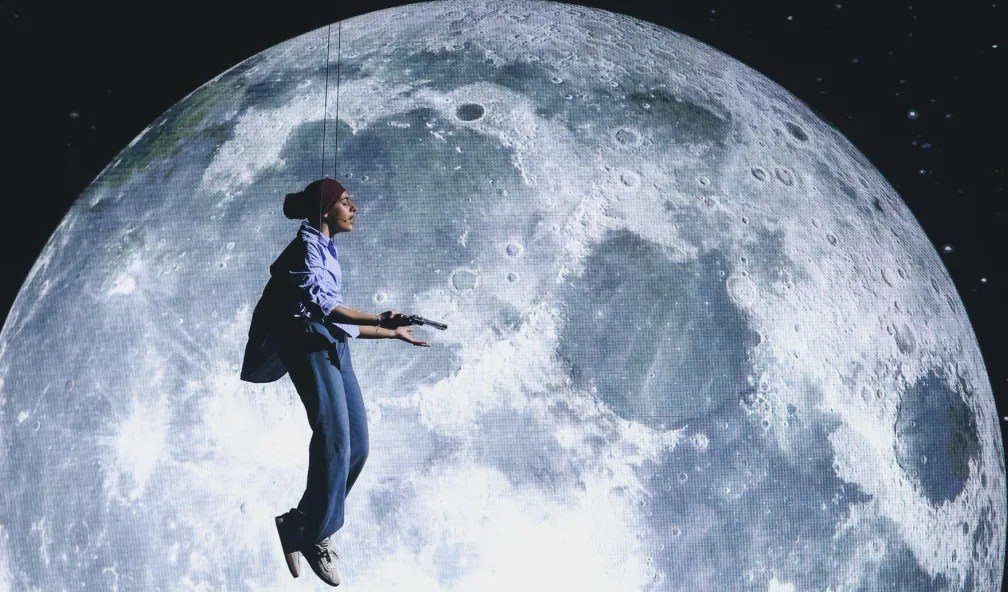
When Olivia Wilde talks about "The Invite," she describes a film that was, by her own account, partly written in the room. Speaking on the IndieWire platform on 8 July 2026, the director framed the project as a collaborative, on-set writing exercise, with the cast shaping the script as the cameras rolled. Critics who have now seen the finished film agree on the central fact: there is not much in the way of a pre-baked screenplay.
What they do not agree on is whether that fact is exciting or exhausting.
"The Invite" lands at a moment when improv-led, ensemble-written drama has moved from a Sundance-circuit curiosity into a recognisable mode. The reviews published this week — including a sharply ambivalent write-up in Scroll.in on 10 July 2026 — treat the picture less as a one-off experiment and more as a marker of where independent American film is drifting.
How the film was actually made
The clearest factual claim is Wilde's own. In the IndieWire conversation dated 8 July 2026, she characterised "The Invite" as a project on which the cast "wrote the movie as they shot it." That phrasing is unusually candid for a director and unusually compressed for a film still in release. It signals, at minimum, a stripped-down development phase and an unusually high degree of on-set latitude for the performers.
The Scroll.in review, published two days later, treats that latitude as the central fact about the finished product. The film, the critic writes, boils down to a couple running out of ways to insult each other — a one-line structural read that lines up neatly with what Wilde described as a writer's-room-meets-soundstage process. If the script was thin going in, two adult performers in a room have to be thick enough to fill it.
Wilde has, over the past several years, positioned herself as a director interested in exactly that kind of pressure-cooker writing: a director whose producers and interviews have emphasised collaboration and improvisation rather than authored, locked scripts. "The Invite" is the most committed version of that thesis to date.
What the critics say
The Scroll.in review is unsparing on the texture of the result. A two-hander built around mutual laceration has to land each line; when the lines keep arriving at roughly the same volume, the review argues, the scene runs out of oxygen before the film does. The picture is treated as a chamber piece that mistakes the chamber for a stage.
What the review does not do is deny Wilde's stated working method. In fact, the aesthetic it diagnoses — the sense of dialogue being generated rather than selected — is more or less what Wilde herself described to IndieWire. The disagreement is over whether that process produces a movie or merely a performance.
That distinction matters. Improvised drama can build a character from the inside out in a way pre-written scripts rarely allow. It can also produce scenes in which an actor's good idea carries a sequence that a writer would have cut. "The Invite," on the evidence of one published review and the director's own framing, sits squarely on that fault line.
What is actually new here
Step back from the picture itself, and a structural pattern is visible. The unscripted or partly improvised ensemble drama has become a low-budget solution to three pressures bearing down simultaneously on independent film: production budgets that have not recovered from the post-pandemic contraction, the disappearance of the mid-budget two-hour drama from streaming acquisition strategies, and a generational shift among filmmakers who came up through theatre and sketch comedy rather than screenwriting programmes.
Those pressures are not unique to any one project, and they do not produce uniformly good results. They do, however, raise the question of what a critic is supposed to do with a film in which the writing and the performing are the same act. The old vocabulary — screenplay, dialogue, lines — strains to describe it. A new vocabulary — texture, rhythm, presence — has to do work it was not built for.
"The Invite" is a useful test case precisely because Wilde named the method publicly before the reviews arrived. The conversation IndieWire hosted was, in effect, a director's brief for how to read the picture. The reviews this week are a first draft of whether the public is persuaded.
What remains uncertain
The public verdict is not yet in. Scroll.in has published one negative-leaning review; IndieWire's piece is an interview, not a notice. Distribution details, audience-size signals, and the wider wave of American trade-press reviews that will follow the wider release are not reflected in the source material available at this publication time. The available evidence base supports two confident claims: that the film is the most openly improvised work Wilde has directed to date, and that the early critical reception treats the experience as claustrophobic rather than liberating. Everything beyond that — awards positioning, viewership, the length of its theatrical life — is genuinely to come.
What can also be said plainly is that the film is not a referendum on Wilde as a director. It is, more usefully, a referendum on whether the improv-led mode can carry a feature without a safety net. The Scroll.in review's conclusion that the couple runs out of ways to insult each other is, if the picture really is being built line by line in the room, an indictment of the room as much as the writing.
The stakes
For independent American film, the stakes are modest but real. If audiences keep showing up for partly improvised ensemble work, distributors will keep financing it; if not, the form retreats to the festival circuit. For Wilde specifically, the film sits inside a career arc that has, over the past several years, carried her from acting into directing into the more exposed terrain of directing work that is openly, publicly experimental. The film cannot settle the question of where that arc leads, but it tells the audience what kind of director she is willing to be in public.
The question the picture leaves is not whether improvisation is a legitimate tool. It plainly is. It is whether, given a small cast and a thin premise, the method can build a movie that survives its own length. On the evidence of one published review and the director's own framing, this particular film, on this particular occasion, finds that out the hard way.
Desk note: Monexus treated Wilde's IndieWire interview as the on-the-record production-source account of how the film was made, and treated Scroll.in's review as a single, dated critical data point rather than as a consensus verdict. Where the two accounts disagree — on whether the improvisational method works as drama — Monexus has reported both positions side by side and flagged the disagreement explicitly, rather than collapsing it into a single read.
Wire provenance
This editorial synthesis draws on the following public wire/social posts:
- https://t.me/telegramindiewire/