The Gaza force that won't deploy, the teachers Trump is hunting, and the Iran plot nobody can verify
Six stories from a single Thursday tell a coherent story about a White House that fires in every direction at once — and a press corps that keeps each story in its own box.
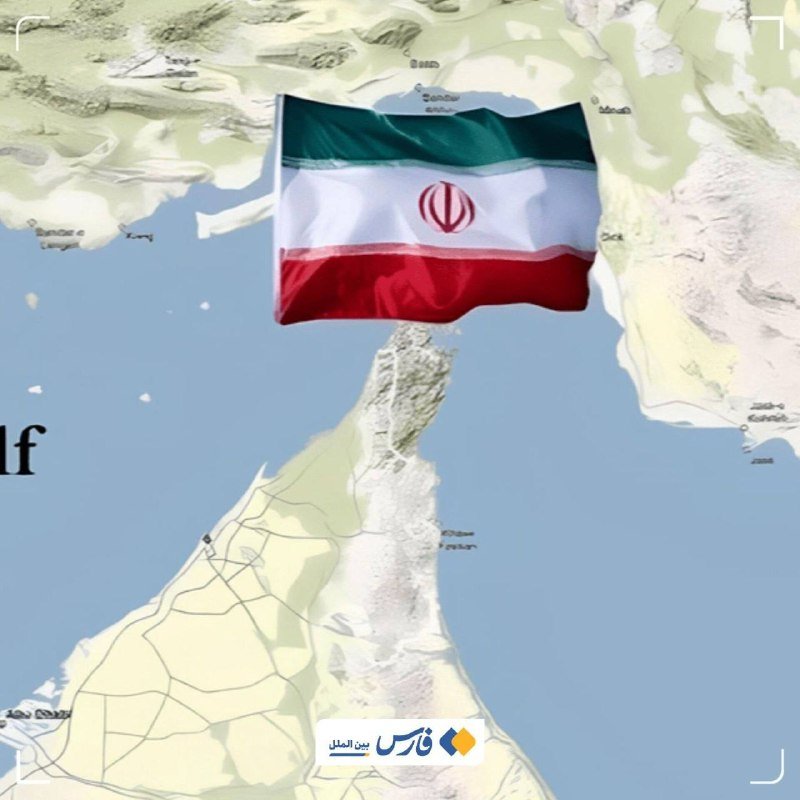
At 18:52 UTC on 10 July 2026, the Palestine Chronicle reported that the Trump administration's post-war plan for Gaza is collapsing at its load-bearing joint: the international stabilisation force meant to underwrite the entire arrangement cannot muster even twenty personnel. Six hours earlier, the same administration, per a New York Post piece surfaced by Unusual Whales, had launched a national crackdown on teachers accused of sexual abuse. By mid-afternoon UTC, the White House had separately decided to let a bipartisan housing bill become law without a signature to protest a Republican voter-ID law, signalled it does not want Israel involved in US strikes (per CNN, via Unusual Whales), and been warned by Israel that Iran had hatched a fresh plot to assassinate the president (per the Wall Street Journal, via Unusual Whales). A Polymarket contract put the odds of a federal AI-model review ordered by month-end at 12 percent.
The throughline is not policy coherence. It is the speed at which a second-term White House can move on six fronts at once while the press continues to file each story in its own drawer.
The 20-person problem
The Gaza force is the most consequential of the six because the rest of the Trump plan rests on it. Without foreign troops under a recognisable flag, there is no buffer between Israeli operations and the territory's civilian population, no entity to hand provincial administration to, and no diplomatic cover for the donor conference that was supposed to follow. That an internationally backed deployment cannot field twenty personnel, on the timeline already elapsed, is less a logistical embarrassment than an indictment of the planning premise: that a coalition of the willing could be assembled before the politics of willing caught up.
The teacher hunt and the housing veto-by-default
The domestic items travel together. A federally coordinated crackdown on teachers accused of sexual abuse, framed as a moral emergency, arrives in the same news cycle as a veto-by-default on a bipartisan housing bill triggered by a procedural grievance about voter ID. The pattern is recognisable from earlier administrations of both parties: executive energy concentrated on culturally resonant targets while bipartisan compromise is left to expire on the calendar. The housing outcome in particular — a bill becoming law because the president chose not to sign it — is a constitutionally available but rarely used lever, and the reason given (voter-ID disagreement) suggests the priority is signalling within the Republican coalition rather than the merits of housing supply.
The Iran thread and the AI speculation
Two foreign-policy items sit at opposite ends of the certainty spectrum. The Iranian assassination plot, relayed to Washington by Israeli intelligence and reported by the Wall Street Journal, fits a known pattern of late-cycle threat reporting between the two services — pattern, not proof. Israeli intelligence on Iranian plots has been right often enough that the warning is taken seriously, and wrong or exaggerated often enough that it should not be taken at face value. The White House's reported desire to keep Israel out of US strikes, per CNN, is the more interesting signal: it implies an operational lane the administration wants to keep American and unilateral, which in turn constrains what Jerusalem can do without coordinating with Washington.
The Polymarket contract on a federal AI-model review by month-end, sitting at 12 percent, is best read as a thermometer on insider expectations rather than a forecast. Low-probability policy events priced on prediction markets tend to move on leaks; the contract's existence is itself a piece of news, telling readers that the AI-governance question is now liquid enough to bet on.
What the wire is doing
The reason these six items feel disconnected is that the wire treats them as disconnected. The Gaza story runs on the foreign-affairs desk; the teacher crackdown runs on the education or justice beat; the housing bill runs on Congress; the Iran warning runs through the national-security stack; the AI market runs on tech. Each gets its own slug, its own expert quotes, its own mini-narrative. None of the coverage connects the dots — that an administration running at this tempo on this many fronts is also visibly thin on the ground in Gaza, which is the one file where thinness costs lives.
That is the press's failure mode, not its conspiracy. It is the structural consequence of beat-based reporting in an administration that does not respect beats.
Stakes and uncertainty
What remains genuinely uncertain is whether the Gaza force can be reconstituted at any meaningful size before the political window closes, whether the Iran-plot reporting will be corroborated by anything beyond the original Israeli warning, and whether the AI-review contract is pricing in an actual policy move or simply noise around a salient topic. The teacher crackdown and the housing-bill mechanics are the most legible items on this list; the foreign-policy thread is the one where the evidence is thinnest and the consequences are largest.
Monexus framed these six wires as a single working day rather than six stories, on the grounds that beat-by-beat filing obscures the tempo question — how much an administration can move at once, and where its bandwidth is visibly absent.