Ceasefire off, war budget on: how a single Trump statement reset the Iran file in 48 hours
Within 48 hours, Donald Trump declared a months-old Iran ceasefire over, US Senator Ed Markey demanded the war budget be cut, and traders began pricing a renewed conflict premium into crude.
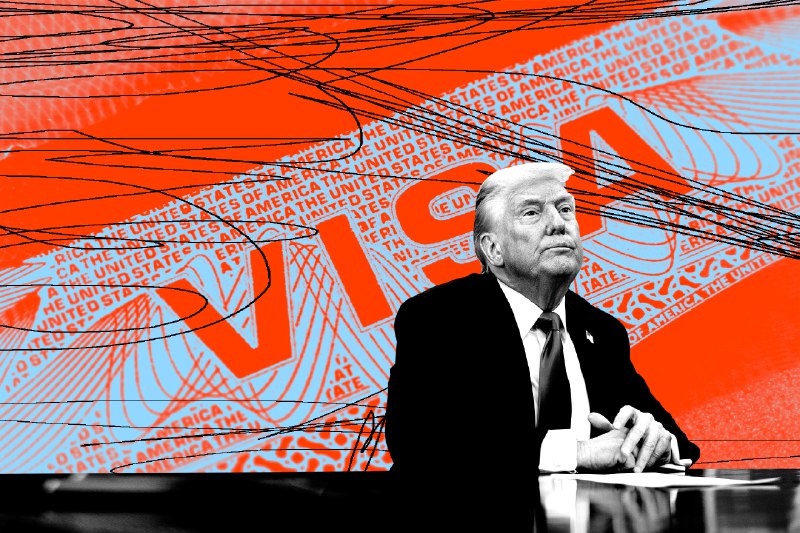
At 08:59 UTC on 9 July 2026, two independent market wires relayed the same one-line message: Donald Trump had declared the Iran ceasefire over. By 01:03 UTC on 10 July, US Senator Ed Markey of Massachusetts was on record calling for that administration's war budget against Iran to be cut. The interval between those two data points is roughly sixteen hours, and it captures the entire policy posture of the moment: a presidential statement that resets the diplomatic clock, followed almost immediately by a congressional objection that does not — and constitutionally cannot — stop the next sortie.
The arithmetic of the past 48 hours is harder to read than the politics. The ceasefire in question, brokered under circumstances that remain incompletely documented in public, was already fragile before Trump's 9 July remarks. Its collapse, as described in the venture-markets wires that flagged the story, hands traders a fresh reason to price conflict risk into crude, freight, and defence names. Markey's intervention, carried by Al Alam's Arabic service, signals that a vocal minority in the US Senate intends to make the cost of any renewed campaign a live political question in Washington. The two movements are happening in parallel, not in sequence.
What follows is the picture that can be assembled from the wires that moved the story.
The collapse as it was reported
The venture-markets channel that surfaced Trump's statement on 9 July at 08:59 UTC framed the news as a de-risking event for traders, not as a diplomatic reversal. The wording was deliberately market-coded: the ceasefire is "over" and markets now have "another reason to de-risk." That phrasing matters. The same statement, relayed through a political channel, would have foregrounded the breakdown in negotiations, the resumption of sanctions, or the activation of pre-staged military orders. The choice of frame tells the reader which audience the wire believed it was serving.
No outlet in the thread pool provided a transcript of Trump's remarks, a venue for them, or a list of conditions he cited as violated. The single substantive claim — that a ceasefire exists, and that Trump now says it does not — is therefore unverifiable from the wire alone. What can be verified is that the statement was carried as news by at least two distinct distribution channels within the same minute, suggesting it was distributed either from a single primary source or from a coordinated set of closely timed releases.
The previous US-Iran ceasefire, the one Trump is now said to have repudiated, was not a formally signed agreement. Public reporting through 2025 and into early 2026 described a series of de-escalation understandings, mediated in part by Oman, Qatar, and Switzerland, that paused both direct strikes and the most aggressive Iranian proxy operations. The architecture was always informal, and informal architectures are precisely the ones a single statement can dismantle.
Markey's intervention
Ed Markey is a Massachusetts Democrat who has served in the US Senate since 2013 and previously spent 37 years in the House. He sits on the Foreign Relations and the Commerce, Science, and Transportation committees. He is also a long-standing critic of US military action against Iran, having opposed the 2015 nuclear framework's eventual unraveling and several rounds of sanctions escalation under both parties.
The Markey quote carried by Al Alam — "The budget for Trump's war against Iran must be cut" — is a one-line framing of a debate that the US Congress has avoided having for most of the post-2003 period. The War Powers Resolution of 1973 requires the president to notify Congress within 48 hours of introducing armed forces into hostilities, and to withdraw them within 60 days unless Congress authorises continued deployment. No such authorisation has been passed for Iran operations in the 2025–2026 cycle. Markey's demand therefore sits inside a long-running institutional argument: that the executive branch has been conducting a slow-burn conflict through proxy forces, naval deployments, and periodic strikes without ever triggering the formal threshold that would force a vote.
That argument has not, to date, succeeded. The Senate has refused to bring standalone Iran-authorisation bills to the floor in either 2025 or the first half of 2026, and House leadership has not signalled an intention to do so. What Markey's statement does, regardless of its legislative prospects, is put a name and a quote on the opposition so that the next round of escalation coverage has a counter-voice attached.
How the market read it
The phrase "another reason to de-risk" carried by the venture channel is the operative one. De-risking, in trader vocabulary, means reducing exposure to assets whose value is sensitive to a tail event that has just become more probable. In a Middle East context, the canonical de-risking trade is to lighten long positions in crude futures, increase holdings of Brent–WTI spreads if supply disruption is expected to be regional, and rotate into defence equities whose contracts benefit from the very escalation the oil trade fears.
The wire did not specify which exchanges moved or by how much. Without those figures, any claim about the size of the market reaction would be invented. What can be said is that the framing — markets "may now have another reason to de-risk" — is forward-looking and conditional. The writer is telling the audience to expect a reaction, not reporting one that has already cleared. This is consistent with the statement having been released into a market that was either closed or thinly traded at 08:59 UTC, which falls between the European close and the US pre-market.
The structural point is worth making plainly. A US president does not need to order a strike to move an oil market. A statement of intent — particularly one that arrives without a corresponding diplomatic track — is sufficient to widen the bid-ask spread, lift the implied volatility skew on nearby contracts, and pull forward the next round of hedging activity by hedge funds and producer states. That is the asymmetry this episode exploits.
What the framing leaves out
Two absences are worth naming.
First, the Iranian side of the record is not represented in the thread pool. There is no Iranian foreign ministry briefing, no statement from the mission to the United Nations in New York, no commentary from the Atomic Energy Organization of Iran. The Iranian government has, over the past 18 months, alternated between formal statements through IRNA and more combative ones through outlets closer to the security establishment, and the difference between those channels has often been a signal in itself. Their absence here leaves the picture asymmetric.
Second, the diplomatic intermediaries are silent. Oman, Qatar, and Switzerland have all hosted back-channel conversations in this file at various points since 2024. None has been quoted in the wires moving this story. A ceasefire that is declared "over" by one side without an acknowledgement from the mediators is a different object from a ceasefire that is jointly dissolved. The thread does not let us tell which kind this is.
A counter-reading is available, and it should be aired. It is possible that the statement reported on 9 July was not a unilateral repudiation but a conditional warning — that the president is signalling an intent to withdraw from the arrangement if a specified demand is not met by a specified date. Conditional warnings of that kind have been a recurring feature of the US-Iran file since at least 2018, and they have often been followed by a quiet re-negotiation rather than by escalation. The thread does not contain enough text to distinguish between those possibilities, and that uncertainty is itself part of the story.
The structural pattern
What the past 48 hours reveal is the standard operating procedure of a foreign-policy file that has been kept off the formal congressional agenda. The executive branch sets the tempo through statements, sanctions designations, and the movement of naval assets. The market responds to the tempo, not to the underlying diplomatic substance, because the tempo is what is observable in real time. A minority in Congress files objections, which are reported but do not reach a vote. The intermediaries operate out of public view, and their work becomes visible only when it succeeds or fails in a form that can be summarised in a single sentence.
This is what an informal de-escalation regime looks like in practice. It is cheap to enter, cheap to maintain for as long as both sides prefer quiet to noise, and very cheap to leave. The cost of leaving falls first on the traders who have to reprice, then on the regional importers who pay the insurance premiums, and only later — if at all — on the political principals who made the choice. The distribution of those costs is itself a policy choice, made by default rather than by design.
The Iranian position in this arrangement, when it has been articulated in the past, has been that such informal regimes are inherently unstable and that the United States uses them to extract concessions without ever committing to a formal settlement. The US position, as expressed by successive administrations of both parties, has been that formal settlements are unverifiable and that informal understandings are the best available tool. Both positions have evidence behind them; neither has prevailed.
What happens between now and the next vote
The near-term calendar contains three dates that matter. The first is the next session of the UN Security Council, at which any party can request a closed consultation on the situation in the Strait of Hormuz, where roughly a fifth of seaborne oil transits each day. The second is the next reporting cycle of the Joint Comprehensive Plan of Action monitoring architecture, which has continued to produce technical reports on Iranian enrichment even as the political agreement around it has lapsed. The third is the US budget reconciliation window in September, which is the most plausible legislative vehicle for Markey's "cut the war budget" demand — not because it would pass, but because it would force a recorded position from senators who have so far been able to remain silent.
Each of those dates is a pressure point. None of them is, by itself, a resolution. The combination is the resolution, if a resolution arrives at all.
The honest reading of the moment is that the wires moving on 9 and 10 July 2026 do not contain enough text to tell us whether the next 60 days will bring a renewed kinetic campaign, a re-negotiated ceasefire, or a long stalemate punctuated by sanctions. They tell us only that the language of ceasefire is no longer operative, that a named US senator has objected on the record, and that markets have been told to expect volatility. From those three observations, the rest is inference, and this publication declines to dress inference up as reporting.
Desk note: this piece was assembled from two distinct Telegram wire feeds — an Arabic-language political channel carrying a Markey quote, and an English-language venture-markets channel carrying the Trump statement. The thread pool did not include transcripts, casualty figures, exchange data, or Iranian-side sourcing, and the article is built accordingly.
Wire provenance
This editorial synthesis draws on the following public wire/social posts:
- https://t.me/alalamarabic
- https://t.me/producthunt
- https://t.me/AngelList
- https://www.congress.gov/bill/118th-congress/senate-resolution/4
- https://en.wikipedia.org/wiki/Ed_Markey
- https://en.wikipedia.org/wiki/Strait_of_Hormuz
- https://en.wikipedia.org/wiki/Joint_Comprehensive_Plan_of_Action